









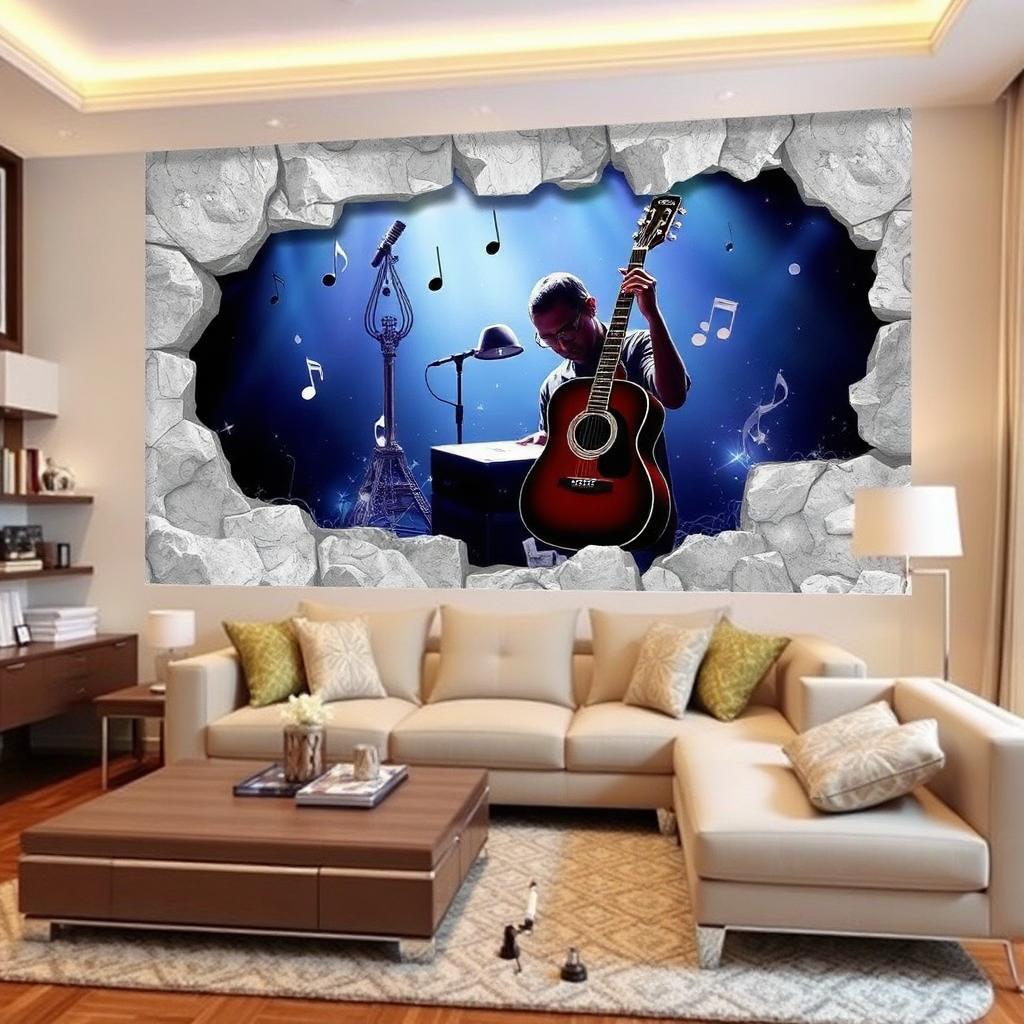

Description
Custom-made silk fabric sheet music wall art
Custom-made, removable, and reusable silk fabric sheet music wall art is the “pinnacle product” of musical decor. It solves the biggest problems of standard wallpaper (permanence and difficult installation) while offering an aesthetic quality that paper or vinyl simply cannot match.
Standard vinyl wallpaper reflects light plastically (glare), whereas silk fabric absorbs and diffuses light.
Luminous Depth
Silk has a natural fiber structure that gives the printed sheet music a soft, glowing quality. When sunlight hits the notes, they don’t look like flat ink; they look like they are woven into the room.
Tactile Luxury
It physically feels like a high-end textile. This adds acoustic softness to the room, preventing the “echo” effect often caused by hard vinyl surfaces—a crucial feature for music rooms.
No “Plastic” Shine
Unlike cheaper peel-and-stick vinyls that look like stickers, silk fabric looks like a permanent, high-end mural, even though it is removable.
The Practical Advantage (Removable & Reusable) Wallpaper Wall Art
This is the “renter-friendly” and “error-proof” factor.
Zero-Damage Removal
It uses a specialized gum-like adhesive that stays tacky but never hardens. You can peel it off a wall after 3 years, and it will leave zero residue and pull zero paint off the wall.
Move With You
Because the fabric doesn’t stretch or tear like paper, you can crumble it up, put it back on its backing paper, and re-install it in a new house. It is an asset you own, not just a sunk cost for one room.
Wrinkle-Free Installation
If you crease vinyl, it’s ruined. If you crease silk fabric, you can simply smooth it out with your hand. It is incredibly forgiving for DIY installation.
Customization Advantage (The “Personal Sheet Music Wall Art”)
Since this is custom-printed rather than mass-produced rolls:
The “Readable” Wall
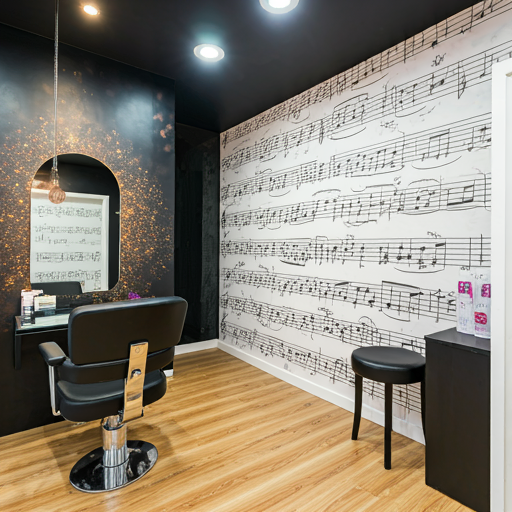
You can upload a high-resolution scan of a specific song (e.g., your own composition or a rare jazz chart). The clarity on silk is high enough that a musician can actually stand at the wall and play the song.
Scale Control
You can choose to have the notes be life-size (subtle texture) or massive (architectural drama), ensuring the lines of the staff align perfectly with your furniture height (e.g., the staff lines starting exactly above your sofa).
Summary Comparison
| Feature | Standard Vinyl Wallpaper | Custom Silk Fabric Wall Art |
| Texture | Smooth / Plastic Feel | Soft / Woven Feel |
| Light Reflection | High Glare (looks like a sticker) | Soft Glow (looks like a mural) |
| Reusability | Low (Stretches when removed) | High (Can be moved to new home) |
| Install Difficulty | High (Bubbles easily) | Low (Breathable, no bubbles) |
| Acoustics | Reflects Sound (Echo) | Absorbs Sound (Dampening) |
Sheet Music Wall Art (The “Document”)
Sheet Music Wall Art and Music Notes Wall Mural are two distinct approaches to musical decor. While both celebrate audio, they differ fundamentally in intent, structure, and visual impact.
One serves as a historical document (the score), while the other serves as a dynamic decoration (the symbol).
Here is an overview of the two concepts and the sharp distinctions between them.
The sheet music wall art treats the musical score as a piece of fine art. It visualizes the complete, structured language of a song—including the five-line staff, time signatures, key signatures, dynamic markings ($f$, $p$, $cresc. $), and lyrics.
The Aesthetic of Sheet Music Wall Art
The Architecture of Sound
The aesthetic of sheet music wall art is defined by its architectural stability. Unlike the free-form drift of floating music notes, sheet music is built upon the rigid foundation of the five-line staff. This creates a strong horizontal linearity that visually widens a room and provides a sense of “grounding.” The staff acts as a grid, imposing discipline and order on the space. It appeals to the analytical side of the brain, suggesting that creativity is not just random inspiration, but the result of structure, rules, and mathematical precision.
This visual language evokes an atmosphere of history and academia. It transforms a standard living space into an environment that feels curated and learned, reminiscent of a grand conservatory, a dusty university library, or a composer’s private study. The density of the notation—the clusters of chords, the sharp vertical beams, the sweeping legatos—creates a sophisticated “intellectual texture.” It is not merely decoration; it is a visual representation of a complex language, signaling to anyone entering the room that this is a space where art is taken seriously, studied, and revered.
The Content of Sheet Music Wall Art
The Curated Narrative
The true power of sheet music art lies in its specificity. While generic music notes symbolize the concept of music, a score displays a specific reality. By choosing to display Beethoven’s 5th Symphony or The Beatles’ “Let It Be,” you are not just covering a wall; you are embedding a “sonic signature” into the room’s identity. This transforms the decor into a readable narrative—a code that musicians can decipher and hear in their heads the moment they walk in. It acts as an “Easter egg” for the initiated, rewarding close inspection with a melody.
This allows for a level of deep personalization that few other patterns can offer. The wall becomes a biography of the owner.
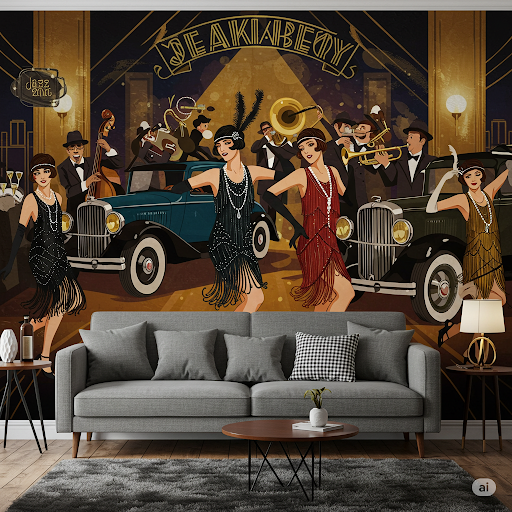
Jazz music wall art
For the Jazz Lover, displaying John Coltrane’s Giant Steps—notorious for its difficulty—signals a respect for virtuosity, complexity, and improvisation. It is a badge of honor.
Romantic music wall art
For the Romantic, framing the score of a “First Dance” or a lullaby turns the wall into a memory keeper. It captures an ephemeral emotional moment and freezes it in ink, making the sentiment permanent. In this way, the wall ceases to be background noise and becomes a conversation piece, inviting guests to ask, “What song is this?” and unlocking the personal story behind the choice.
The “Wall Art” Aspect
This often appears as:
Framed Prints
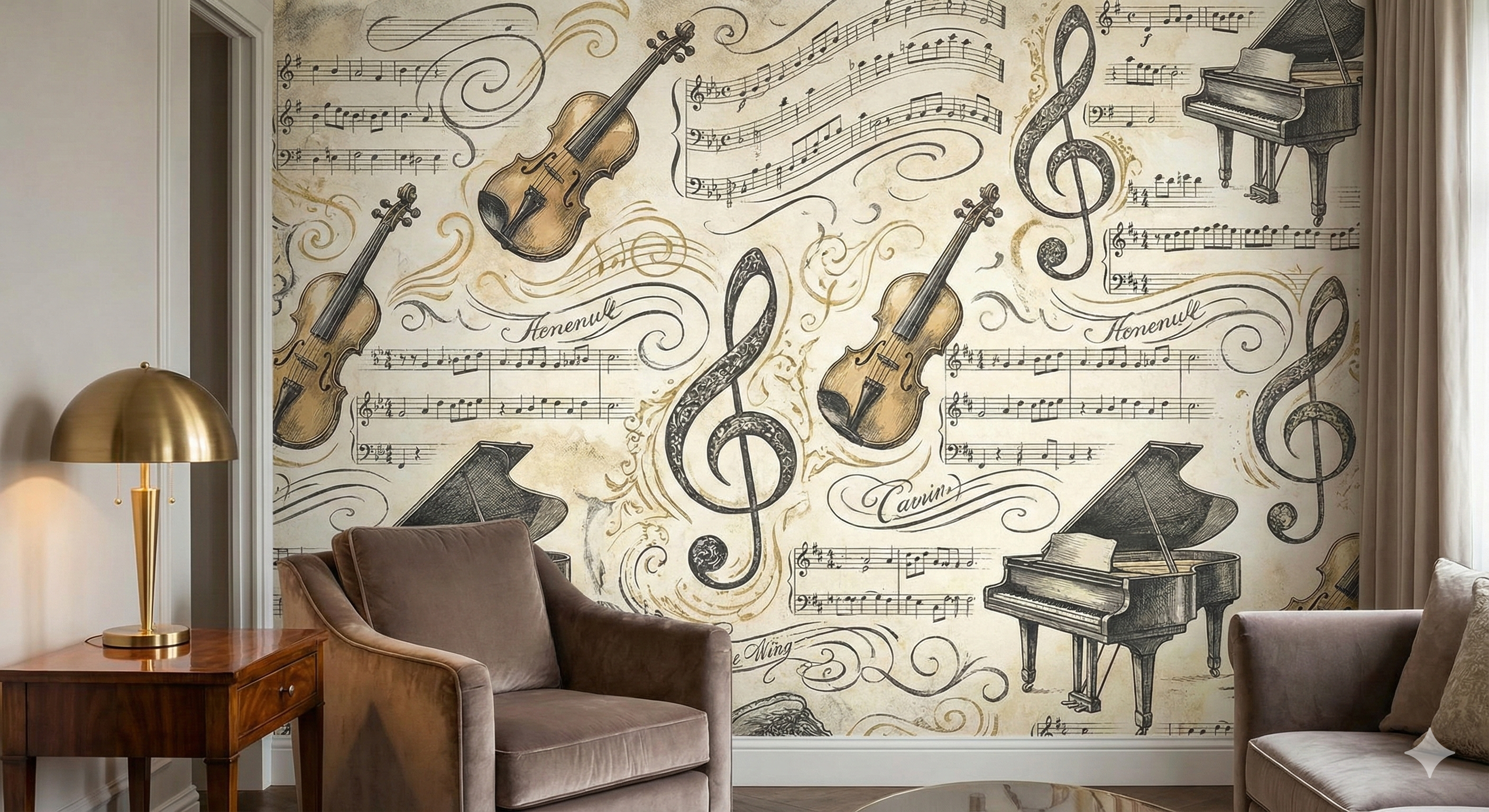
Vintage pages mounted in glass. This approach treats the music as a museum artifact. By placing a yellowed, 100-year-old sheet of music inside a crisp black frame with a wide white mat, you elevate it to high art. It highlights the texture of the paper and the elegance of the engraving.
Canvas Wraps
A specific chorus of a song blown up to poster size. This is a modern, frameless alternative where the image of the score or lyrics wraps around the edges of a wooden frame. It creates a bold, 3D architectural element that stands out from the wall, perfect for making a favorite lyric the dominant focal point of a room.
Full Wallpaper
A repeating pattern of an antique score (often sepia or black-and-white). This transforms the entire wall into a texture of rhythm. Instead of a single focal point, the wall becomes an immersive background of seamless musical theory. The repetition of the staff lines creates a subtle horizontal stripe effect that widens the room, while the density of the notes adds intricate detail that rewards close inspection without overwhelming the space from a distance.
Music Notes Wall Mural (The “Symbol”)
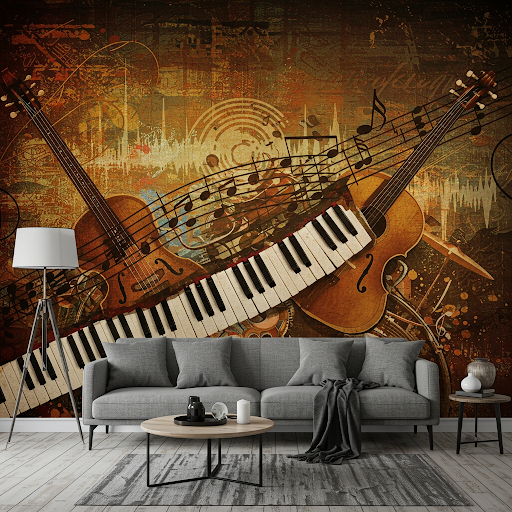
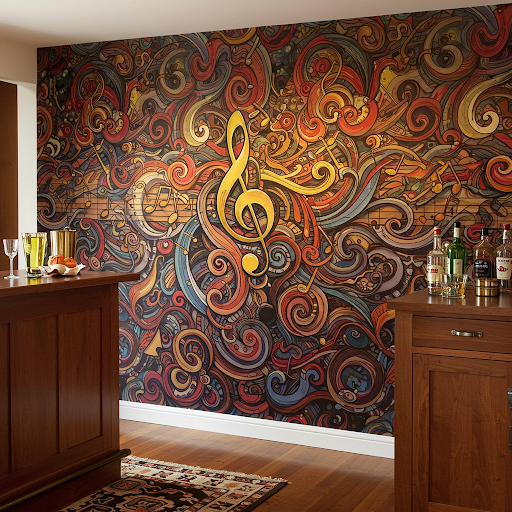
This category deconstructs the language of music into isolated decorative elements. It takes the symbols of music—the Treble Clef, the Eighth Note, the Beam, the Sharp—and uses them as graphic design tools to create a pattern or a scene.
The Aesthetic
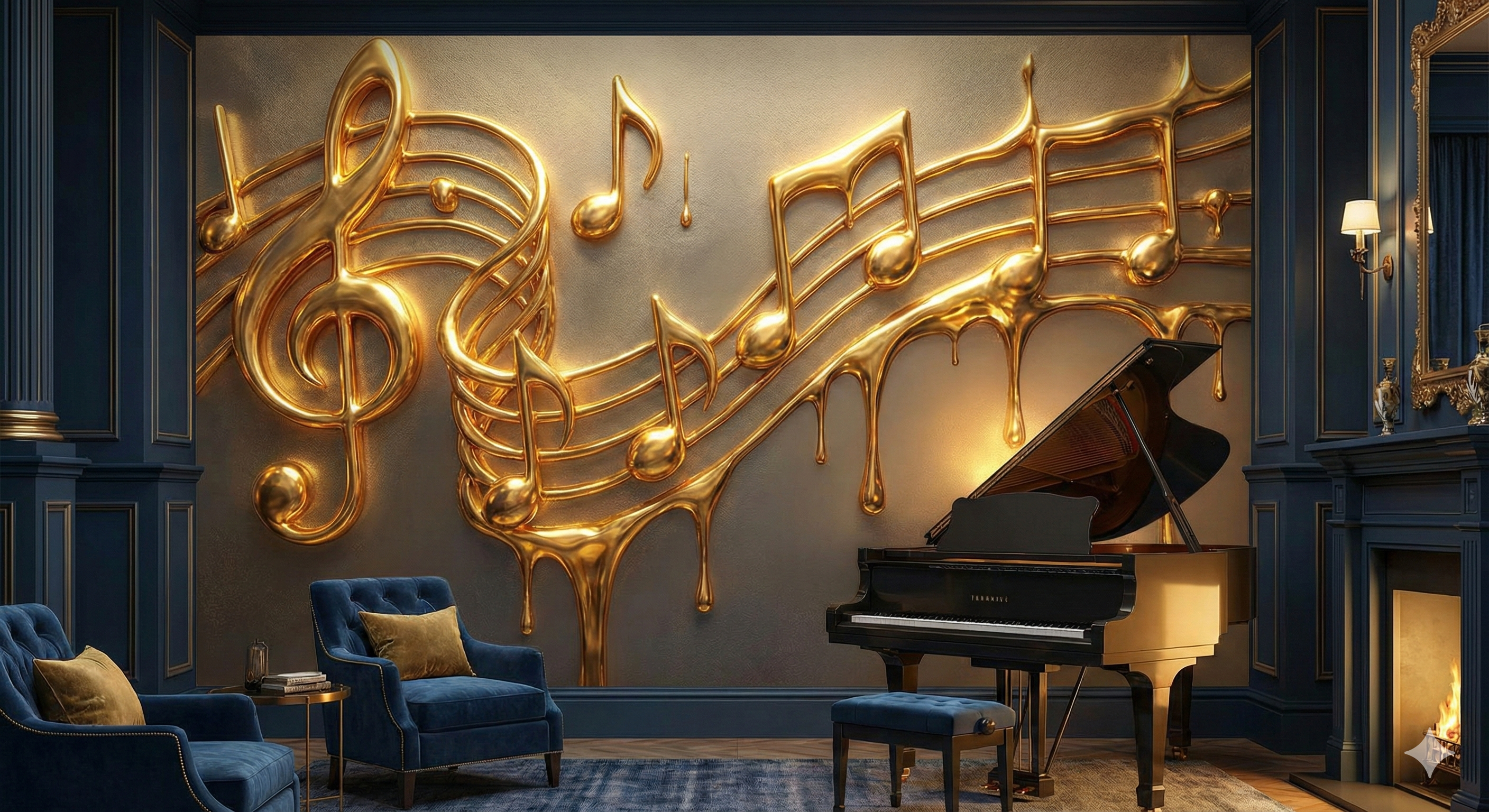
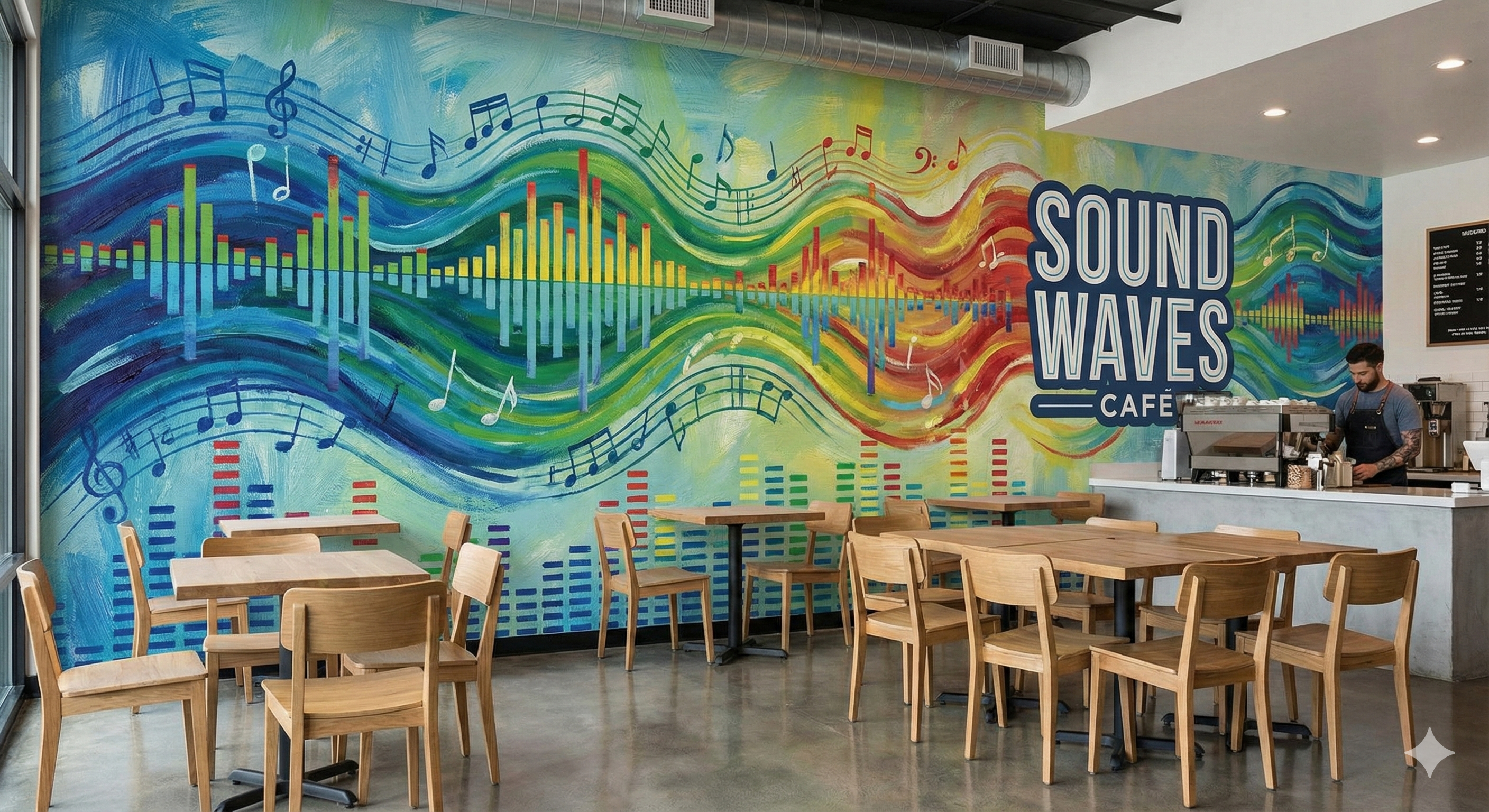
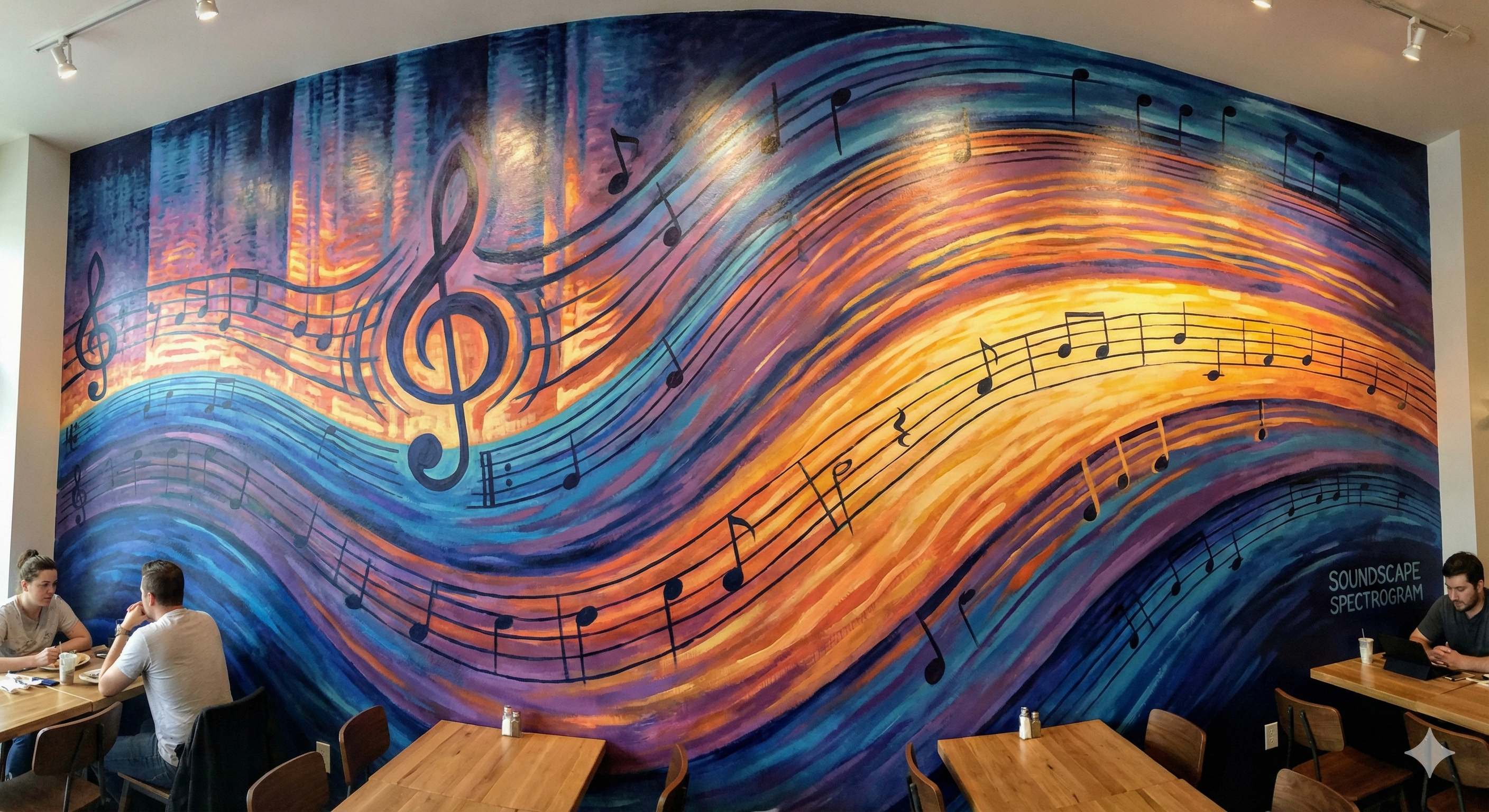
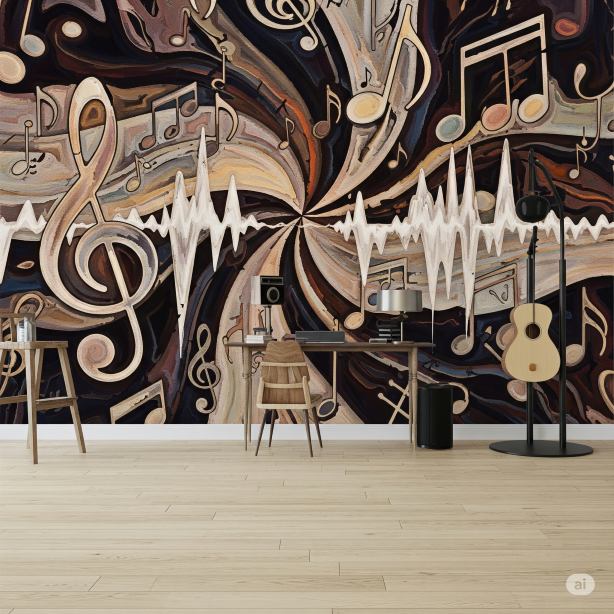
It is fluid, chaotic, and rhythmic. The notes are rarely placed on a straight line; they float, swirl, or explode across the wall to mimic the feeling of sound moving through air.
The Content
It is universal. It doesn’t represent a specific song; it represents the idea of music in general.
The “Mural” Aspect
This is almost always a large-scale application (paint or vinyl) where the notes are huge—sometimes 2–3 feet tall—creating a playful or dramatic immersive environment.
The Core Distinctions of Sheet Music Wall Art
A. Structure vs. Flow (The Visual Difference)
The Architecture of Sound vs. The Motion of Sound
Sheet Music is rigid
It relies on the strict architecture of the five-line staff. This creates a strong horizontal grid that visually anchors the room, adding a sense of stability and permanence. It appeals to the part of the brain that loves patterns, mathematics, and logic. By displaying the “blueprint” of a song, it says, “Music is a science and a craft,” emphasizing the discipline required to master an instrument. It brings a library-like order and discipline to the interior.
Music Notes are free-form
They shatter the grid entirely. Without the constraint of the staff, the notes become kinetic objects—floating, tumbling, or swirling as if blown by the wind. This design choice mimics the invisible, airy nature of audio waves filling a room. It brings energy and movement, making static walls feel dynamic. It says, “Music is freedom and joy,” emphasizing the emotional release of listening rather than the technicality of playing.
B. Specificity vs. Universality (The Meaning)
The Curation vs. The Vibe
Sheet Music is about Identity
It acts as a badge of expertise or a sentimental token. It is highly curated content. A jazz club displaying the complex score of Dave Brubeck’s Take Five isn’t just decorating; it is signaling its genre expertise to aficionados who recognize the 5/4 time signature. Similarly, a couple displaying their “First Dance” song makes the wall deeply personal. It transforms the decor into a narrative that requires inside knowledge to fully appreciate.
Music Notes are about Atmosphere
They function as a universal signifier. You do not need to know music theory or recognize a specific composer to understand the message. It is genre-neutral and inclusive. A mural of a flying treble clef works equally well in a kid’s piano practice room, a Top 40 radio station, or a generic nightclub because it represents the general spirit of music. It sets a mood without demanding that the viewer understand a specific reference.
C. “Readability” (The Musician’s Perspective)
Cognitive Engagement vs. Visceral Reaction
Sheet Music engages the musician’s brain
It creates an involuntary cognitive response. A pianist or violinist walking into the room cannot look at the wall passively; they will instinctively try to “read” the notes, tap out the rhythm, and hear the melody in their head. The wall becomes an interactive puzzle. It commands attention and invites intellectual scrutiny (“Is that a sharp or a flat?”).
Music Notes engage the musician’s emotions
There is nothing to decode. The brain processes the image instantly as a symbol of happiness, creativity, or rhythm. It bypasses the analytical mind and goes straight to the visual vibe. It is meant to be felt rather than read, creating a subconscious feeling of lightness and playfulness that relaxes the viewer rather than challenging them.
Summary Comparison Table of Sheet Music Wall Art & Music Notes
Recommendation
-
Use Sheet Music Art if you want to create a Focal Point (e.g., a large canvas above a sofa) that guests will stop and inspect close-up.
-
Use Music Notes Murals if you want to create a Background Vibe that fills a large empty wall without demanding detailed attention.