


Description
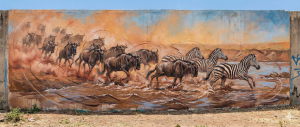
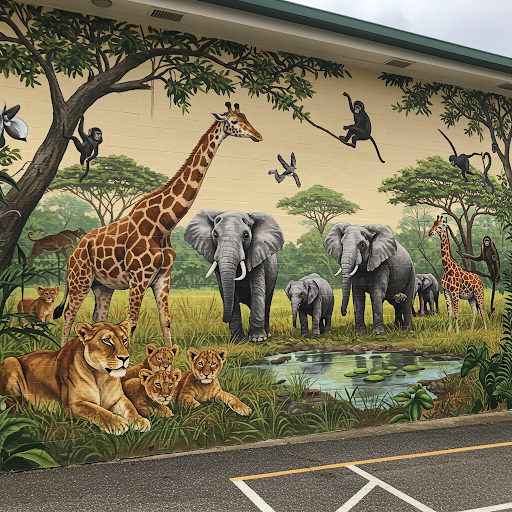
Wildlife mural painting has evolved from primitive records of survival to high-tech tools for global conservation. What once served as a “magico-religious” ritual on cave walls is now a sophisticated intersection of art, environmental activism (artivism), and digital technology.
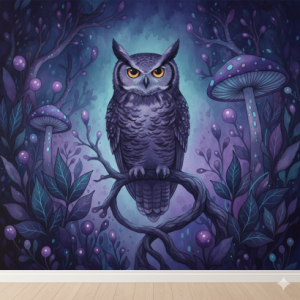
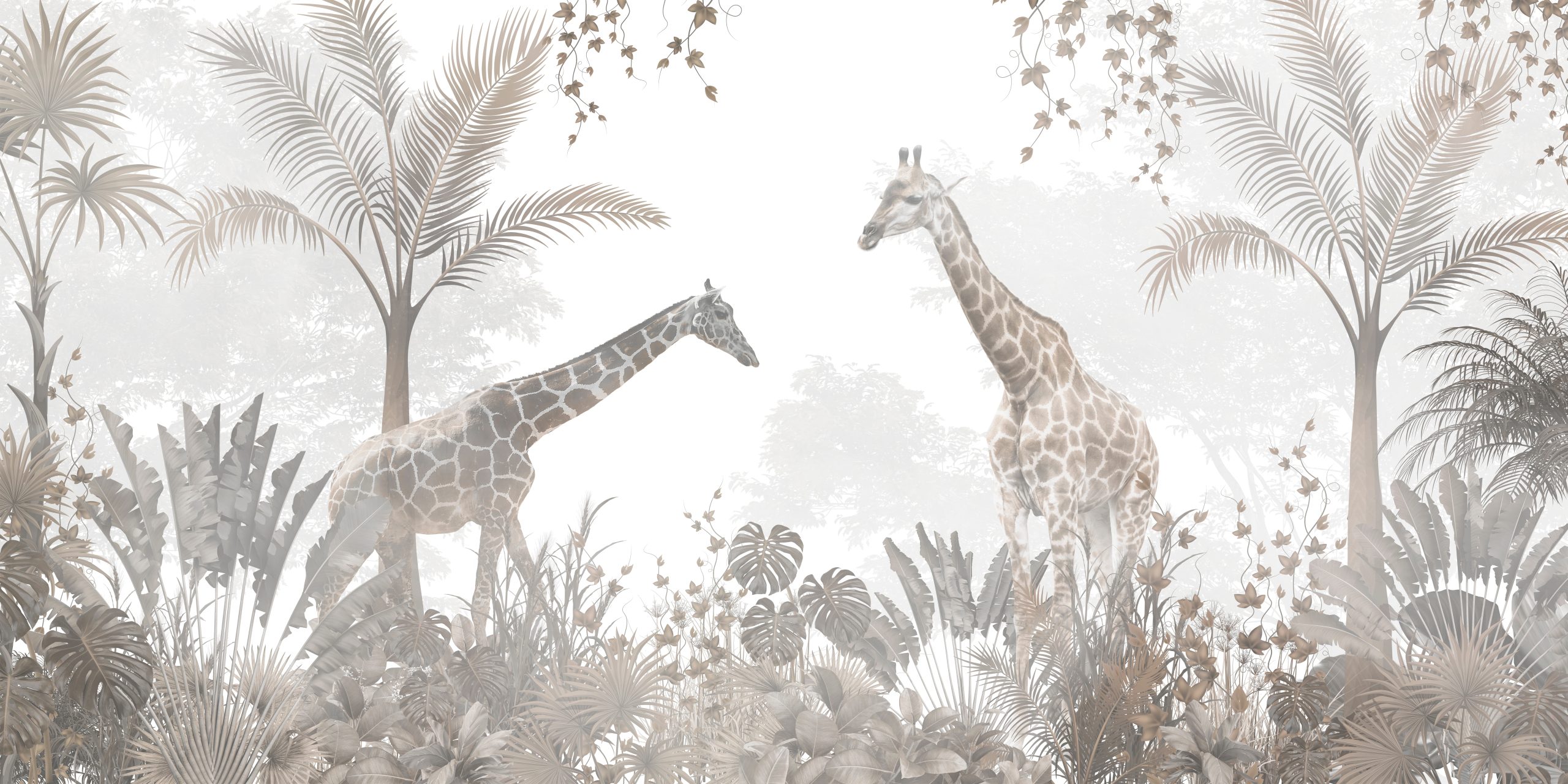
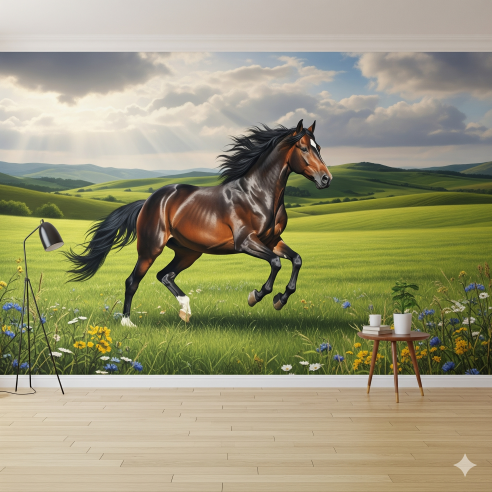
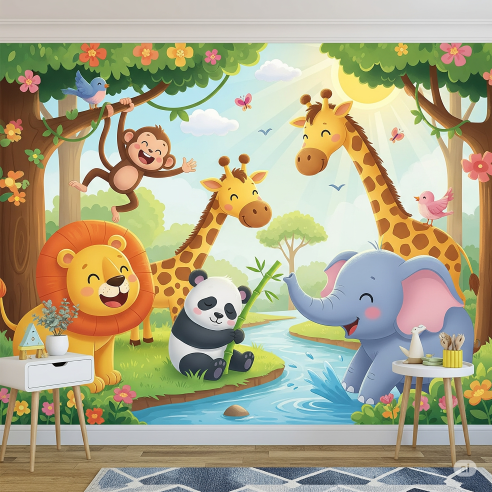
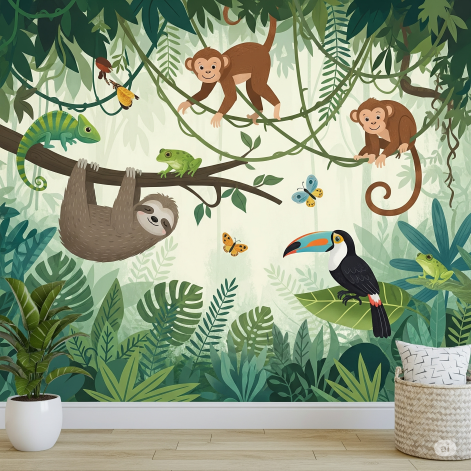
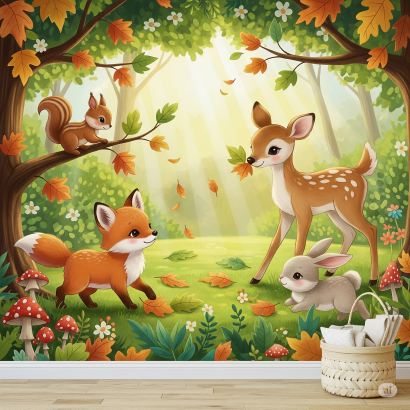
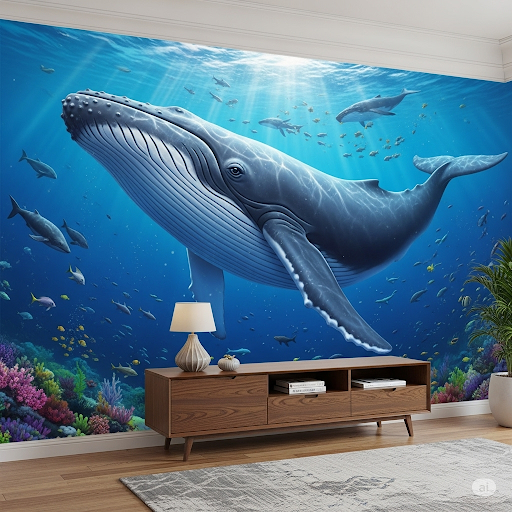
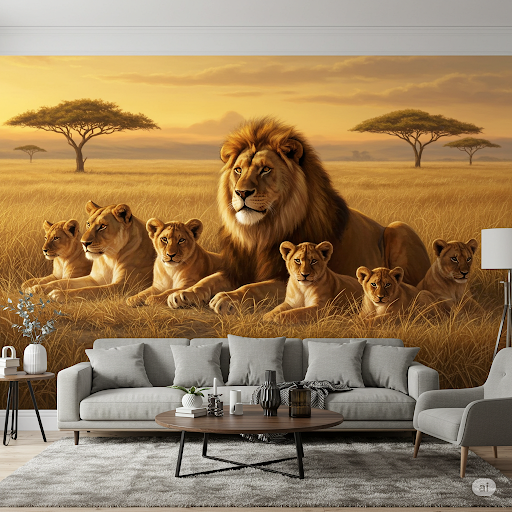
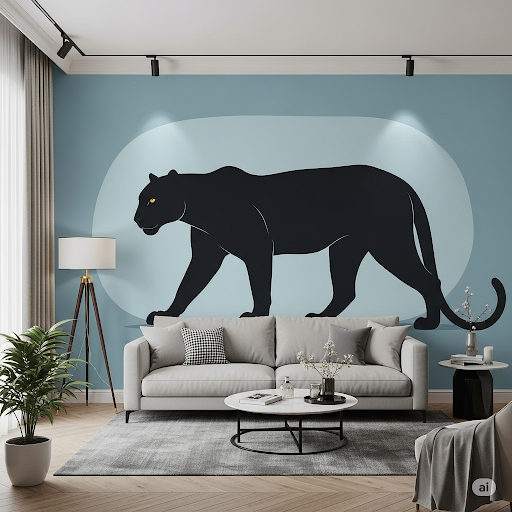
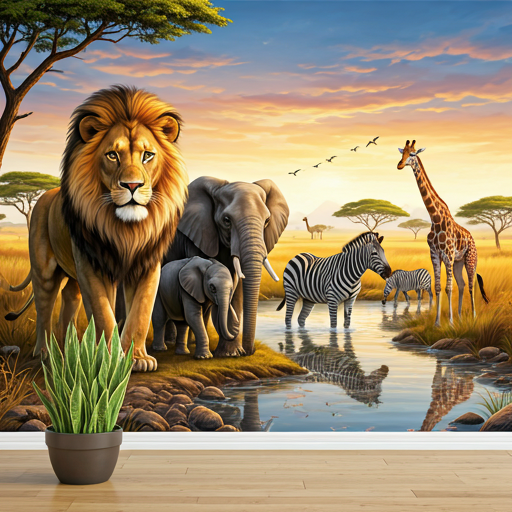
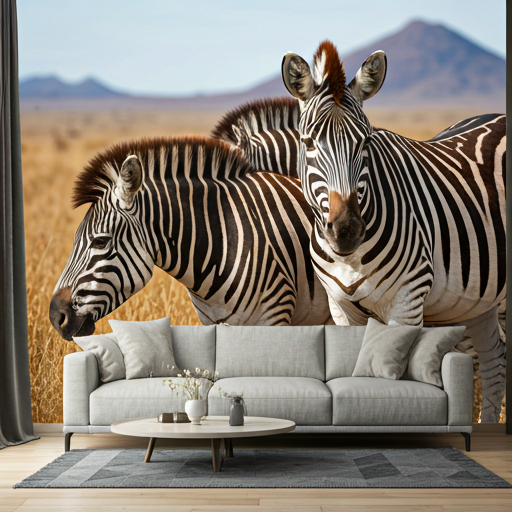
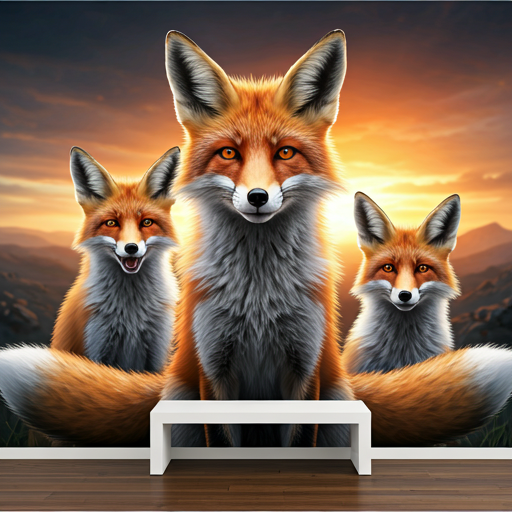
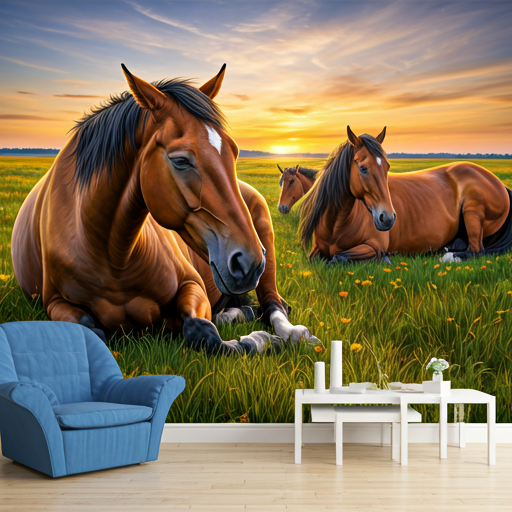
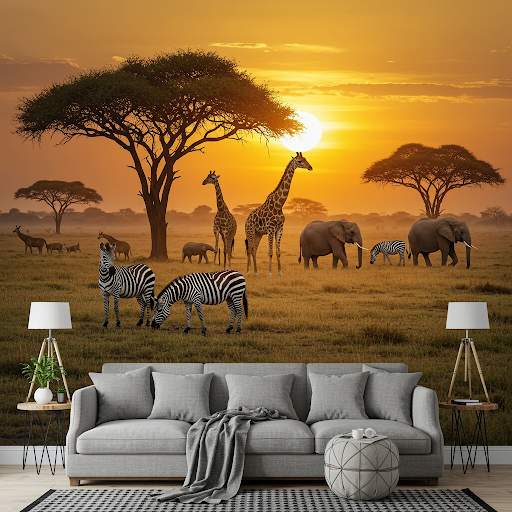
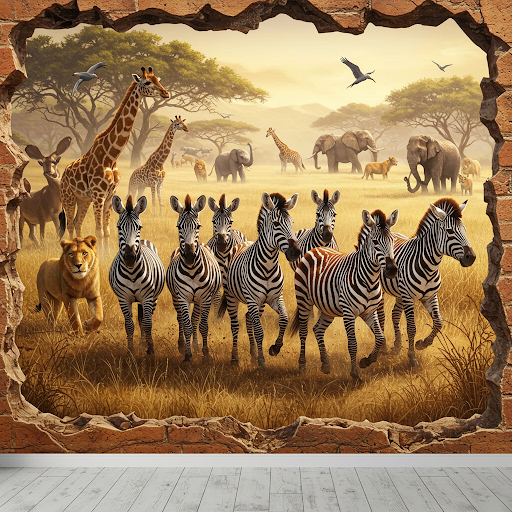
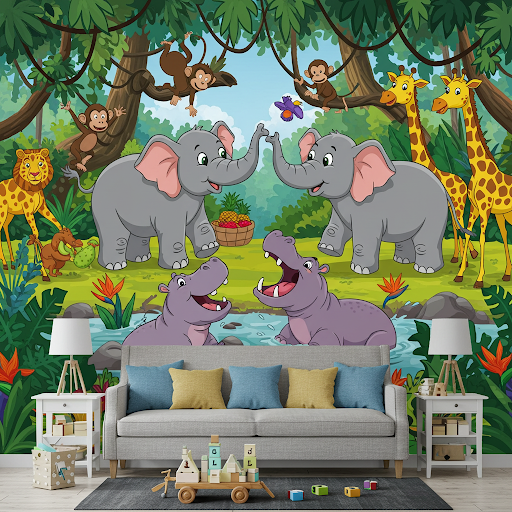
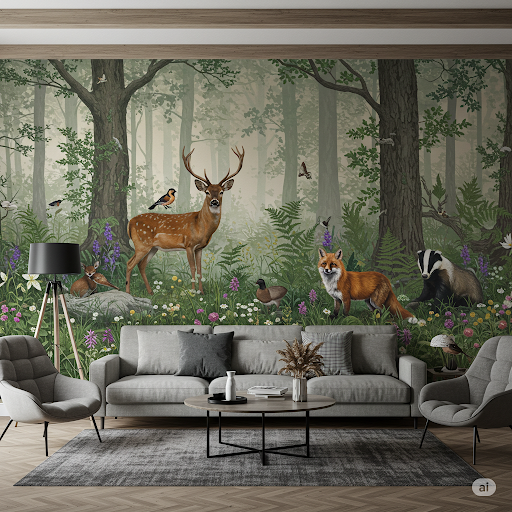
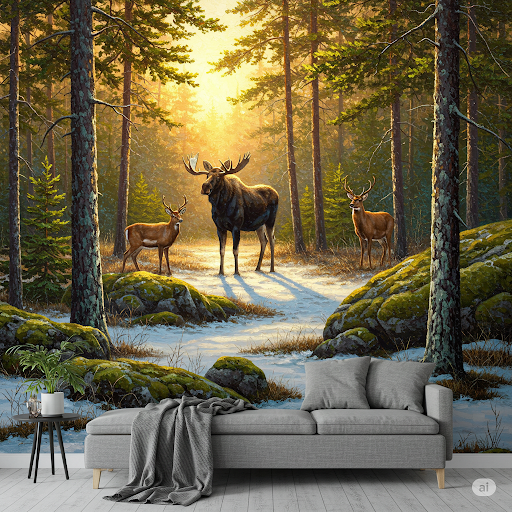
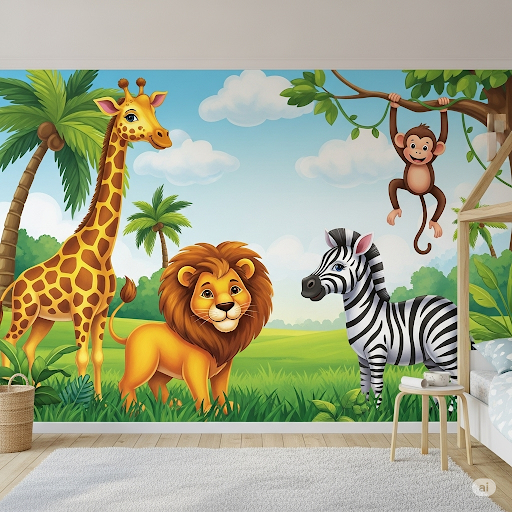
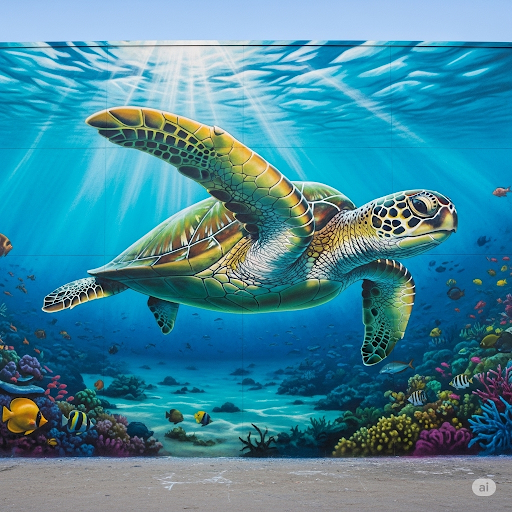
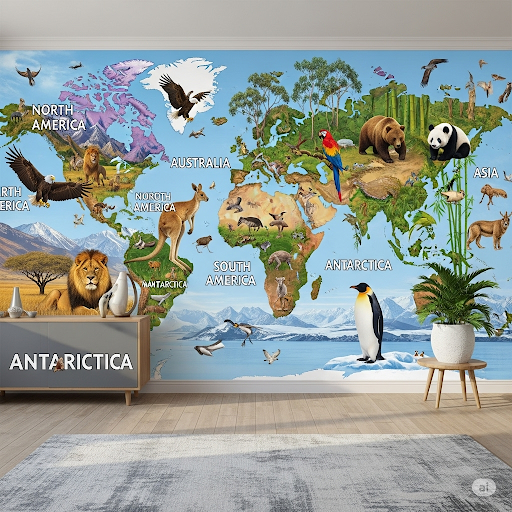
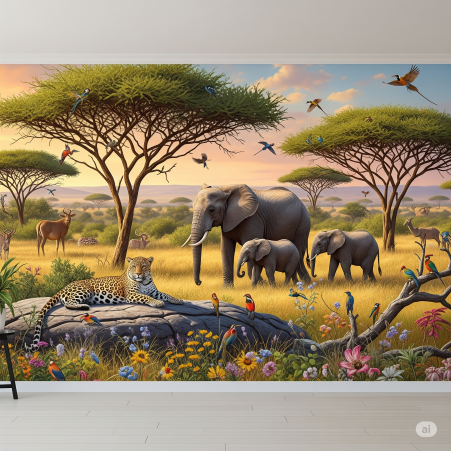
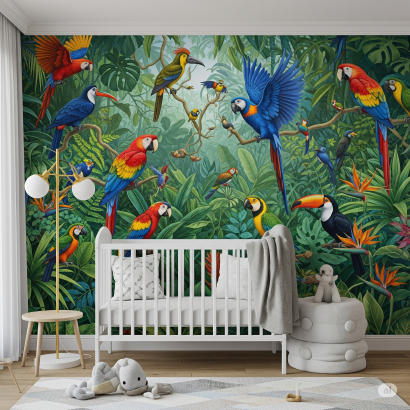
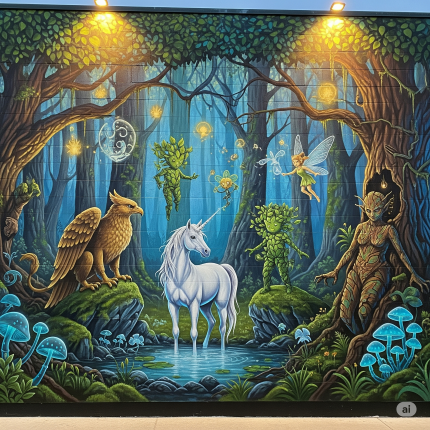
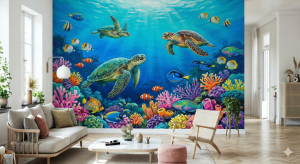
In 2026, the boundary between “painting” and “wallpaper” has blurred through high-resolution digital printing and tactile materials. Wildlife mural wallpaper now offers more than static patterns. They provide immersive “panoramic stories” that span entire rooms.
Current trends focus on matte finishes and eco-friendly materials like silk fabric, catering to the sustainability-conscious homeowner. Visually, the movement has shifted from sharp photography to painted textures—mimicking watercolors, oil brushstrokes, or charcoal sketches—to give walls a handcrafted feel. “Wallpaper drenching,” where the mural extends across all four walls and even the ceiling, is a hallmark of the 2026 maximalist wildlife aesthetic.
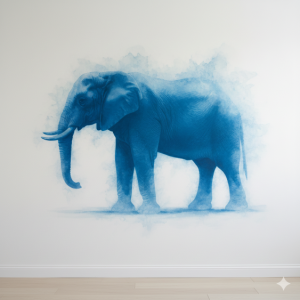
Wildlife Mural Painting of The Past: Survival and Symbolism
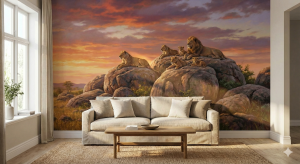
For most of human history, wildlife murals weren’t “art” in the decorative sense. They were functional or spiritual.
Prehistoric Roots
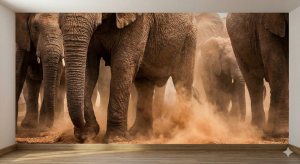
The earliest murals (e.g., Lascaux, Altamira) focused on animals like bison and horses. These were “art about food”. And vital records of the species necessary for survival, likely used for hunting rituals or communal storytelling.
Scientific Illustration (15th–19th Century)s
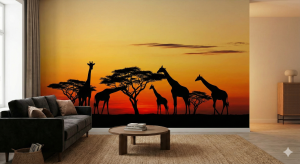
During the 15th to 19th centuries, wildlife mural art underwent a profound transformation. It shifted from symbolic icons to instruments of taxonomic accuracy. Driven by the era of global exploration, artists were commissioned to document “exotic” species with the precision of a scientist. This movement turned the walls of aristocratic manors and scholarly institutions into permanent “cabinets of curiosities,” showcasing the biological wealth of newly charted territories.
Albrecht Dürer (15th–16th Century)
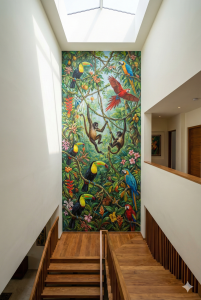
Although he never saw a rhinoceros in person, Dürer’s 1515 woodcut became the definitive scientific reference for centuries. His work moved away from medieval fantasy toward observational naturalism, emphasizing texture and form.
John James Audubon (19th Century)
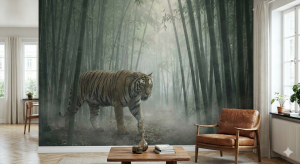
Famous for The Birds of America, Audubon revolutionized wildlife depiction. By painting birds life-sized and in active, lifelike poses. His work influenced muralists to treat walls not just as decoration, but as a scaled record of the natural world.
As global exploration expanded, wildlife murals and large-scale paintings shifted toward taxonomic accuracy. Artists like Audubon and Dürer influenced muralists to depict animals as scientific specimens, often on the walls of aristocratic manors to showcase exotic “discoveries.”
The Mexican Muralism Influence (Early 20th Century)
While not exclusively wildlife-focused, this movement shifted the “mural” from private decor to public property. It established the idea that a wall could hold a powerful social message, laying the groundwork for modern environmental murals.
The Current (2025–2026): “Artivism” and Biodiversity
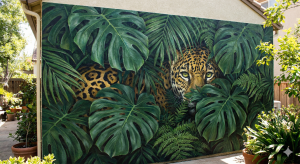
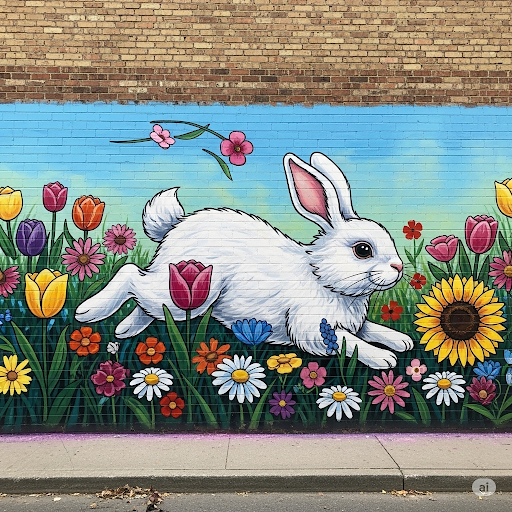
In 2025 and 2026, wildlife mural painting has transitioned from passive decorations to active urban ecological interventions. These “living walls” go beyond aesthetic appeal, serving as functional tools for environmental education and climate advocacy. Directly addressing the urgent need for ecosystem restoration and the preservation of global biodiversity.
The Rise of Artivism
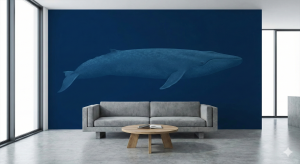
The “artivism” movement is redefining public spaces by making “invisible” species—those often overlooked or endangered—highly visible. Projects like the Endangered Species Mural Project and Street Art For Mankind lead this charge. In 2026, the trend has shifted from charismatic megafauna (lions and tigers) to localized biodiversity.
Artists are now highlighting species critical to specific local ecosystems. Such as the Blue-legged Crayfish in West Virginia or the Hawaiian Hoary Bat. These murals often incorporate QR codes, transforming walls into interactive educational hubs that link viewers to conservation data. And calls to action, fostering deep community pride and a “spirit of place.”
Hyper-Realism vs. Stylized Wildlife Mural Painting
The intersection of wildlife conservation and street art has birthed two distinct but equally powerful visual languages. One seeks to mirror the physical world to bridge the gap between humans and nature. And the other attempts to capture the invisible life force that makes a wild animal “wild.”
Photorealism: The Mirror of Empathy
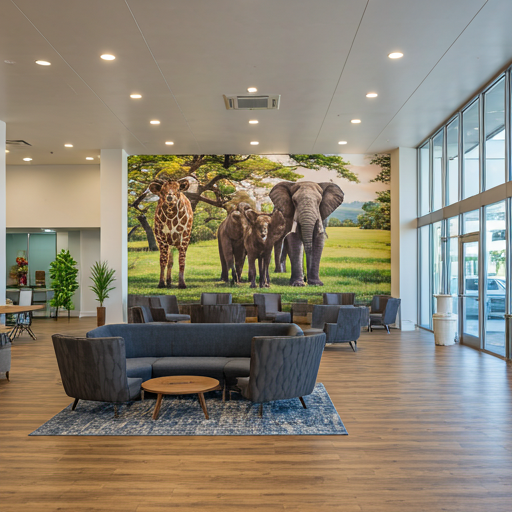
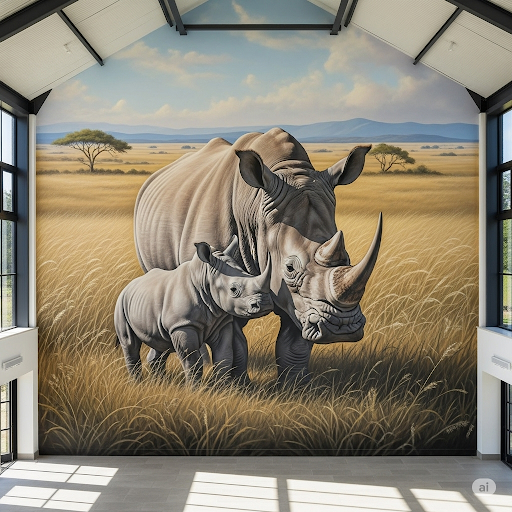
In photorealistic wildlife mural painting, technical mastery is used as a tool for advocacy. By rendering every minute detail—the dampness of a jaguar’s nose or the translucent veins in a dragonfly’s wing—artists remove the “artistic barrier,” forcing the viewer to confront the animal as a living, breathing entity. This high-fidelity approach triggers a deep empathetic response. It is difficult to ignore the plight of a creature when you can see the individual fibers of its fur. In urban environments, these “windows to the wild” serve as hyper-accurate reminders of the biological beauty we stand to lose.
Dynamic Stylization: The Pulse of the Wild
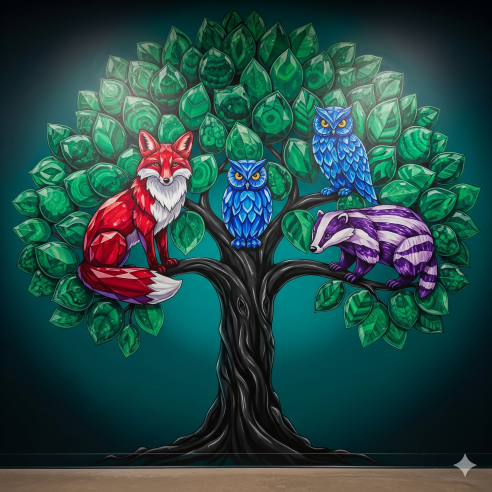
Conversely, artists like Fio Silva reject anatomical rigidity in favor of “fragmented movement.” This style utilizes surreal, flowing lines and explosive, vibrant palettes to represent the energy, mood, and untamable spirit of nature. Rather than a static specimen, the animal is depicted as a swirl of organic shapes—leaves turning into feathers or wings dissolving into wind. Stylization prioritizes the sensory experience of a wild encounter over literal documentation. It captures the “wildness” itself, suggesting that nature is a fluid, unstoppable force that cannot be contained by a camera lens.
The choice between these styles often depends on the mural’s environment. A photorealistic mural might offer a grounding, educational presence in a dense concrete jungle, while stylized movement can breathe life and “wild” energy into a rigid architectural space.
Interior “Biophilia” Wildlife Mural Painting
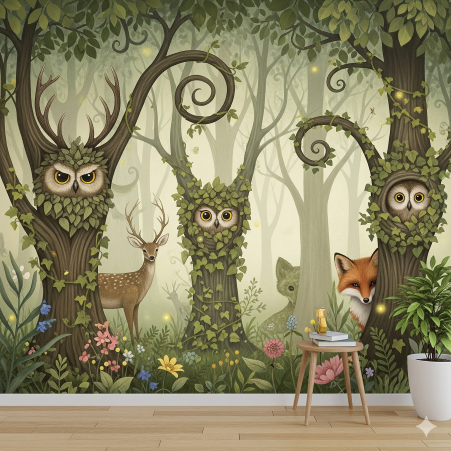
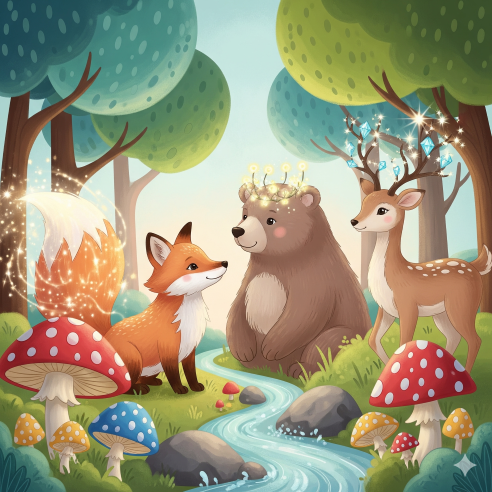
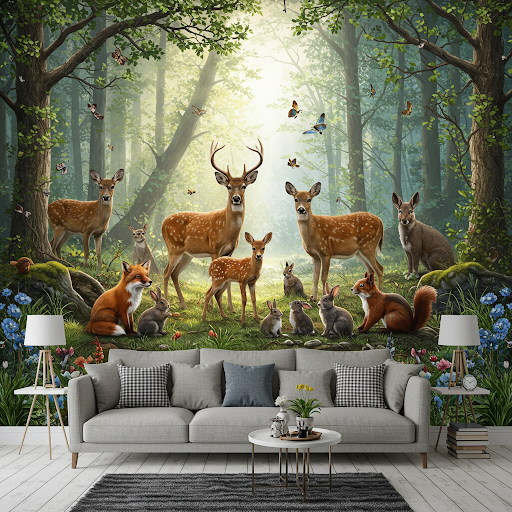
In 2026, the “Biophilia” movement matured from a corporate design standard into a deeply personal home decor philosophy. As we seek refuge from digital fatigue, modern wildlife murals have evolved into “serene woodland retreats“—transforming interior walls into living, breathing ecosystems that provide a psychological sanctuary.
Earth-Drenched Palettes
Design for 2026 and 2027 centers on color drenching with grounding, sophisticated tones. Burnt Sienna (a warm, clay-like terracotta) provides a connection to the soil and traditional craftsmanship, while Future Dusk—a deep, celestial blue-purple—introduces a sense of mystery and escapism. These palettes avoid the sterile whites of the past, instead using “tinted darks” to create a cocooning effect. By painting both walls and ceilings in these rich hues, the room feels like an intimate hollow within a forest, grounding the inhabitant in a stable, organic environment.
Sensory Textures
The modern wildlife mural painting is no longer a flat image. It is a multidimensional experience. Artists are increasingly incorporating tactile materials like preserved moss, sustainable cork, and heavy impasto brushwork to create “living” art. These 3D elements do more than look beautiful. They improve acoustics by absorbing sound and invite the sense of touch, which is often neglected in our screen-centric lives. A wall featuring a mix of flat forest moss and “ball moss” contours mimics the irregular rhythms of nature, bringing a literal piece of the outdoors into the sanctuary.
Atmospheric Nature
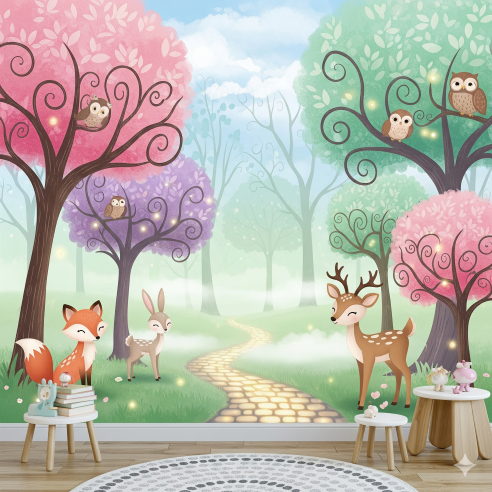
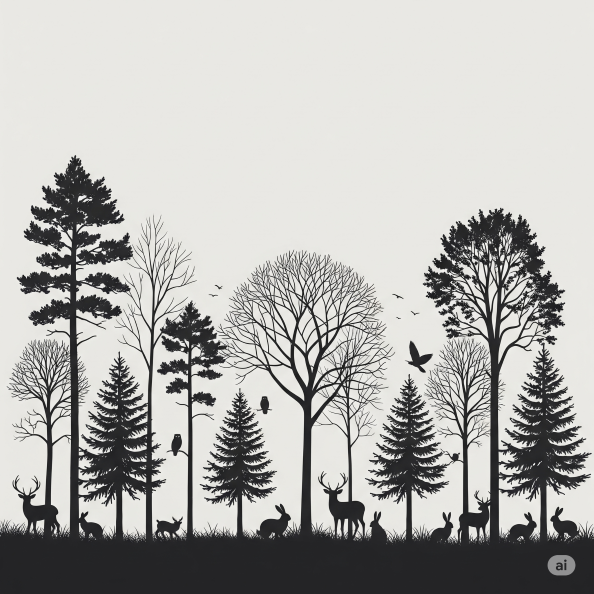
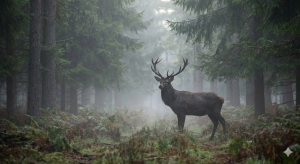
Rather than focusing on a single, literal animal, 2026 wildlife mural painting prioritizes atmospheric immersion. The focus shifts to foggy forests, abstracted foliage, and “wanderlust landscapes” that use horizontal gradients to make rooms feel wider and more expansive. These “misty rainforest” scenes utilize soft, blurred edges and watercolor-like transitions to trick the brain into a state of “soft fascination.” By drenching the space in layers of depth—from dark foreground silhouettes to distant, foggy ridgelines—the mural provides a mental escape route to a world untethered by technology.
Future Wildlife Mural Painting: Living Walls & Digital Layers
The next decade of wildlife murals is moving toward interactivity and sustainability.
Augmented Reality (AR) Wildlife Mural Painting
Future murals will act as digital portals. By scanning a QR code on a painted wing, viewers might see a 3D animation of the bird’s migration route or hear its song, turning a static wall into a nature documentary.
Air-Purifying Paints
Murals are being painted with specialized pigments that actually absorb 10$CO_2$ and pollutants from the air, making the artwork physically beneficial to the environment it depicts.
Thermochromic & Photochromic Inks
We are seeing the rise of “living” murals that change color based on temperature or UV light, perhaps “fading” a species away as temperatures rise to symbolize climate change.
AI Integration
Artists are beginning to use “Large Nature Models” to generate complex patterns of coral or foliage, ensuring that the biodiversity depicted is as accurate and diverse as possible.
Ephemeral Landscapes
A growing trend involves “art that doesn’t last”—murals made from natural dyes, moss, or sand that evolve and eventually disappear, reflecting the fragile cycle of life.