


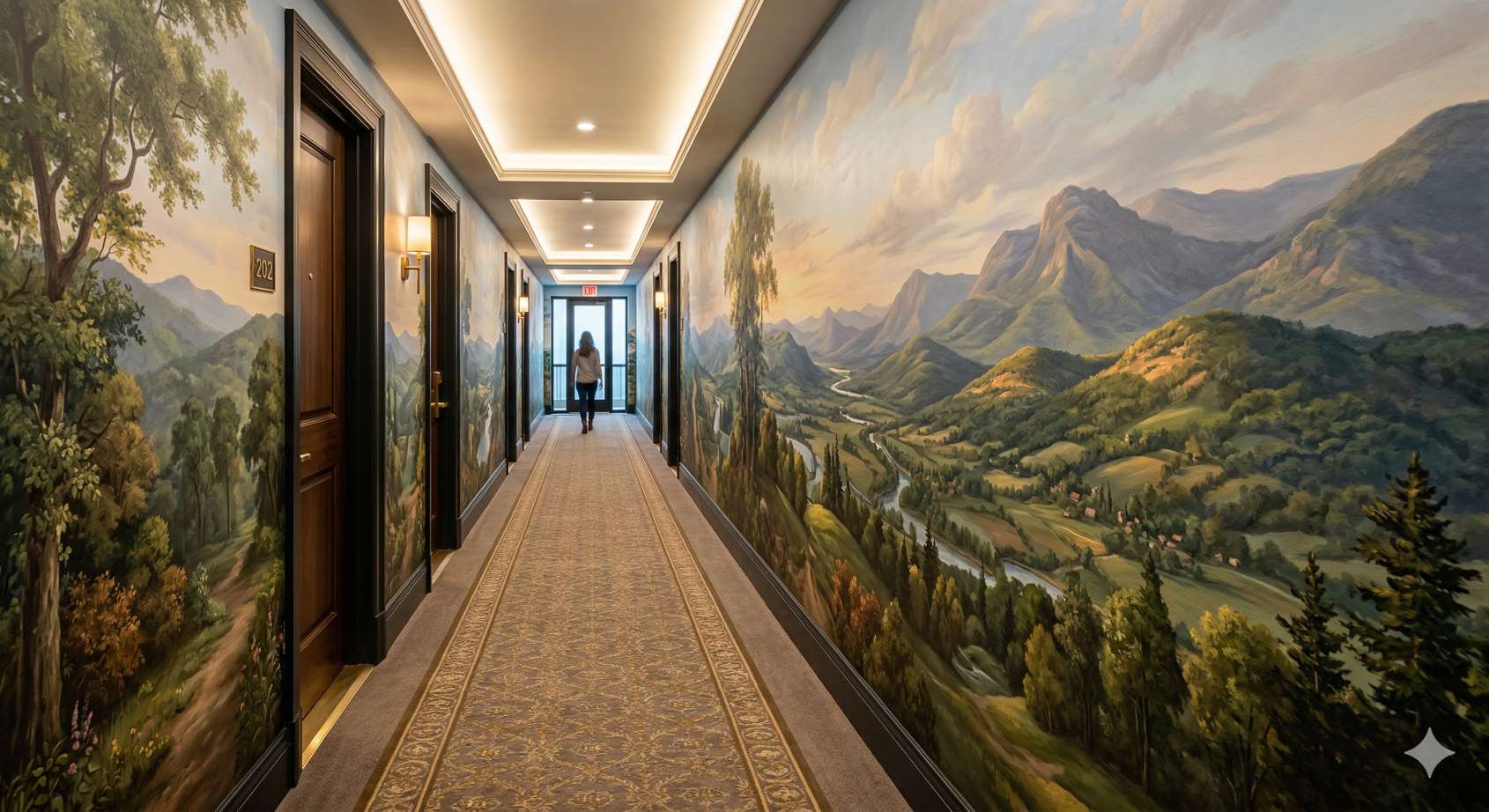
Description
Designing a hotel hallway wallpaper mural is a delicate balancing act. Unlike a guest room, where the goal is often comfort and rest, a hallway is a high-traffic “transitional space.” The design needs to guide the guest while standing up to the literal bumps and bruises of hospitality life. Every choice, from color palette to material, must withstand constant movement while maintaining the property’s aesthetic. In these windowless, narrow stretches, the mural serves as both a protective layer and a narrative bridge, transforming a purely functional thoroughfare into an immersive, branded journey that subtly directs the flow of guest traffic toward their final destination.
1. Hallway Wallpaper Mural Scale and Perspective
Hallways are often long, narrow, and lacking in natural light. The mural design must account for the viewing distance. Since guests view these walls from just a few feet away, the resolution must be crisp, yet the overarching composition needs to work from a distance to prevent the corridor from feeling like a claustrophobic, never-ending tunnel for arriving travelers.
Compression
A mural with a strong focal point at the end of a long corridor can make the hallway feel shorter and more inviting. By placing a bold visual “anchor” at the terminus, the eye is drawn forward, reducing the perceived fatigue of a long walk. This technique effectively breaks up monotony and creates a welcoming sense of arrival.
Expansion
Using “atmospheric perspective”—incorporating lighter colors and softer lines in the distance—or landscape murals with a sense of depth can make narrow corridors feel significantly wider. These designs trick the eye into perceiving a horizon line beyond the physical wall. This spatial illusion is essential for opening up tight, windowless spaces and reducing the “closed-in” feeling typical of hotel wings.
Repeat vs. Unique
A continuous, non-repeating mural creates a “gallery” experience. Whereas a subtle, repeating pattern provides rhythm without being overwhelming. Unique hallway mural designs tell a cohesive story as guests walk, making the transition feel like an exploration. Conversely, repeating patterns offer a predictable, calming cadence that feels more residential and less distracting, depending on the hotel’s specific brand identity and atmosphere.
2. Hotel Hallway Wallpaper Mural Durability and Maintenance
In a hotel, aesthetics are nothing without performance. The “correct” design is one that can survive a luggage cart. Frequent movement of heavy bags and housekeeping trolleys means the mural faces constant physical impact. A truly successful design must prioritize longevity, ensuring the visual appeal isn’t compromised by the inevitable wear and tear of a high-traffic hospitality environment.
Material
While Type II Vinyl is the standard for high-traffic areas, Silk fabric is an exceptional alternative for this hotel mural. It is equally durable, offering a robust, heavy-duty barrier against the constant impacts and moisture that would destroy standard wallpaper. Beyond its aesthetic appeal, this material meets strict Class A fire safety codes and is highly scrubbable and strip-resistant. Its ability to be frequently sanitized without fading the vibrant ink makes it the ideal solution for commercial corridors, ensuring this perspective mural maintains its pristine, spacious look.
Pattern Camouflage
Murals with high visual texture or intricate details are better at hiding the scuffs, scratches, and fingerprints that inevitably occur in high-traffic zones compared to flat, solid-color designs. Busy patterns, organic stone textures, or complex geometric layers distract the eye from minor surface damage. This strategic “visual noise” extends the life of the installation and reduces maintenance costs.
3. Wayfinding and Logic Hotel Hallway Wallpaper
A hallway is a map. The wallpaper should help guests understand where they are. In a large hotel, navigation can be disorienting. The mural serves as a continuous visual breadcrumb trail. By integrating logic into the design, the wallpaper becomes a functional tool that reduces guest anxiety, ensuring they feel confident navigating the corridors toward their specific room or exit.
Orientation
Designs can subtly change at “decision points” (like elevator banks or floor transitions) to signal a change in direction. By altering the pattern’s density or introducing a new accent color at corners and intersections, the mural acts as a silent navigator. This environmental cue helps guests instinctively recognize a shift in the building’s layout without constantly relying on overhead signage.
Floor Identity
Many hotels use unique mural themes for different floors to help guests instantly recognize if they’ve stepped off the elevator at the right level. By varying the color story or the specific botanical or geometric motifs on each level, you create a distinct “personality” for each floor. This visual shorthand is an effective way to improve the overall guest experience.
4. Lighting Integration
Hallways often rely on artificial light, which can drastically change how colors and textures appear. Unlike rooms with windows, these windowless stretches depend entirely on consistent, often directional, interior illumination. The mural must be designed to work with the specific color temperature and placement of the fixtures, ensuring the art doesn’t look washed out or unintendedly shadowed during various hours.
Wall Grazing
If the hallway uses recessed ceiling lights that “wash” the walls, a mural with physical or visual texture will look more dynamic. This lighting technique highlights the highs and lows of a textured surface, creating a sophisticated play of shadows. For murals, this means choosing a substrate with a slight grain or a design with deep, simulated 3D depth.
Lumen Output
Darker murals absorb light, which can make a hallway feel “moody” or “cramped” depending on the brand. Lighter, more reflective murals help bounce light in windowless corridors, increasing the perceived brightness without requiring additional fixtures. Selecting the right Light Reflectance Value (LRV) for the mural is a critical step in maintaining a safe, comfortable, and energy-efficient lighting environment.
5. Brand Narrative and Local Context
The hallway wallpaper mural is a prime opportunity to tell the hotel’s story. It acts as a silent brand ambassador, bridging the gap between a generic building and a memorable destination. By weaving specific heritage or brand values into the wallcovering, you create an immersive environment where the architecture speaks, fostering a deeper emotional connection between the guest and the property.
The “Sense of Place”
Modern hospitality trends lean heavily toward localism. This might involve abstracting local topography, flora, or historical maps into the design to give guests a sense of the city they are visiting. For instance, a Nairobi hotel might use stylized Rift Valley silhouettes or endemic floral patterns, grounding the interior design in its specific geographic and cultural surroundings.
Psychology of Color
Blues/Greens
Promote a sense of calm as guests approach their rooms. These cool tones lower the heart rate and reduce stress, making them ideal for long corridors where the goal is to transition the guest from the high energy of the city or lobby into a state of relaxation. They create a “sanctuary” feeling that begins well before the door.
Warm Neutrals
Create a high-end, residential feel. Tones like taupe, champagne, and soft ochre evoke a sense of timeless elegance and stability. These colors are less likely to fatigue the eye over multiple stays and provide a sophisticated backdrop that complements high-quality lighting, making the hotel hallway feel like an extension of a luxury private home or estate.
Bold Graphics
Used in boutique or lifestyle hotels to create an “Instagrammable” moment. High-contrast patterns and vibrant colors turn a functional passage into a social media backdrop. This strategy encourages guest engagement and organic marketing, as the hallway itself becomes a destination for photography, reflecting a brand that is energetic, modern, and unafraid to make a strong visual statement.