

Description
Types of 3D Lion Wallpaper Mural Effects
A 3D Lion Wallpaper Mural is a large-scale wall covering designed to create a visual illusion of depth. Making the lion appear as if it is stepping out of the wall or carved into it.
Unlike standard flat wallpaper, these murals use shadows, highlights, and perspective. And sometimes physical texture—to create a high-impact focal point.
When shopping, you will encounter two distinct ways “3D” is defined:
Visual 3D (Trompe-l’œil) Lion Wallpaper
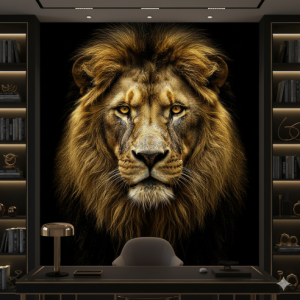
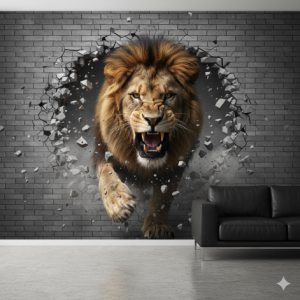
Visual 3D murals rely on the ancient art of trompe-l’œil (French for “deceive the eye”). These are technically flat, 2D prints on standard wallpaper material. But they use hyper-realistic shadows, forced perspective, and “vanishing points” to create an illusion of three-dimensional space. In lion murals, this effect is most powerful when depicting a lion “breaking through” a brick wall. Or emerging from a deep, black void. By strategically placing highlights on the lion’s mane and deep shadows behind its shoulders, the image tricks the brain into perceiving depth where none physically exists.
Physical 3D (Textured/Relief) Wallpaper
Physical 3D murals, often marketed as 5D or 8D, provide a tactile experience you can actually feel. Unlike flat prints, these use “embossed” or “UV-layered” printing technology to stack layers of ink or resin on the surface. This creates a physical “relief” where the lion’s features—such as its muscular brow, whiskers, or individual strands of hair—are raised above the background. This technique is frequently used to mimic the appearance of hand-carved stone, metallic sculptures, or thick oil paint brushstrokes. It adds a sophisticated, high-end “art gallery” texture to the wall that changes as light hits the raised edges.
3D Lion Wallpaper Mural Design Styles
Popular 3D Lion Wallpaper Murals have evolved from simple “photo stickers” into sophisticated interior design tools. They are primarily categorized by the specific “optical illusion” they provide.
Here is a look at the most popular designs currently trending:
1. The “Stone Relief”3D Lion Wallpaper
The Stone Relief 3D Lion Mural is widely considered the pinnacle of luxury lion decor in 2026. This design is engineered to replicate the grandeur of ancient Greco-Roman or Renaissance architecture. It creates the illusion that a massive lion sculpture has been meticulously hand-carved directly into your home’s structural walls. Unlike standard prints, it focuses on “bas-relief” artistry, where the subject stands out from a solid background with soft, realistic depth. It offers a timeless, majestic quality that transcends fleeting trends. And acts more like a permanent architectural feature than a temporary wall covering.
Aesthetic
The primary aesthetic is Majestic Sophistication. These murals typically feature a centered, front-facing lion’s head. Or a side profile with an incredibly detailed mane. The “3D” trick relies on hyper-realistic shadowing around the eyes and snout, making the features appear to hold physical weight and volume. It mimics the texture of porous limestone or polished marble, giving the wall a “cold to the touch” visual feel that exudes strength and stability.
Colors
To maintain the illusion of carved stone, these murals utilize Monochrome and Metallic palettes. Common choices include:
Concrete Grey & Slate
This industrial-inspired design utilizes a palette of Concrete Grey and Slate to mimic a heavy, hand-carved stone monument. It creates a “cold to the touch” visual texture that exudes permanence and raw architectural strength, perfect for modern, minimalist, or industrial-themed interiors.
Warm Ivory & Sandstone
The Warm Ivory & Sandstone 3D Lion Wallpaper is a premium design that mimics the look of a classical stone carving. It creates an inviting, soft, and classical atmosphere, making the wall appear as if it were a hand-sculpted architectural masterpiece.
This design features a “bas-relief” style, where the lion’s head and mane emerge with realistic volume. The soft, natural textures of the sandstone provide a sophisticated, matte finish that feels timeless, dignified, and visually “grounded” compared to more modern styles.
Antique Gold & Bronze Accents
The Antique Gold & Bronze Accents 3D Lion Mural is a high-end design that mimics the opulent feel of a metallic monument. It combines the prestige of “Old World” wealth with a powerful, modern 3D depth effect.
This design features a “relief sculpture” look where the lion’s features are highlighted with metallic sheens. The 3D effect is created by the way “light” reflects off the printed golden mane, making it appear as if it is made of solid, polished metal. The deep bronze shadows add a layer of weighted realism, giving the lion a commanding, three-dimensional presence that seems to shift as you move through the room.
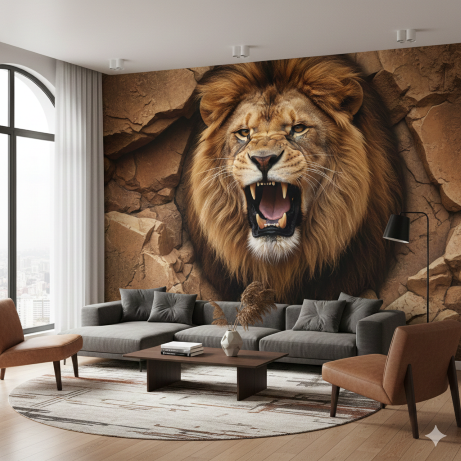
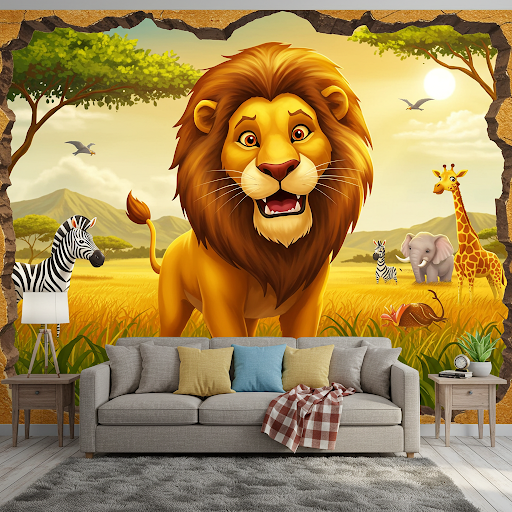
2. The “Breakthrough” or “Cracked Wall” 3D Lion Wallpaper
The Breakthrough design is a masterclass in high-action 3D illusion, specifically engineered to create a dramatic sense of movement and raw power. This classic “trompe-l’œil” style is designed to trick the viewer into believing the physical boundary of the room has been breached. It serves as a high-impact focal point that demands immediate attention, making it perfect for those who want their decor to make a bold statement. It transforms a static, flat surface into a dynamic scene, bringing a sense of wild, untamed energy directly into the modern interior.
Aesthetic
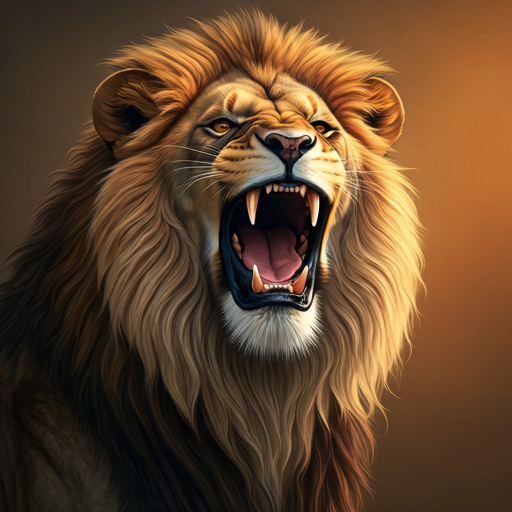
The aesthetic is defined by dynamic realism and grit. The mural typically depicts a powerful lion—often mid-roar—literally “shattering” a brick, stone, or concrete wall. The 3D effect is achieved through hyper-realistic renderings of flying debris, jagged “cracked” edges, and deep shadows within the fissures. By placing the lion “behind” the broken pieces, the mural creates a massive sense of depth, making the animal appear as if it is physically stepping out from a hidden dimension and into your living space.
Colors
The palette centers on High-Contrast Earth Tones. The lion is rendered in realistic oranges, golds, and tawny browns, which pop intensely against the muted, industrial background. The “shattered” wall is usually depicted in shades of charcoal grey, dusty brown, or slate.
3. The “Geometric / Low-Poly” 3D Lion Wallpaper Mural
The Geometric or Low-Poly 3D Lion Mural is a modern, digital-inspired take on traditional wildlife art. It fits perfectly in contemporary apartments, blending the organic majesty of the lion with a sleek, mathematical aesthetic for a truly cutting-edge wall feature.
Aesthetic
The aesthetic is defined by mathematical precision and digital artistry. Instead of realistic fur, the lion’s face and mane are constructed from hundreds of sharp, interlocking 3D triangles, known as “polygons.” This “Low-Poly” technique creates a “crystalline” or “wireframe” structure that appears to jut out from the wall. The 3D illusion is driven by the unique shading applied to every individual facet. By treating each triangle as a different surface reflecting light, the mural creates a multi-dimensional, sculptural effect that mimics a faceted gemstone or a futuristic digital render.
Colors
These murals often utilize Bold Contrast and Metallics. You will frequently see deep matte blacks paired with “neon-on-black” color schemes, such as electric blue or vibrant orange. Metallic finishes like silver, chrome, or copper are also popular for a premium “tech” feel.
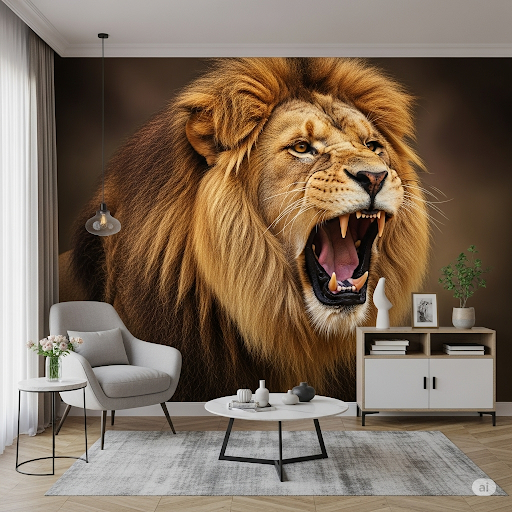
4. The “Dark Mode” Hyper-Realistic Portrait
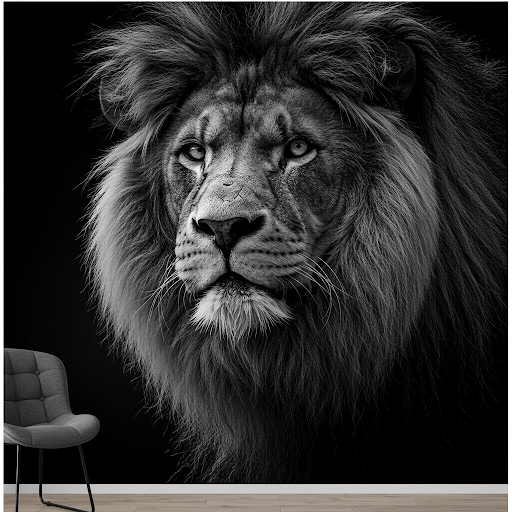
The Dark Mode Hyper-Realistic Portrait is a masterclass in atmospheric depth, moving away from loud, physical illusions like “shattered brick” in favor of sophisticated lighting. This design relies on the high-contrast “chiaroscuro” technique, where a meticulously detailed lion emerges from a pitch-black, infinite void. By eliminating the background entirely, the mural removes the viewer’s sense of a flat wall, making the lion appear to float in a three-dimensional space. The 3D effect is achieved through “lighting depth”—where only the tips of the mane and the contours of the face are illuminated, tricking the eye into perceiving a solid, living form projecting forward into the room.
Aesthetic
The aesthetic is Intense and Intimate. It focuses on “Micro-Realism,” highlighting the moisture in the lion’s eyes, the individual texture of whiskers, and the golden sheen of its fur against the darkness. It creates a powerful, quiet presence that feels both regal and mysterious.
Colors
The palette is strictly Minimalist and High-Contrast. It is dominated by deep, “True Black” backgrounds which allow the rich golden yellows, burnt oranges, and creamy whites of the lion’s face to radiate. This narrow color range ensures the mural feels like a high-end photograph rather than a standard wallpaper.
5. The “Biophilic” Jungle Depth
The Biophilic Jungle Depth Mural is a sophisticated design that uses the principle of “parallax layering” to transform a flat wall into a sprawling, multi-dimensional ecosystem. By blending the lion’s image with tiered levels of 3D foliage, this style creates a “window into the wild,” effectively pushing the visual boundaries of the room outward. It leans into the biophilic design trend, which seeks to connect indoor spaces with the natural world. Instead of a single flat image, the mural uses foreground leaves that appear “closer” to the viewer. And misty background trees to create a sense of vast, breathable distance.
Aesthetic
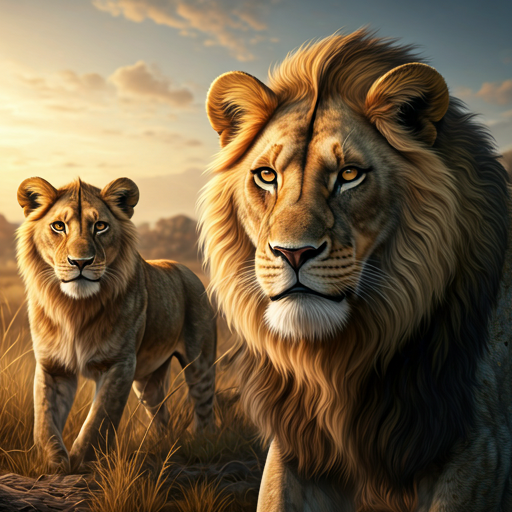
The aesthetic is Lush and Immersive. It focuses on “Visual Layering,” where the lion is partially obscured by large, 3D-shaded tropical leaves or ferns. These elements are rendered with soft drop-shadows on the lion’s face, creating a realistic sense of light filtering through a canopy. The result is a high-definition, deep-focus look that feels like a professional wildlife photograph taken from a hidden vantage point, offering a serene yet powerful connection to the jungle.
Colors
The palette is dominated by Rich Botanicals and Earth Tones. It features a vibrant spectrum of emerald, forest, and sage greens, contrasted against the lion’s natural golden-brown hues. Deep umbers and misty teals are often used in the background layers to enhance the feeling of atmospheric depth and humidity.