





Description
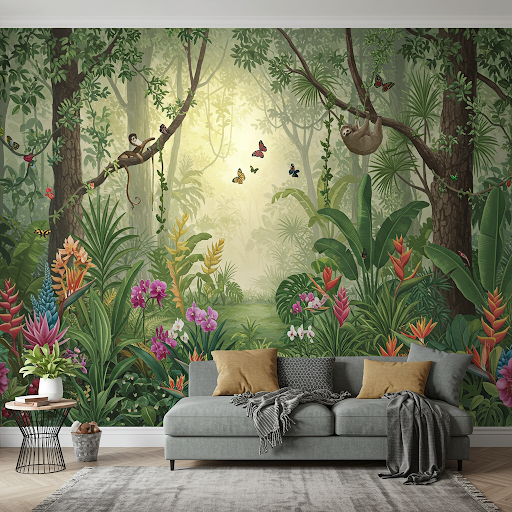
African Jungle Wallpaper Mural is a specific category of biophilic design that focuses on the continent’s dense, tropical ecosystems—specifically the Congo Basin, the forests of West Africa, and the volcanic slopes of Rwanda.

It is distinct from general “Tropical” wallpaper (which usually features Amazonian parrots or Caribbean palms) and “Safari” wallpaper (which features dry savanna and acacia trees). African Jungle Wallpaper focuses on depth, humidity, and lush greenery.

The African jungle wallpaper genre captures the “Green Heart of Africa.” It creates an immersive, escapist atmosphere that feels oxygen-rich and wild.
The Palette
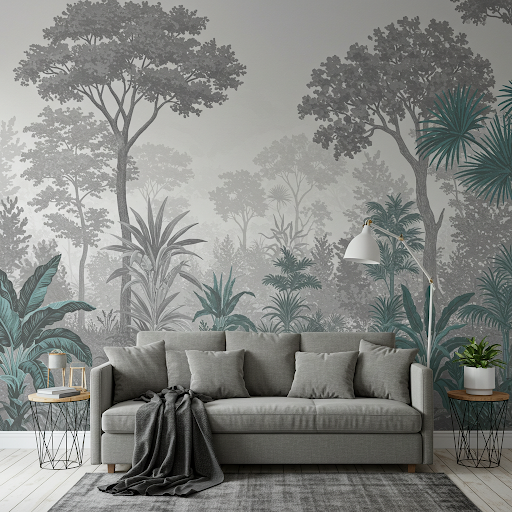
Dominated by deep, moody Emerald Greens, mossy Olives, and mist-grey accents. It avoids the dry yellows/browns of the savanna.
The Vibe
Mysterious, serene, and luxurious. It is often used to create a “cocooning” effect in a room.
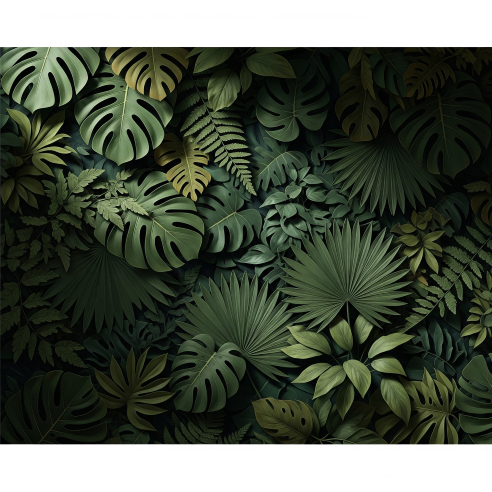
The “Congo Basin” (Deep & Moody) African Jungle Wallpaper
The Focus: The Green Heart of Africa
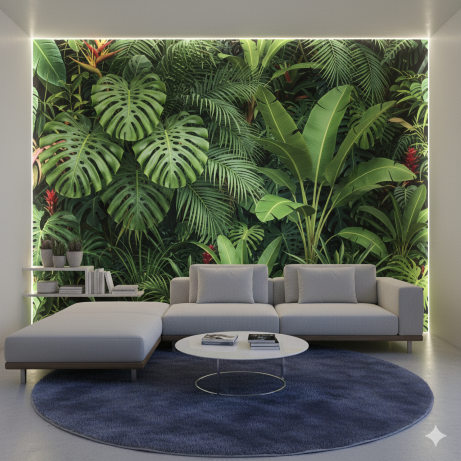
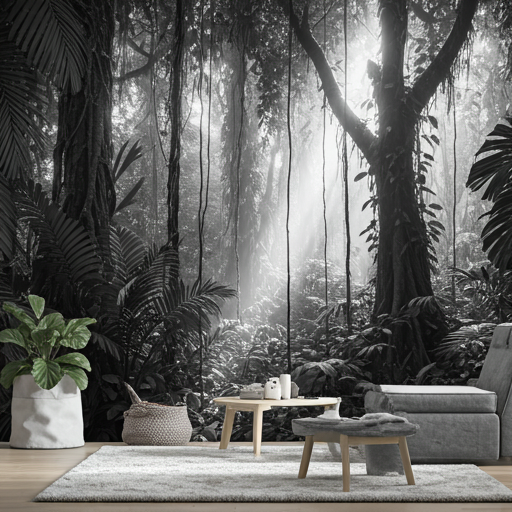
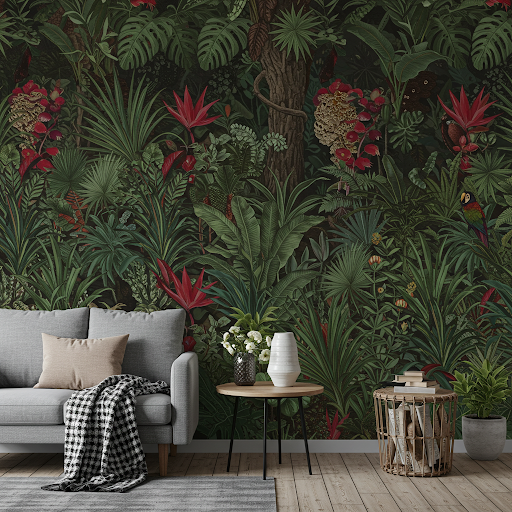
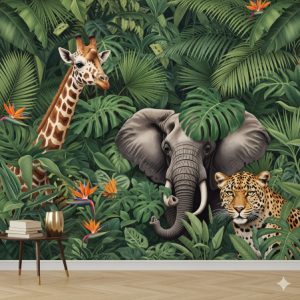
This style immerses the viewer in the raw density of the Congo Basin, the world’s second-largest rainforest. It moves away from the sun-drenched, airy aesthetics of typical tropical wallpapers to capture the humid, shadowy, and claustrophobic beauty of the jungle floor. It celebrates the feeling of being completely enveloped by nature, emphasizing the sheer scale and ancient biomass of this critical ecosystem.
The Visual Infinite Green Depth
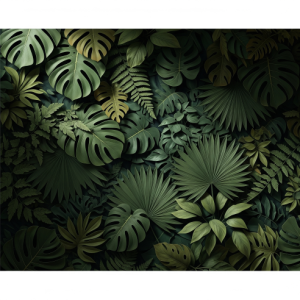
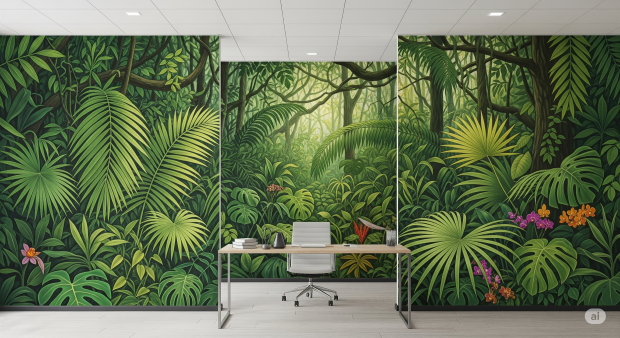
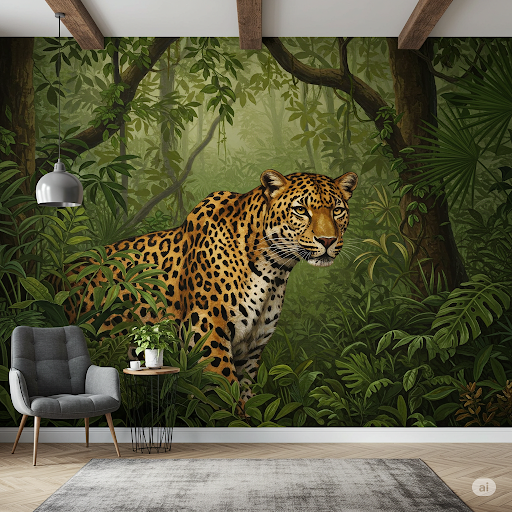
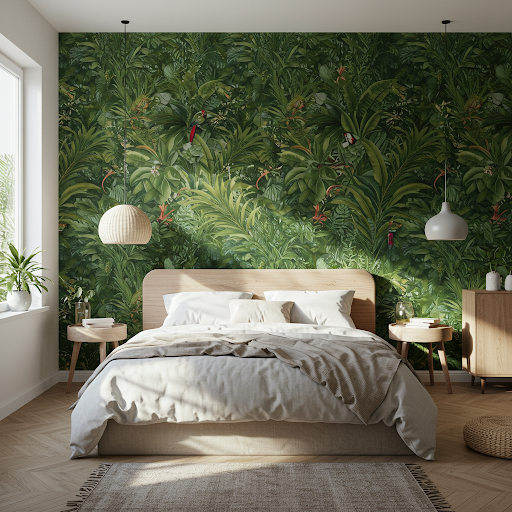
The visual composition relies on layers of foliage. Foreground leaves are sharp and detailed, while background layers fade into mist and shadow, creating a trompe-l’œil effect of infinite depth. The background color is deliberately dark—often Midnight Charcoal, Deep Forest Green, or Indigo—to simulate the canopy’s ability to block out the sun, creating a “twilight” atmosphere even in a brightly lit room.
Key Elements
Flora Giants of the Understory
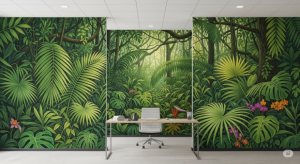
The botany is supersized and specific. It features massive, architectural plants like the Ensete (Wild Banana) with its paddle-shaped leaves, towering Tree Ferns that look prehistoric, and twisting Liana vines that snake vertically through the design. This creates a vertical rhythm that draws the eye upward, mimicking the height of the rainforest trees.
Fauna: The Shadow Dwellers
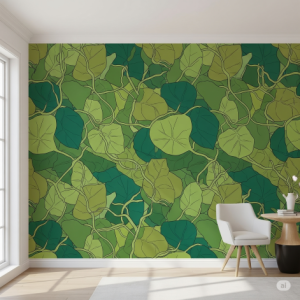
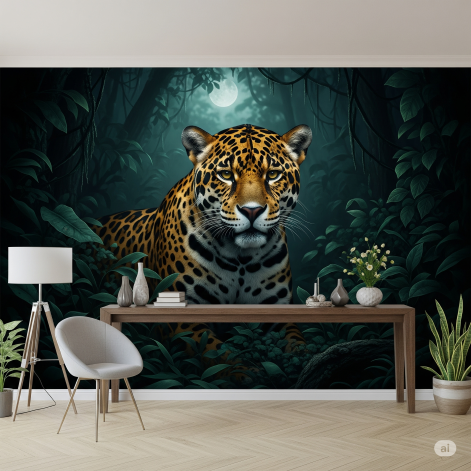
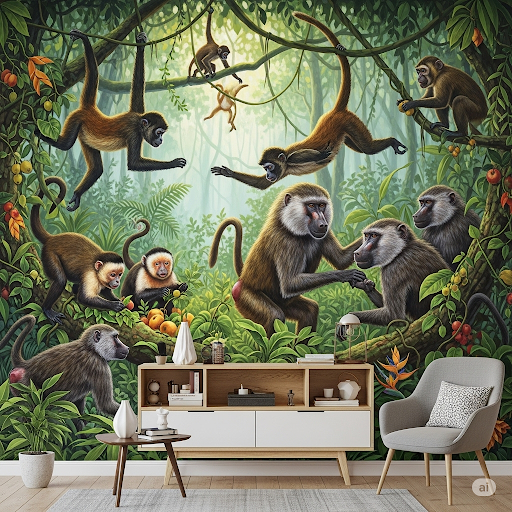
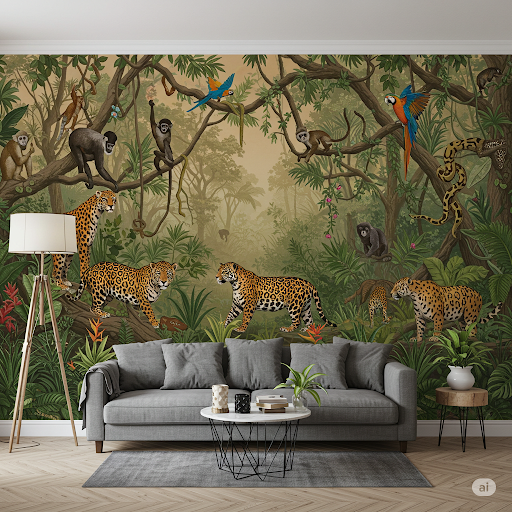
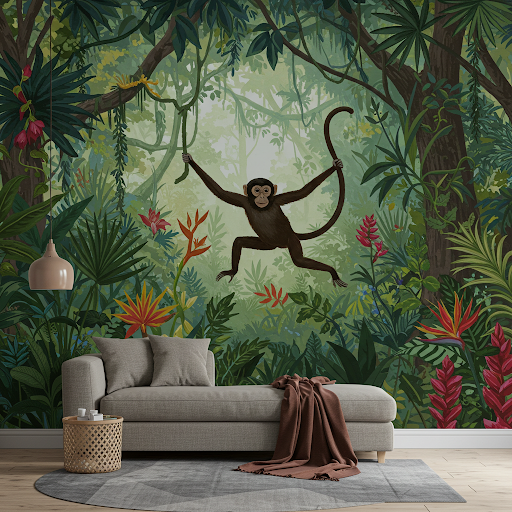
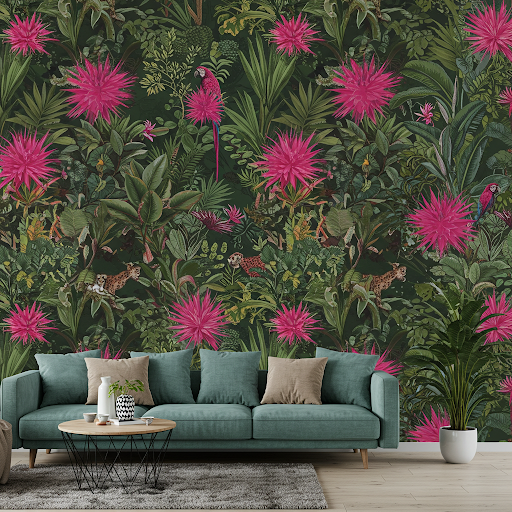
Unlike safari wallpaper murals, where animals are in plain sight, here the fauna is elusive. The animals are “shadow dwellers”—a Leopard draped lazily over a high branch, the dark silhouette of a Mountain Gorilla peering through the ferns, or a Chimpanzee mid-swing. They are hidden gems within the pattern, rewarding patience and close observation.
Best For
Powder rooms, intimate dining spaces, or bedrooms where you want a dark, cozy atmosphere.
Botanical Illustration African Jungle Wallpaper Aesthetics
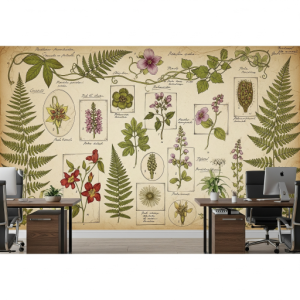
The Inspiration: The Age of Discovery
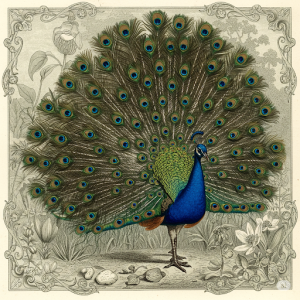
This aesthetic captures the romance and curiosity of the 19th-century Age of Exploration. It draws direct inspiration from the field journals, scientific lithographs, and intricate travel sketches of early botanists who documented Africa’s unknown flora. It blends scientific rigor with artistic wonder, turning the wall into a historical archive of discovery.
The Visual: The Textbook Wall
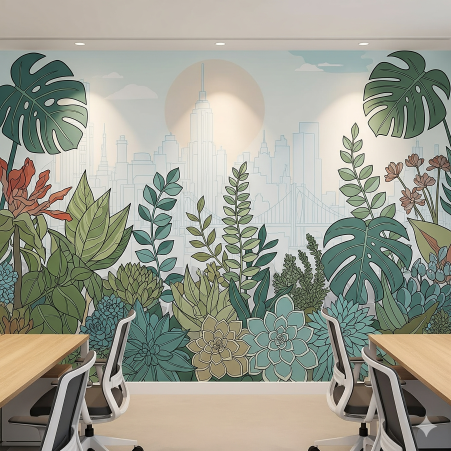
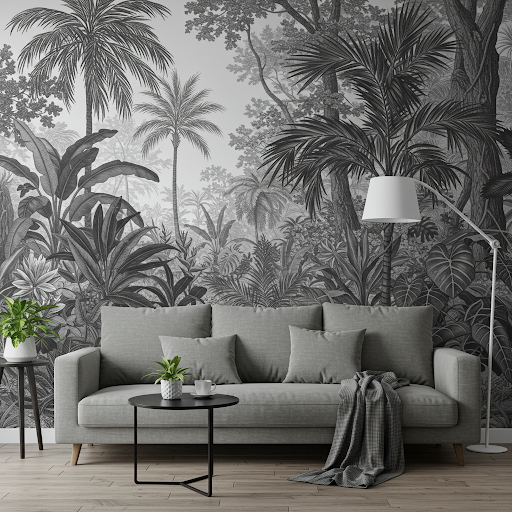
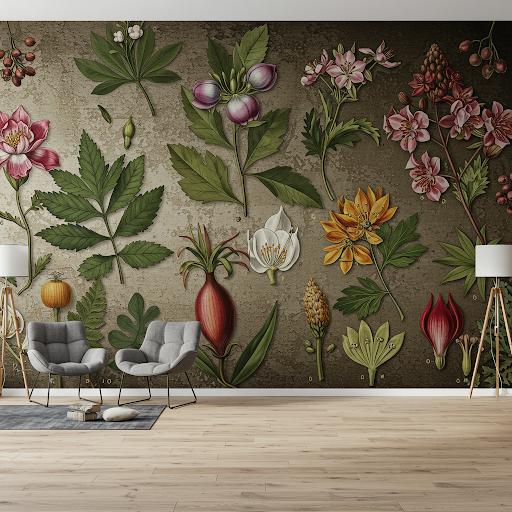
The design relies on precision and negative space. It features detailed, fine-line ink etchings or soft, hand-painted watercolors that prioritize clarity over chaos. The wall is treated like a page from a vintage biology textbook or an antique encyclopedia blown up to architectural scale, offering a clean, airy, and sophisticated composition.
Key Elements
Flora Botanical Accuracy
Authenticity is paramount. The design features taxonomically accurate drawings of iconic African species, such as the architectural Strelitzia (Bird of Paradise) or the flaming Gloriosa Lily. These botanical specimens are isolated against a background of aged parchment, warm cream, or tea-stained paper, emphasizing their structural beauty without visual noise.
Fauna Avian Jewels

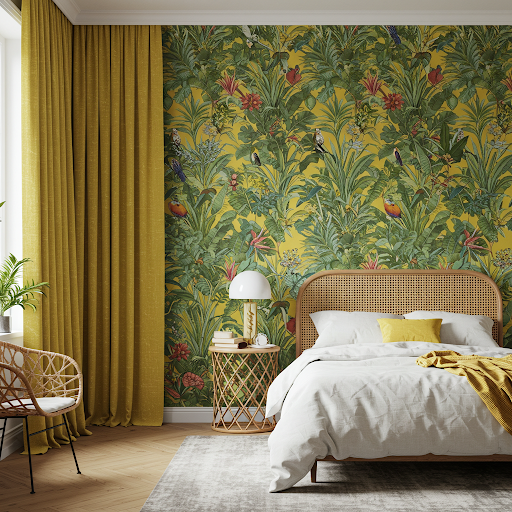
Instead of heavy mammals, this style highlights the avian jewels of the forest canopy. It features the intelligent red tail of the African Grey Parrot, the prehistoric casque of the Hornbill, or the vibrant green crest of the Turaco. These birds add delicate splashes of color to the otherwise muted, sepia-toned palette.
Best For
Home offices, hallways, or sophisticated living rooms (Colonial/British style).
Gold & Glamour African Jungle Wallpaper
The Concept: Opulence in the Wild
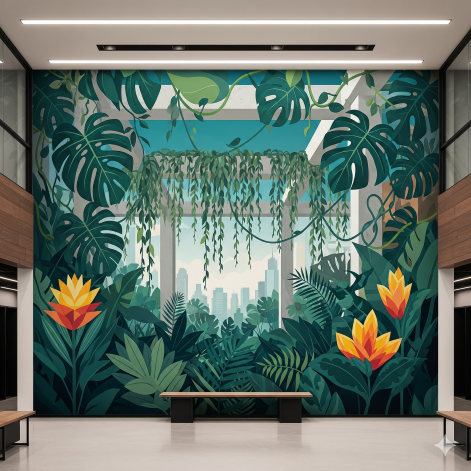
The opulence in the wild style is a stylized, decorative interpretation of the jungle theme, designed specifically for luxury interiors. It moves away from realism and biological accuracy to embrace fantasy and opulence. It treats the jungle not as a biological ecosystem, but as a source of pattern and texture to be elevated with high-fashion materials.
The Visual Metallic Fusion
The visual language creates a fusion between the organic and the man-made. Lush, dark jungle motifs are seamlessly blended with metallic elements. The deep greens of the foliage are often offset by shimmering highlights, creating a wall covering that catches the light and changes mood as the day progresses from morning sun to evening ambiance.
Key Elements Gilded Nature
The design features distinct luxury upgrades: gold-leafed palm fronds that shimmer against matte black backgrounds, metallic copper leopards prowling through teal foliage, or rigid Art Deco geometric patterns interwoven with twisting organic vines. This contrast between the wild chaos of nature and the ordered shine of metal creates a sophisticated, “Great Gatsby meets the Congo” aesthetic.
Best For
High-end bars, hotel lobbies, or feature walls in a glam master suite.
Key Flora & Fauna (The African Distinction)
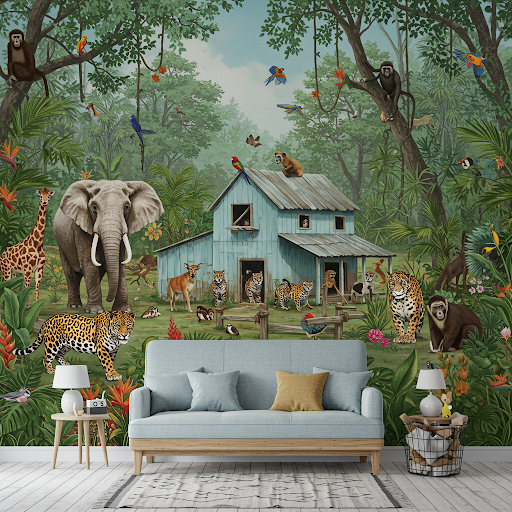
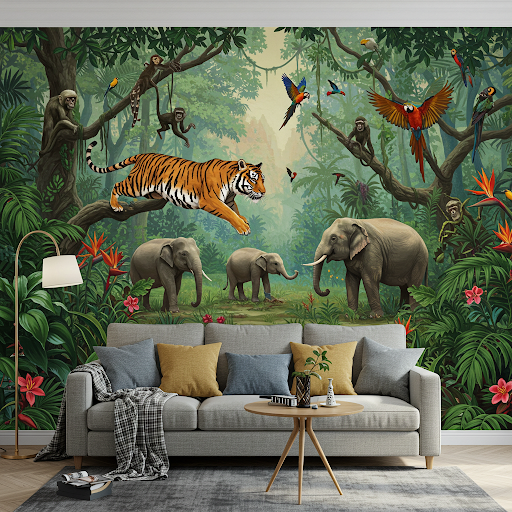
To ensure authenticity, an African Jungle Wallpaper Mural should feature specific regional biology, distinguishing it from Amazonian or Asian themes.
Authenticity in African Jungle Wallpaper Murals: The Flora & Fauna Guide
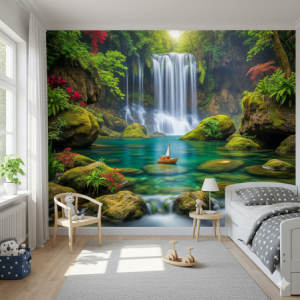
To create a truly authentic African Jungle Wallpaper Mural, one must act as a curator of regional biology. Many “jungle” designs lazily mix species from South America, Asia, and Africa, creating a generic “fantasy forest.” The distinction lies in the specific botanical and zoological details that define the Congo Basin and the West African rainforests.
Here is the breakdown of what to include and what to avoid to ensure your mural is geographically accurate.
1. Plants to Look For (The Botany)
Ensete Ventricosum (False Banana)
The Look:
These are the giants of the African landscape. Unlike the split, feathery leaves of a coconut palm, Ensete leaves are massive, solid paddle shapes with a thick, often red, central rib (midrib).
Why it matters:
It instantly provides scale and “heaviness” to the design, grounding the mural in the East African highlands and Ethiopian aesthetic.
Strelitzia (Bird of Paradise)
The Look:
The iconic orange and blue flower resembles the head of a crane.
Why it matters:
It is the definitive floral symbol of Southern and East Africa. It adds a sharp, architectural spike of color that contrasts beautifully with soft green foliage.
Sansevieria (Snake Plant / Mother-in-Law’s Tongue)
The Look:
Vertical, sword-like leaves with variegated green and yellow banding.
Why it matters:
Native to West Africa (from Nigeria to the Congo), this plant adds verticality and a structured, “modern” texture to the jungle floor, distinct from the leafy chaos of ferns.
Coffee Arabica
The Look:
Glossy, dark green leaves with clusters of small white flowers or bright red “cherries.”
Why it matters:
Native to the Ethiopian highlands, this plant adds a subtle, historical nod to Africa’s gift to the world. It provides detailed, small-scale texture against larger fronds.
2. Animals to Look For (The Zoology)
Primates (The Crown Jewels)
The Species:
Mountain Gorillas, Colobus Monkeys (Black & White), and Chimpanzees.
Why it matters:
Africa is the “Primate Capital” of the world. A mural featuring a Gorilla conveys the specific mood of the Virunga Mountains or Bwindi Impenetrable Forest—moody, misty, and ancient. The Colobus monkey, with its flowing white hair, adds a sense of motion in the high canopy.
Cats (The Shadow Hunters)
The Species:
Leopards.
Why it matters:
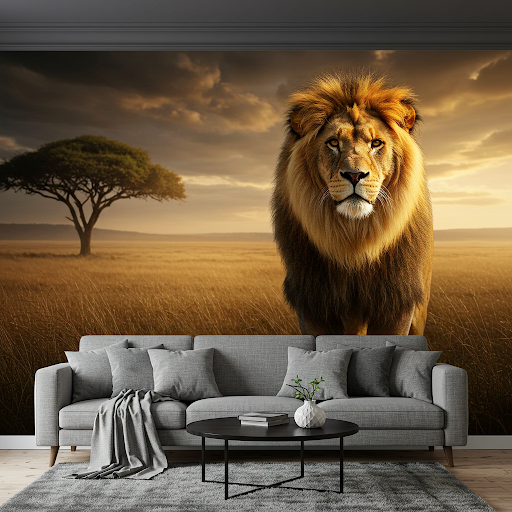
Lions are savanna animals; they do not live in the deep jungle. The Leopard is the true king of the African rainforest. Depicting a leopard resting high in a tree branch is biologically accurate and adds a sense of elegant danger.
Birds (The Canopy Jewels)
The Species:
Hornbills, Turacos, and Sunbirds.
Why it matters:
The Hornbill (with its large casque beak) provides a prehistoric silhouette.
But the Turaco provides splashes of vivid green and red pigment unique to African birds.
The Sunbird is the African ecological equivalent of the Hummingbird (which is only found in the Americas), adding iridescent shimmer to flower scenes.
3. What to AVOID (The Common Mistakes)
If you see these in a design labeled “African Jungle Wallpaper,” it is a generic mix, not an authentic African mural:
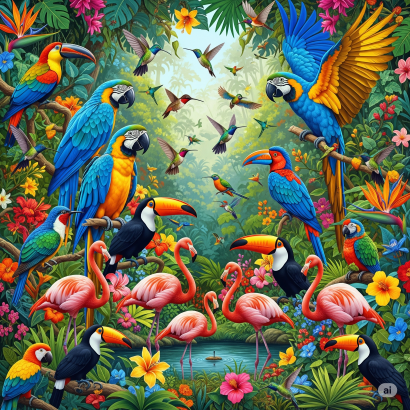
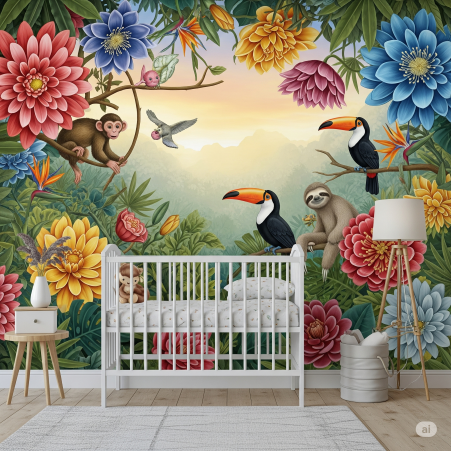
Toucans
These large-beaked birds are exclusively South American (Amazon). Replace them with Hornbills.
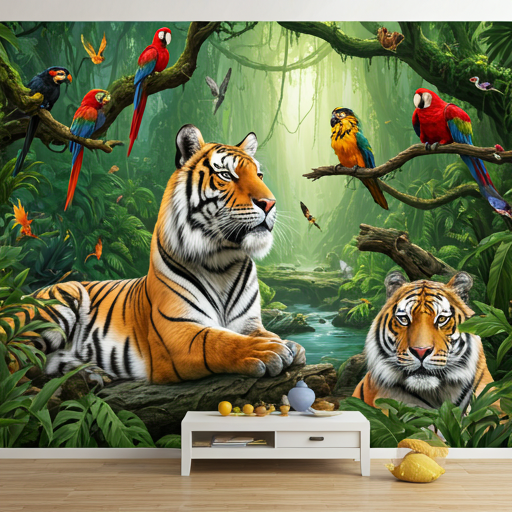
Macaws
These colorful parrots are from the Amazon. Replace them with African Grey Parrots.
Tigers
Tigers are Asian (India/Siberia). They have never lived in the wilds of Africa. Replace them with Leopards.
Sloths
These slow-moving mammals are South/Central American. Replace them with Pottos or Bushbabies (Galagos).
Summary Comparison Table
| Style | Congo Basin | Vintage Explorer | Afro-Luxe |
| Mood | Dark, Dense, Mysterious | Scientific, Nostalgic, Light | Glamorous, Decorative, Shiny |
| Dominant Color | Dark Emerald / Black | Sepia / Cream / Sage | Gold / Black / Teal |
| Key Animal | Leopard / Gorilla | Hornbill / Parrot | Stylized Big Cats |
| Best Room | Powder Room / Bedroom | Study / Hallway | Bar / Lounge |