






Description
African Music Wallpaper Mural is a vibrant category of interior wall art that visually translates the continent’s profound sonic heritage—from ancient griot traditions to modern Afrobeats—into immersive spatial design.
It is distinct from general “tribal” decor. And specifically captures the kinetic energy, rhythm, and communal spirit of African musical performance.
The Echoes of Heritage
Historical African Music Wallpaper murals serve as visual archives, preserving the continent’s sonic ancestry on a grand scale. These designs bypass modern pop culture to focus on the sacred roots of rhythm, depicting traditional ceremonies, griot storytelling circles, and village festivities.
The imagery acts as a window into the past, featuring hyper-realistic or stylized paintings of indigenous instruments like the Djembe, Kora, Mbira, and Balafon. The palette is deeply grounded in the earth, utilizing warm ochres, rich terracottas, and savannah greens. These murals are not just decoration. They are educational and reverent, often placed in cultural centers or sophisticated lounges to honor the communal, spiritual function of music in pre-colonial African society.
1. African Music Wallpaper Rhythm & Storytelling
African Music Wallpaper: Rhythm & Storytelling
The Core Philosophy: Visual Syncopation
The defining characteristic of African music wallpaper is “Visual Syncopation.” Unlike Western music notation, which is linear and reads strictly left to right, African musical art is often circular, layered, and polyrhythmic. The wallpaper designs reflect this structural complexity through repeating geometric patterns, overlapping silhouettes, and bold, vibrating color contrasts.
These elements work together to make the wall feel like it is physically “pulsating,” forcing the viewer’s eye to jump and dance across the surface rather than glide smoothly. It captures the “off-beat” energy that defines the continent’s sound.
The “Call and Response” The Visual Dialogue
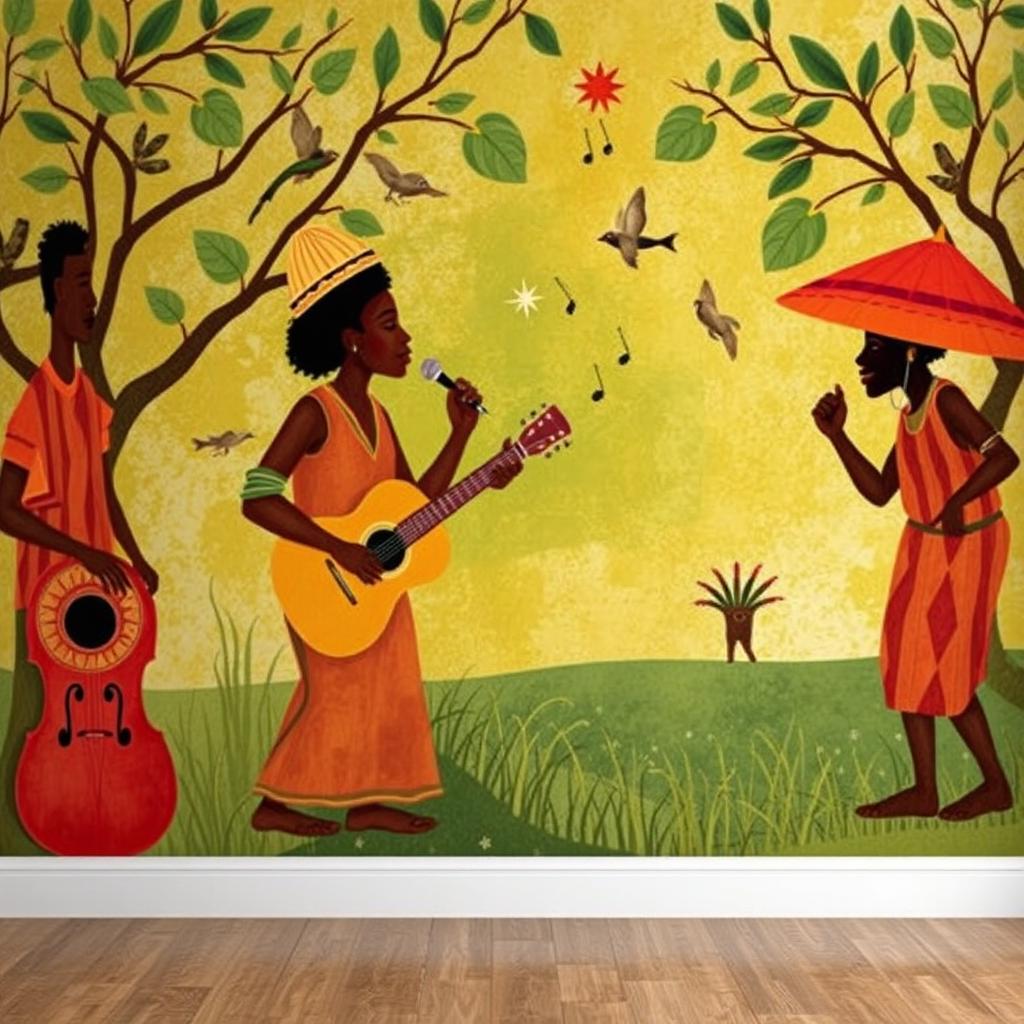
Many murals capture the essence of “Call and Response” by depicting a clear visual dialogue between a lead musician and a supporting chorus of dancers or drummers. This layout symbolizes the communal nature of the art form. The central figure is not a soloist in isolation, but a catalyst for the group’s collective energy, visually representing the inseparable bond between the performer and the community.
Ancestral Connection Sacred Artifacts
In these designs, instruments are depicted not merely as tools for entertainment. But as sacred artifacts that bridge the gap between the living and the dead. The intricate detailing on a Kora or the weathered wood of a Djembe is rendered with reverence, positioning the instrument as a spiritual conduit that connects the modern room to centuries of lineage and history.
2. The Three Primary African Music Wallpaper Design Categories
A. The “Roots” (Traditional Heritage)
The Focus Authentic Representation
The “Roots” design prioritizes historical accuracy and cultural reverence. It avoids caricature, focusing instead on the true craftsmanship of indigenous instruments and the sanctity of ceremonial life. The art serves as an ethnographic record, showcasing the specific attire, posture, and ritualistic context of the musicians, ensuring the design feels like a preserved piece of heritage rather than generic decor.
Key Imagery
The Djembe & Talking Drum Tactile Craftsmanship
These designs often feature hyper-realistic, macro-style illustrations that highlight the tactile nature of the instruments. By zooming in, the wallpaper highlights the porous texture of the stretched goat skin, the tension ropes, and the rough grain of the carved wood. It treats the drum not just as an instrument, but as a sculptural masterpiece.
The Kora & Balafon Contextual Setting
Depictions of these intricate instruments are often placed within their natural environment, set against the warm glow of a savannah sunset or the communal shade of a village “Bantaba” (meeting place). This context creates a narrative, suggesting that the music is being played for a gathering, reinforcing the social and storytelling function of these melodic tools.
Color Palette
Earthy, warm tones—Terracotta, Ochre, Mud-cloth Black, and Deep Mahogany.
Best For
Cultural centers, high-end hotel lobbies, or quiet listening rooms.
B. The “Afro-Vibrant” (Abstract Rhythm)
Visualizing the Vibe
This design philosophy moves away from literal realism to capture the feeling of the beat. It uses optical illusions and aggressive color theory to replicate the high energy and joy of an Afro-pop or Soukous track. The goal is to translate auditory vibrations into visual frequencies, making the silence of the room feel loud, celebratory, and kinetic.
Key Imagery
Textile Fusion Geometric Polyrhythms
This style integrates the iconic motifs of African textiles—specifically the interlocking patterns of Kente or the geometric storytelling of Bogolanfini (Mudcloth)—to create a “wall of sound.” The sharp zig-zags, bold diamonds, and stepped pyramids visually mimic the rapid, staccato nature of high-tempo percussion, turning the wall into a visual representation of a drum solo.
Tinga Tinga Style Surreal Saturation
Drawing from the famous Tanzanian art movement, this style features musicians or instruments rendered in hyper-saturated, glossy enamel colors. The signature use of repetitive dots, swirling lines, and caricature-like forms creates a surreal, dreamlike musical scene. It captures the whimsical and magical spirit of East African folklore, offering a playful and fantastical interpretation of sound.
Color Palette
High contrast—Electric Blue, Sunshine Yellow, and Emerald Green.
Best For
Creative workspaces, children’s playrooms, or lively dining areas.
C. The “Urban Beat” (Contemporary & Jazz)
The Cosmopolitan Evolution
This style explores the sophisticated metamorphosis of African rhythms as they migrated to the city and blended with global influences. It captures the cool confidence of the Jazz age, the swing of Highlife, and the pulsing energy of modern Afrobeats. It celebrates the fusion of traditional roots with cosmopolitan nightlife and electric instrumentation.
Key Imagery
Silhouettes Noir-Style Contrast
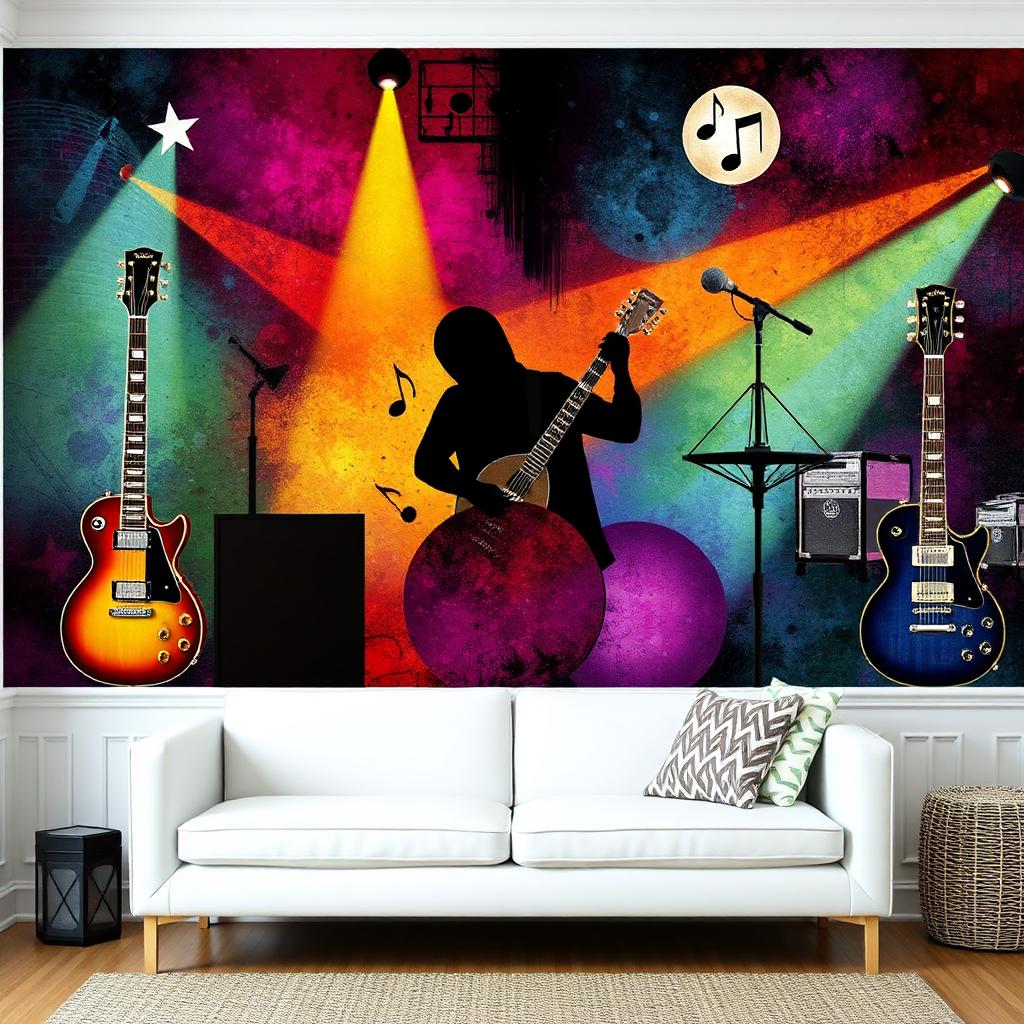
The imagery relies on the drama of high contrast. Stark black silhouettes of saxophone players, double-bassists, or ecstatic dancers are cast against gritty, textured backgrounds that resemble concrete or brick. This anonymity focuses attention entirely on the posture and motion of the performance, creating a moody, cinematic snapshot of a late-night jam session in a Lagos or Nairobi club.
Street Art/Graffiti The Rebel Canvas
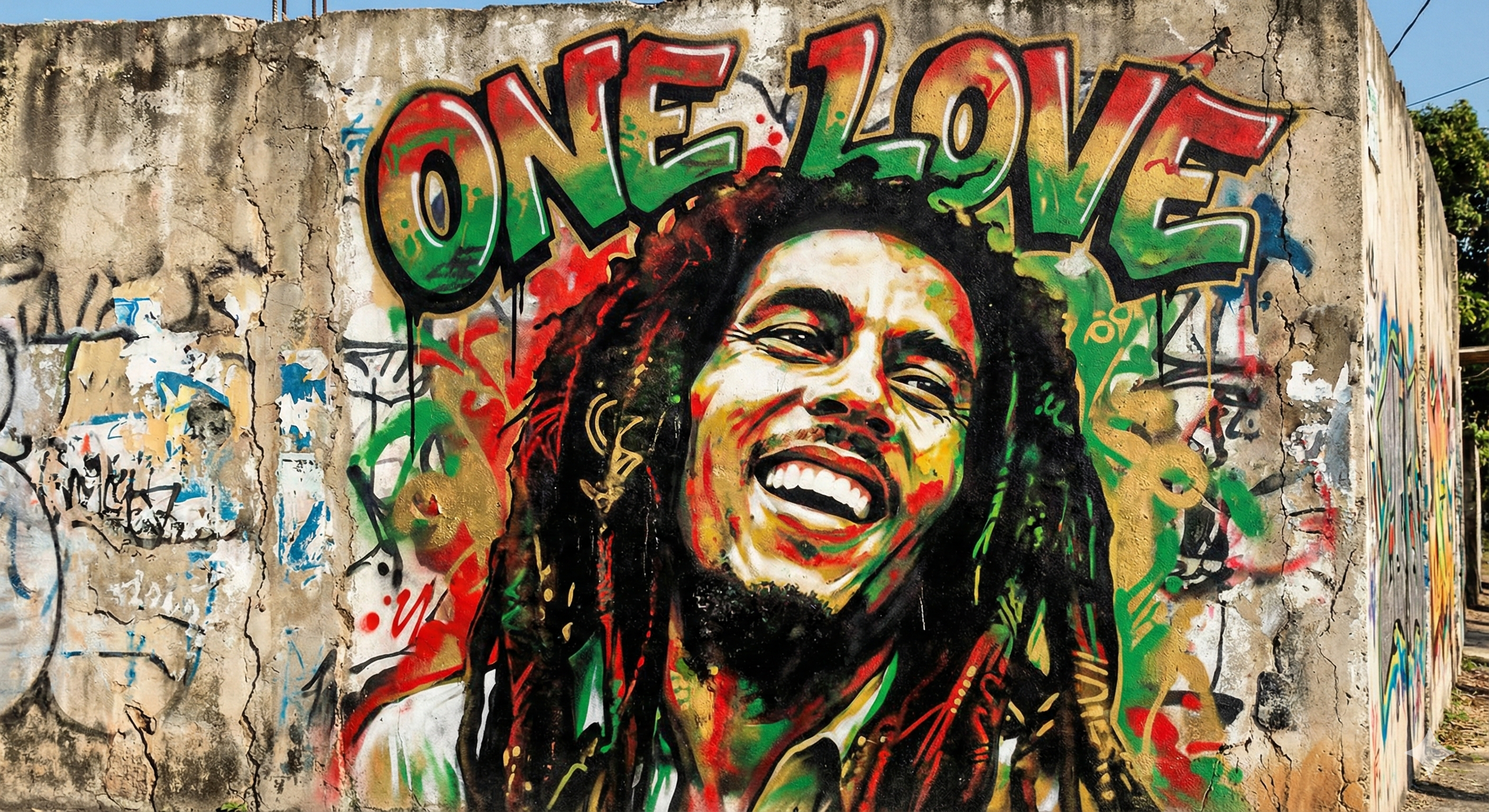
This sub-style embraces the raw rebellion of the street, featuring large-scale, mural-style portraits of legendary icons like Fela Kuti or Miriam Makeba. Rendered in dripping spray paint, stencil art, or bold brushstrokes, these visuals act as a tribute to the political and social power of music, turning the wall into a vibrant urban canvas that tells a history of resistance.
Color Palette
Moody and atmospheric—Smoky Grey, Midnight Blue, with splashes of Neon.
Best For
Home bars, entertainment lounges, and recording studios.
3. African Music Wallpaper Placement Guidelines
Because these murals are often visually “loud” and complex, they work best as Feature Walls.
In a Music Studio
Use the “Urban Beat” style behind the mixing desk to inspire energy and creativity.
In a Living Room
Use the “Roots” style (specifically muted earth tones) to create a warm, sophisticated backdrop that pairs well with wooden furniture and leather seating.
Avoid
Placing complex “Afro-Vibrant” patterns on all four walls, as the high-contrast geometry can become visually overwhelming and claustrophobic.
Summary Comparison
| Style | Roots (Traditional) | Afro-Vibrant (Abstract) | Urban Beat (Modern) |
| Key Symbol | The Drum (Djembe) | The Pattern (Kente) | The Silhouette (Dancer) |
| Mood | Grounded, Historical | Energetic, Playful | Cool, Edgy, Nightlife |
| Primary Color | Brown / Clay | Yellow / Red / Green | Black / Neon / Grey |