








Description
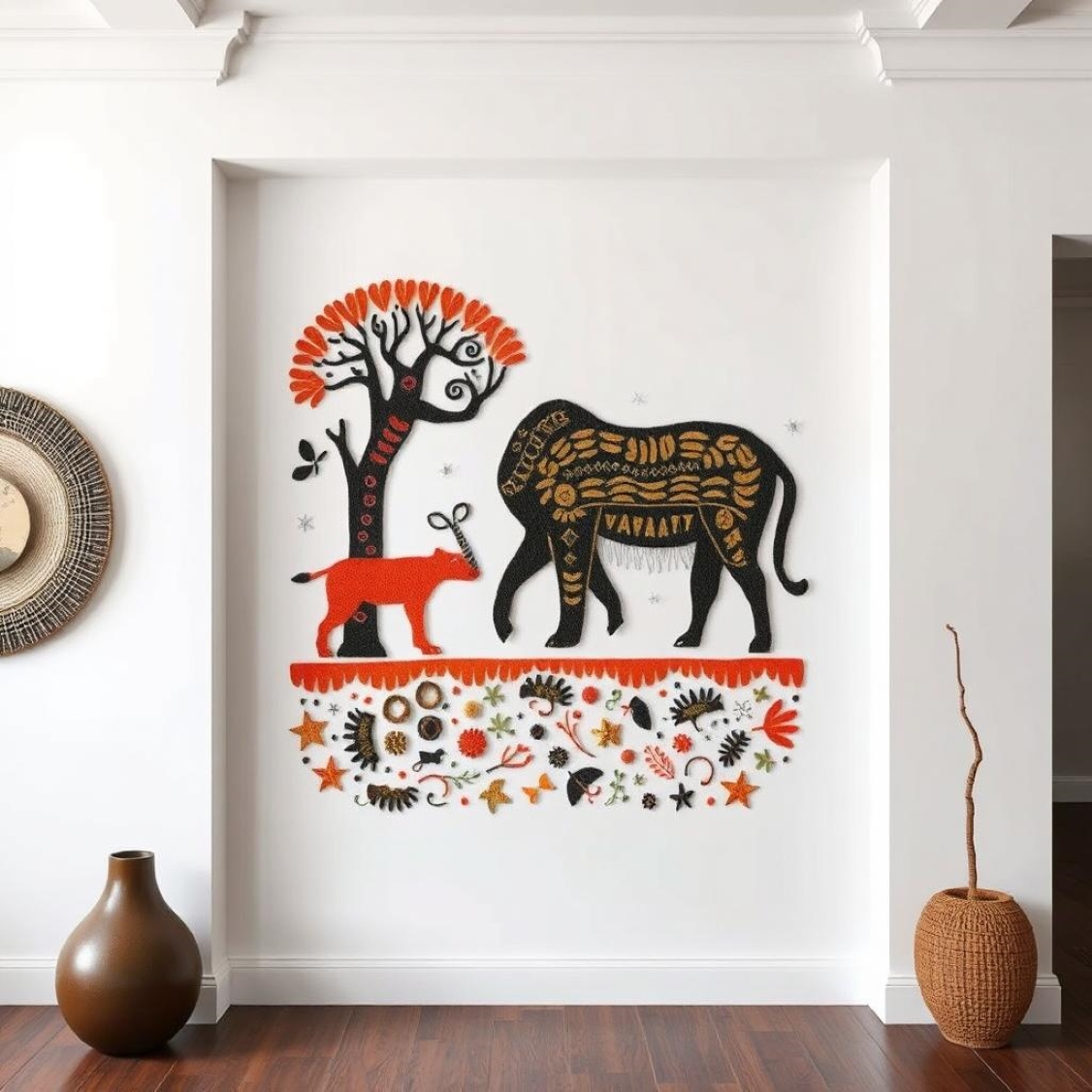
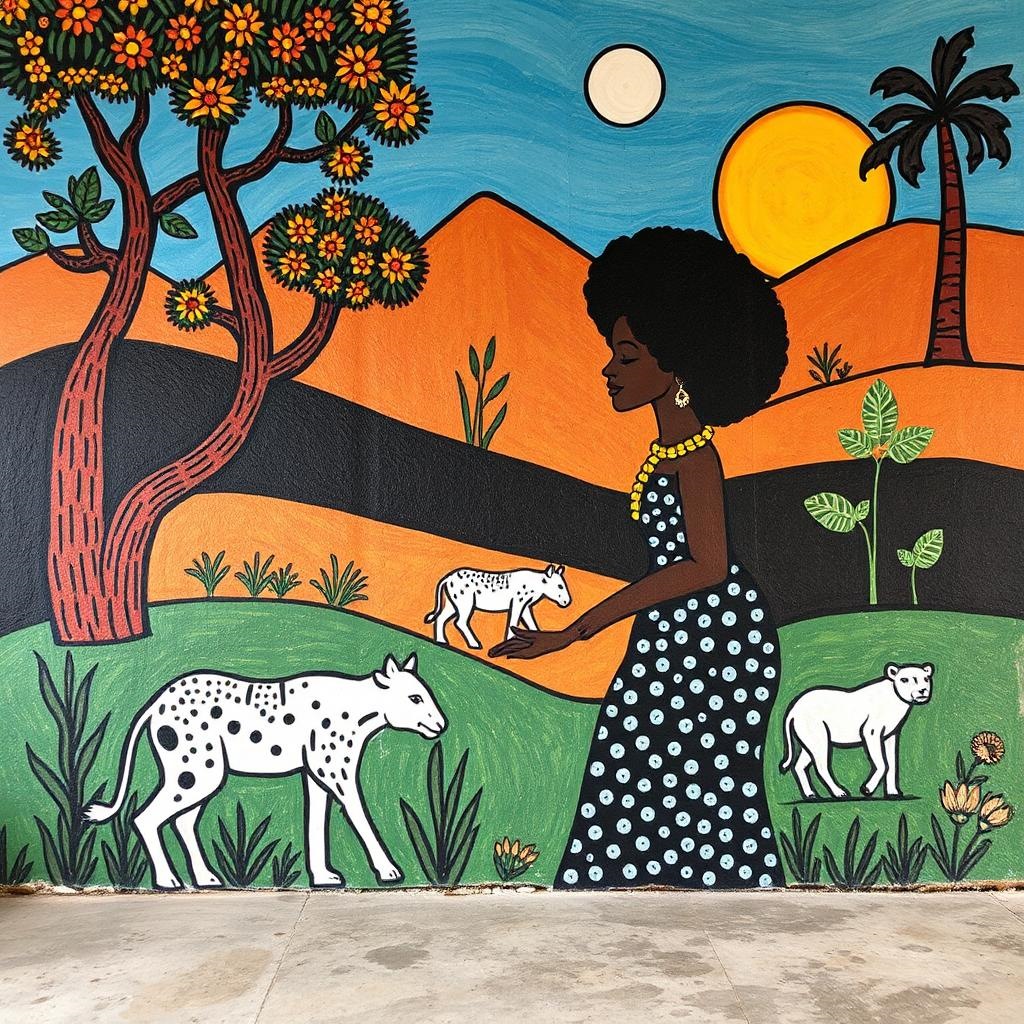
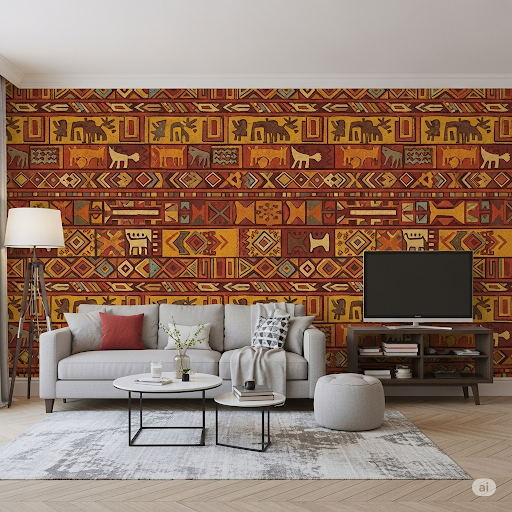
African Tribal Wall Art is a design category that transforms the ancestral visual languages of Africa—masks, beadwork, scarification patterns, and ceremonial motifs—into modern interior decor. It moves beyond generic “safari” themes to celebrate specific cultural identities through bold symbolism and abstraction.
Here is a comprehensive overview of its definition, regional styles, and modern application.
African Tribal Wall Art is defined by its function as a communicative visual system. Historically, these patterns were not mere decoration. They were codes used to indicate lineage, social status, spiritual protection, or historical events. But in modern interiors, this art form retains that “storytelling” essence, often prioritizing symbolism over realism.
Key Regional African Tribal Wall Art Aesthetics
A. West African Tribal Wall Art: The Mask & The Textural
Primary Influences: The Royal & The Spiritual
This aesthetic draws deeply from the sophisticated artistic lineages of West Africa. It channels the metallurgical mastery of the Benin Kingdom (Nigeria), known for royal bronzes. The complex cosmological woodcarvings of the Dogon (Mali). And the philosophical symbolism found in the textile and gold traditions of the Ashanti (Ghana).
Visual Style: Carved Symbolism
The visual style is defined by a “carved” aesthetic that emphasizes depth and shadow. And mimicking the relief sculpture rather than the flat print. Wallpapers in this genre often feature repeating, rhythmic motifs of ceremonial artifacts.
Prominent among these is the Kanaga mask of the Dogon. Which characterized by its distinct rectangular face and double-barred cross structure that symbolize the connection between heaven and earth. Similarly, designs frequently utilize Adinkra symbols from Ghana—such as Gye Nyame (God’s supremacy) or Sankofa (return and get it)—turning the wall into a visual library of proverbs and ancient wisdom, where every curve carries a philosophical meaning.
Texture Organic Imperfection
The texture mimics the tactile warmth of Bogolanfini (Mudcloth) from Mali. Unlike digitally perfect lines, these designs celebrate the “hand of the artist”—featuring shaky, hand-drawn geometric lines, dots, and rough edges. The palette is strictly organic, utilizing the matte, earthy contrasts of fermented river mud (black), unbleached cotton (cream), and natural ochre.
Best For
Creating a sophisticated, gallery-like atmosphere in libraries or living rooms.
B. Southern African Tribal Wall Art: The Geometric & Architectural
Primary Influences: The Domestic Canvas
This style is anchored in the domestic artistry of the Ndebele people of South Africa, where women traditionally paint their homes as a statement of cultural resilience and communication. It also draws heavily from the Basotho of Lesotho, specifically their Litema mural traditions (engraved earth geometric patterns) and the iconic geometric motifs found on Seanamarena (Basotho heritage blankets).
Visual Style: Razor-Sharp Precision
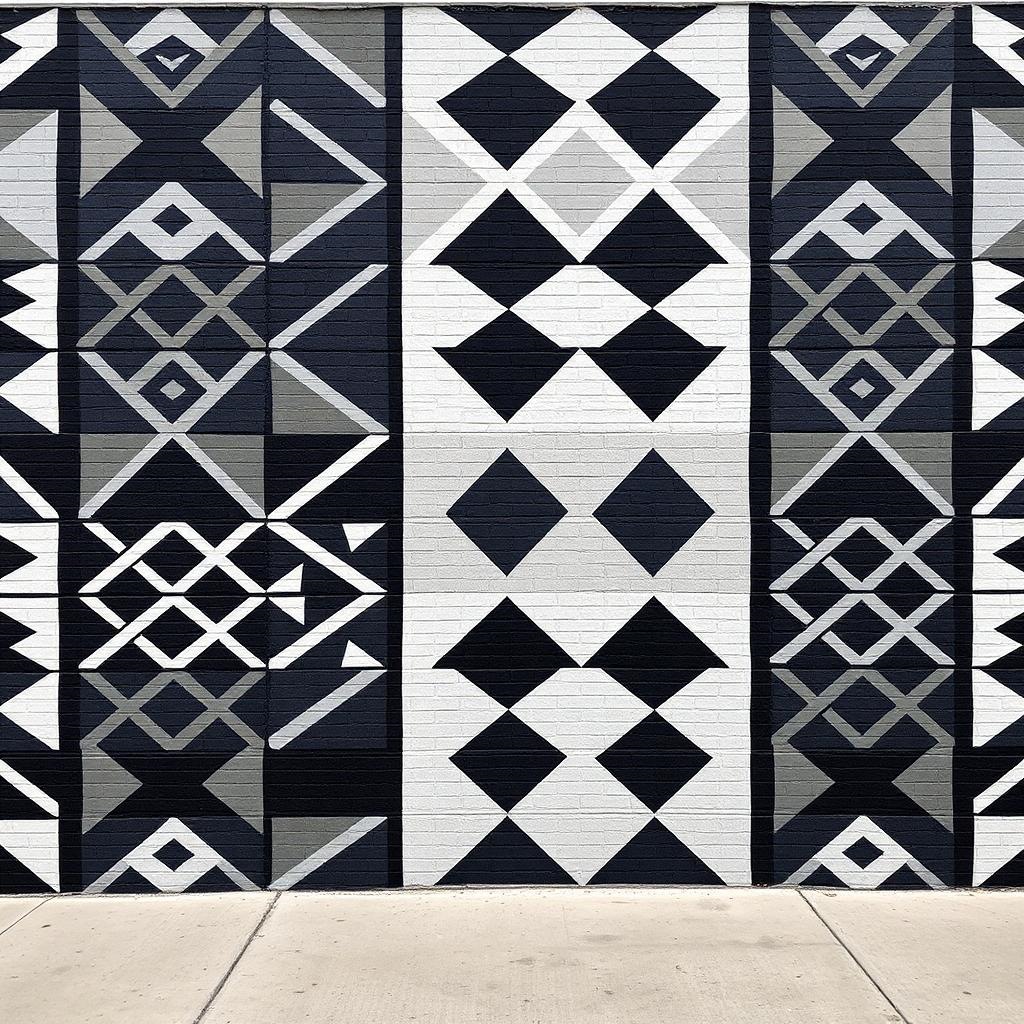
This is arguably the most globally recognized “tribal” graphic language, celebrated for its mathematical precision. Unlike the fluid, organic lines of West African art, this style relies on razor-sharp geometry. It constructs a visual language using bold triangles, chevrons, diamonds, and stepped rectangles, all contained within thick, unwavering black outlines. The effect is architectural rather than decorative; it flattens the 3D space into a 2D plane of intense structure. The distinct lack of curves gives it a modern, almost digital appearance—resembling vector art or stained glass—despite its deep historical roots in hand-painted village muralism.
Color Palette: Radical Vibrancy
The palette is defined by radical vibrancy. It moves beyond natural earth tones to embrace synthetic, high-contrast pigments—Electric Blue, Sunshine Yellow, Hot Pink, and Bright Turquoise. Historically painted on the drabs exterior of mud homes, these colors were chosen specifically to dazzle the eye and signal the homeowner’s presence and status from a distance against the dry landscape.
Best For
Modern minimalist spaces, hallways, or corporate lobbies where the art acts as “architecture.”
C. East African Tribal Wall Art: The Organic & The Warrior
Primary Influences: The Nomadic Spirit
This aesthetic is born from the nomadic warrior traditions of the Great Rift Valley. It draws directly from the visual culture of the Maasai (Kenya/Tanzania), the “Butterfly People” Samburu, and the resilient Turkana. Because these cultures are historically pastoralist, their art is inherently portable—worn on the body as adornment—making the translation to wall art a celebration of personal identity, age sets, and bravery.
Visual Style: Codified Color & Curves
This style focuses on the codified language of beadwork, transforming the intricate concentric circles of a Maasai wedding collar (Mporro) into grand wall murals. The colors are never random; Red represents bravery and blood, White represents peace and milk, and Blue represents the sky and rain. Beyond beads, the aesthetic heavily features the iconic elliptical shield motifs. These designs use a bold, curved interplay of red ochre, black charcoal, and white clay to create aggressive, high-contrast patterns that mimic the markings on cowhide shields, symbolizing protection, strength, and the pastoralist connection to cattle.
Texture Gloss & Grit
The texture oscillates between the smooth and the rugged. It often incorporates the “dot” technique made famous by Tinga Tinga art, where thousands of small points create a vibrant, glossy surface. Alternatively, it mimics the tactile ruggedness of cured cowhide, utilizing rough, fibrous textures that recall the surface of a warrior’s shield.
Best For
Safari lodges, masculine “dens,” or vibrant children’s rooms.
3. The Symbolism of African Tribal Wall Art
Reading the Wall
Unlike Western floral or damask patterns which are primarily decorative, African tribal patterns usually function as a language. They carry specific meanings, often serving as visual proverbs or protective amulets for the home.
The Zig-Zag: The Path of Continuity
The zig-zag is one of the most ubiquitous motifs across the continent, from Zimbabwean stone ruins to West African textiles. It represents the “Path of the Ancestors”—a reminder that life is a continuous, unbroken journey that transcends death. It symbolizes resilience (the ability to navigate turns) and the idea that the bond between the living and the dead is difficult to break.
The Checkerboard: The Balance of Duality
Common in Rift Valley designs (and famously seen in the Kalenjin and Maasai aesthetics), the checkerboard motif symbolizes the fundamental duality of existence. It represents the necessary balance between opposing forces: Day and Night, Courage and Fear, Rain and Drought. It is a visual reminder that wisdom comes from understanding and integrating both sides of life, rather than choosing one.
The Triangle: The Unit of Stability
In many Bantu cultures, the triangle is the geometric representation of the family unit or the homestead. The three points often symbolize the Father, Mother, and Child, creating a structure that is inherently stable and cannot easily be toppled. When repeated in a pattern, it signifies the strength of the community and the safety of the domestic space.
4. Modern Applications
The “Vector” Tribal
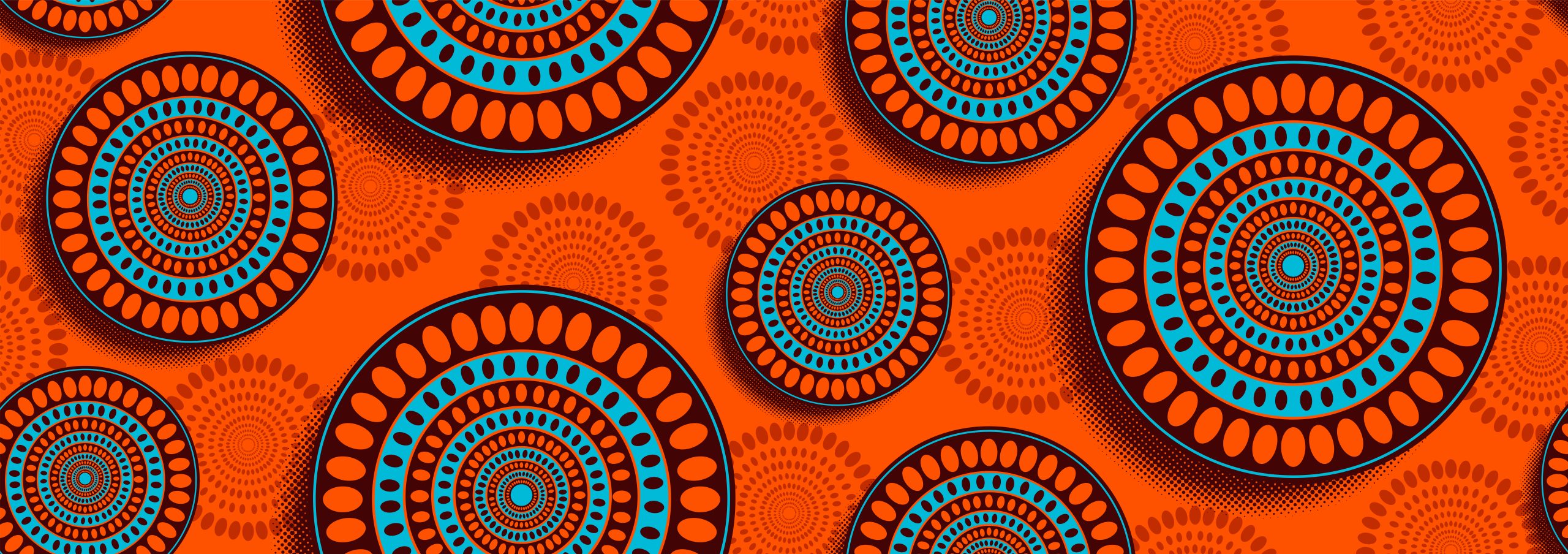
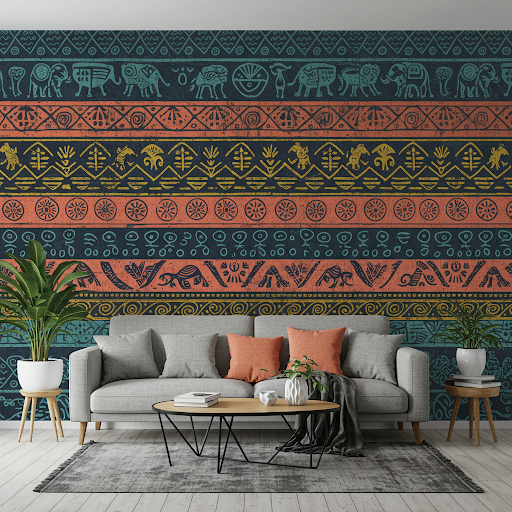
Ancient patterns (like Mudcloth) are digitized into clean, sharp vector files for vinyl wallpaper. This strips away the “rustic” feel, making the pattern look chic and modern (e.g., a black-and-white tribal print in a Scandinavian office).
The 3D Texture
High-end wall coverings that physically simulate the texture of woven grass, beaten copper (Benin Bronze style), or scarified wood, adding depth to the room without adding color.
The “Deconstructed” Mask
Instead of a literal picture of a mask, the wall features just the elements of the mask—eyes, geometric noses, and scarification lines—floating abstractly on the wall (similar to Picasso’s Cubism, which was influenced by African art).
Summary Table
| Region | West Africa | Southern Africa | East Africa |
| Key Aesthetic | Carved / Textural | Geometric / Linear | Color-Coded / Organic |
| Dominant Motif | Masks & Mudcloth | House Murals (Ndebele) | Shields & Beads |
| Palette | Earth / Indigo / Gold | Primary Brights | Red / Black / White |
| Vibe | Spiritual & Historic | Bold & Structural | Vibrant & Cultural |