



Description
Key characteristics of a ceiling mural
The ceiling mural represents one of the most historically significant and visually dramatic forms of public art, distinguished by its unique relationship with architecture and its ability to manipulate space.
A ceiling mural is a large-scale work of graphic art that is painted or permanently affixed directly to the overhead surface of an interior space.
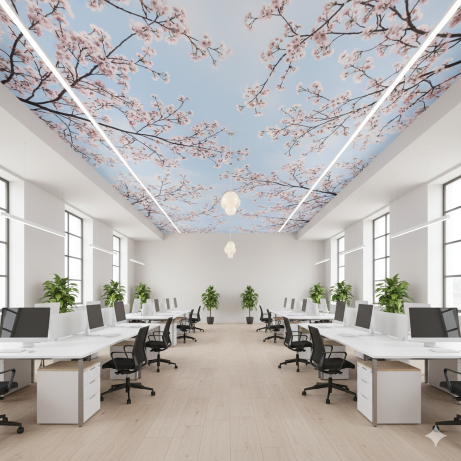
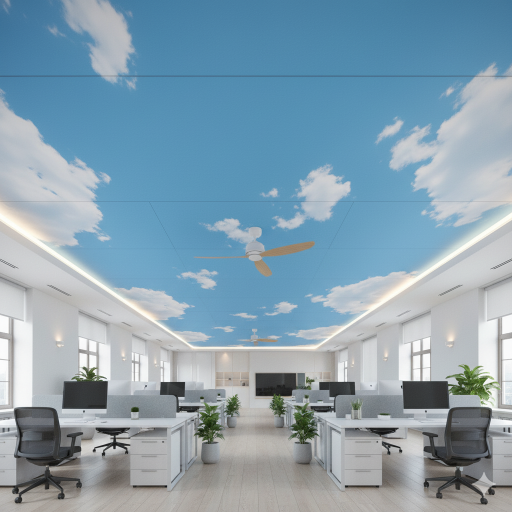
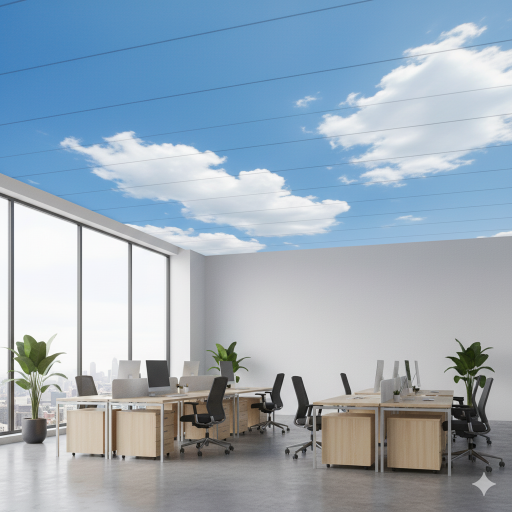
Ceiling murals transform sterile offices into inspiring spaces. They reduce eye strain, boost morale, and showcase creativity or company culture. Illusionistic designs can also visually increase room height, making smaller areas feel more open and grand.
Ceiling Mural Wallpaper
A ceiling wallpaper mural is the ultimate “fifth wall” design strategy, transforming a neglected surface into a breathtaking focal point. Moving beyond standard white paint, these murals add depth, drama, and architectural interest to any room.
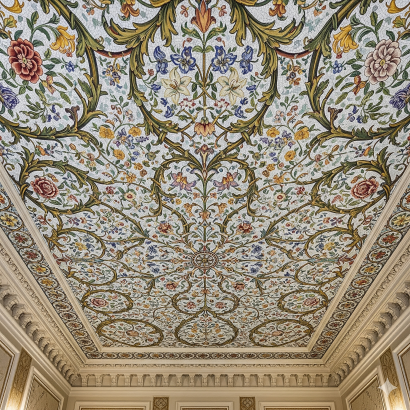
Popular choices include hyper-realistic sky scenes, ornate classical frescoes, and ethereal cosmic patterns. For modern interiors, geometric abstractions or botanical overhangs create an immersive, cocoon-like atmosphere. Beyond aesthetics, ceiling murals can visually expand a small space or add warmth to cavernous rooms. When paired with strategic lighting, they turn a simple ceiling into a captivating piece of overhead art.
Permanence and Integration
The artwork is made integral with the surface of the ceiling (the substrate). Historically, this meant painting directly onto wet plaster (fresco technique). Today, it can also include large-format wallpaper murals, fabric panels, or even mosaics that are designed to be a permanent part of the building.
Architectural Union
Unlike framed art, a ceiling mural is intrinsically linked to the architecture of the space. Its design must consider the room’s shape, curves (domes, vaults), and any existing structural elements (beams, coffers).
Spatial Manipulation
The most celebrated characteristic of the ceiling mural is its ability to radically alter the viewer’s perception of space. Artists use color, perspective, and illusionistic techniques to:
Open the Space
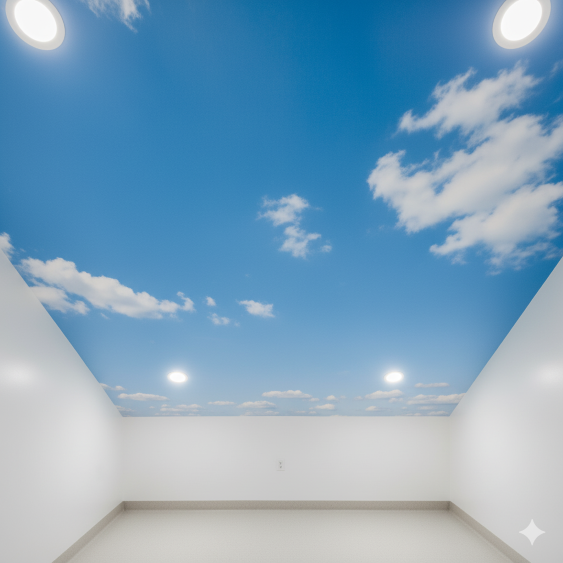
Through masterful trompe l’œil techniques, a ceiling mural acts as a visual portal, shattering the room’s physical boundaries. By painting atmospheric gradients or vanishing architectural lines, the surface “dissolves,” replacing a heavy lid with an infinite sky. This illusion grants even the smallest rooms a sense of boundless, airy freedom.
Impart Grandeur
Ceiling murals elevate a space from functional to monumental, using vertical perspective to stretch the room’s perceived height. In historic halls and palaces, these sweeping compositions command the eye upward, instilling a sense of awe. This upward movement creates a majestic atmosphere, turning architecture into a powerful statement of prestige.
Public and Thematic Significance
As a medium for grand narratives, ceiling murals serve as a communal canvas for storytelling. Whether depicting celestial battles, mythological tales, or shared cultural values, these works unify the audience through a collective gaze. Their placement ensures that the message is both unavoidable and elevated, literally hanging above the mundane.
Modern Ceiling Mural Design Themes
The concept of the “fifth wall” has evolved from a classical luxury to a modern design staple. While traditional murals required months of painstaking labor and scaffolding, today’s digital printing technology has democratized high-end ceiling art.
Here is an exploration of how modern technology and specific design themes are redefining the overhead experience.
1. The Digital Revolution: From Fresco to High-Res
Modern ceiling murals are rarely painted by hand today. Instead, they are often digitally printed on high-performance vinyl, fabric, or “stretch ceiling” membranes. This shift has three major impacts:
Photorealistic Detail
You can now replicate high-resolution macro photography, such as the intricate veins of a marble slab or the galaxy’s edge, with clarity a paintbrush could never achieve.
Scale and Precision
Digital files allow for perfect scaling. A design can be stretched to fit a 50-foot lobby or a 10-foot bedroom without losing proportions.
Architectural Illusions (Trompe l’oeil)
Using 3D rendering, digital murals can mimic structural elements like coffered wood, skylights, or glass domes so convincingly that the eye is tricked into seeing depth where there is only a flat surface.
2. Trending Modern Themes
Modern ceiling murals have traded classical cherubs for immersive experiences. By leveraging high-definition digital printing, designers now treat the “fifth wall” as a tool for emotional and sensory transformation. Today’s themes prioritize depth and atmosphere, turning static rooms into expansive environments that feel physically connected to the world outside.
Hyper-Realistic Galaxies
Digital printing allows for stunning depth through layered blacks and deep purples, punctuated by high-resolution star maps. These murals create a sense of infinite expansion, perfect for bedrooms or home theaters. The cosmic aesthetic offers a meditative focal point, transforming a flat ceiling into a portal to the deep universe.
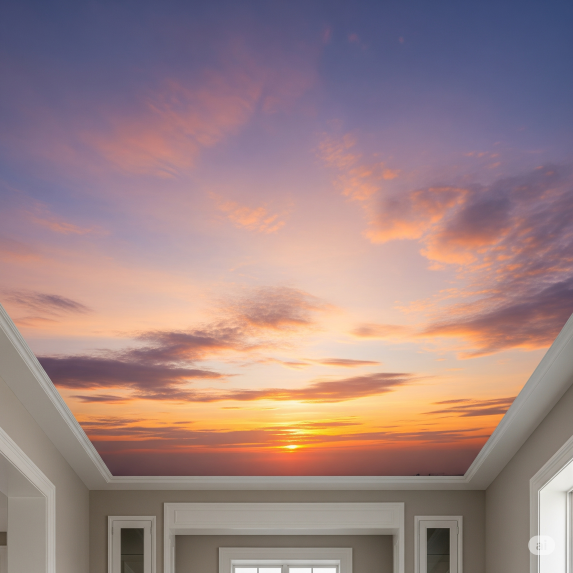
Open Sky Prints
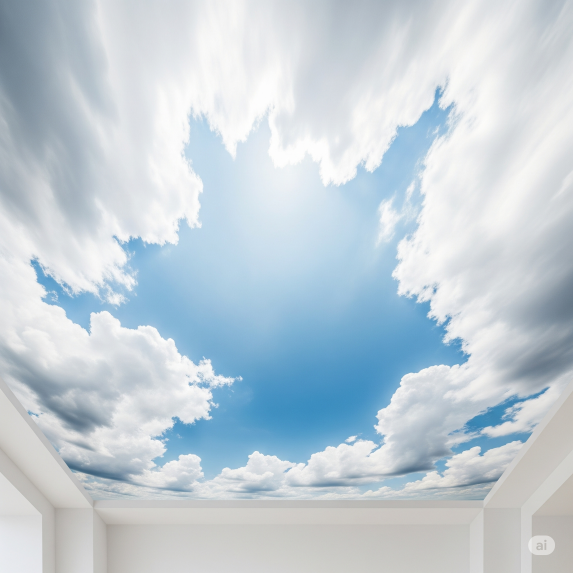
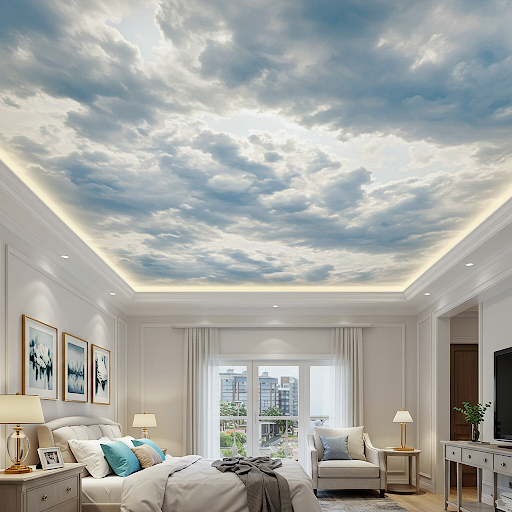
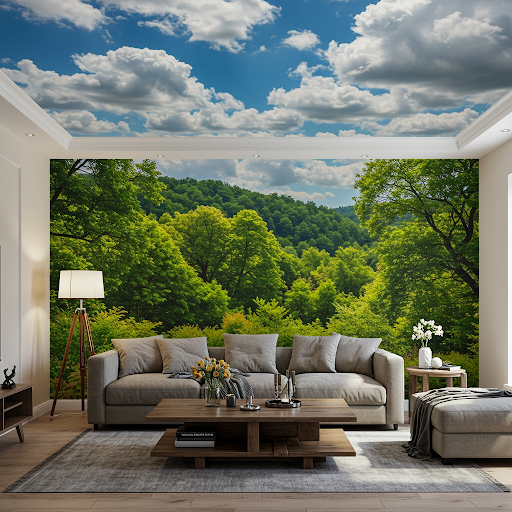
High-resolution “open sky” murals featuring soft cumulus clouds can psychologically trick the mind into perceiving a higher, open-air structure. This is particularly effective in windowless spaces like basements or offices. By simulating daylight, these designs foster a sense of freedom and alleviate the “closed-in” feeling of traditional architecture.
The Celestial & Atmospheric
Hyper-Realistic Galaxies
Digital printing achieves profound depth through layered midnight blacks and nebulous purples, accurately replicating high-resolution star maps. These cosmic murals create an illusion of infinite expansion, turning ceilings into windows to the deep universe. The result is a meditative, awe-inspiring focal point that adds sophisticated drama to modern interior spaces.
Geometric & Abstract
Linear Perspective
The linear perspective designs utilize architectural vanishing points and forced perspective to mathematically trick the eye, creating the stunning illusion of an infinitely high ceiling. By simulating structural depth where none exists, linear murals can make even the most claustrophobic rooms feel soaring and monumental, adding a sense of grand, modern ambition.
Monochromatic Textures
Modern printing mimics the tactile luxury of expensive materials like hammered gold, raw concrete, or Venetian plaster with startling accuracy. These monochromatic murals provide the high-end aesthetic of industrial or classical materials without the structural weight, intense labor, or high costs. They add subtle, sophisticated texture that anchors a room’s atmosphere.
Here are the most popular and impactful ceiling mural design themes:
I. Illusionistic & Architectural Ceiling Mural Designs
These designs are inspired by the grand ceilings of the Renaissance and Baroque periods, using perspective to create depth.
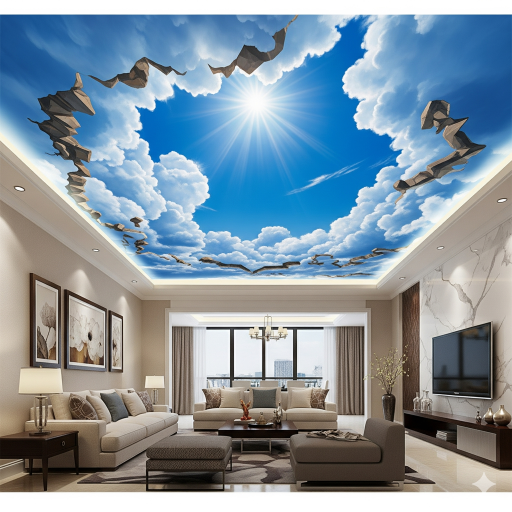
Trompe l’œil Sky Aperture
This design acts as a structural breakthrough, using forced perspective to “shatter” the ceiling’s flat plane. By rendering crisp clouds and soaring birds against an expansive blue gradient, the mural creates the psychological sensation of an open-air courtyard, making the indoor environment feel eternally bright and physically limitless.
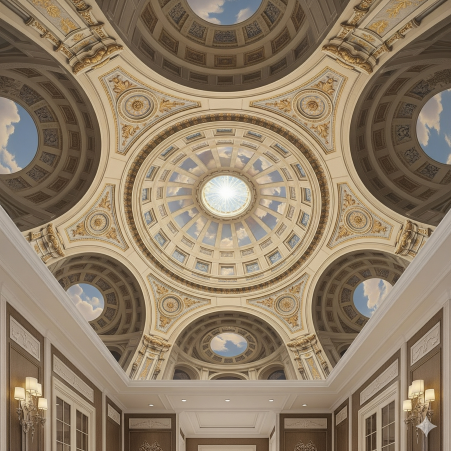
Grand Dome/Vault Fresco
By digitally scaling masterpieces onto modern surfaces, the grand dome theme replicates the intricate narratives of historic cathedrals. These murals use shadow and light to simulate curved depth on flat tray ceilings, instantly imbuing a room with museum-quality prestige and a sophisticated connection to classical art and storytelling.
Coffered Patterns
Painting deep, recessed grids onto a flat ceiling provides the visual weight of heavy woodwork without the structural cost. These murals use meticulous shading on every “sunken” panel to mimic three-dimensional depth, adding a rhythmic, masculine elegance that grounds a large room while providing architectural symmetry and texture.
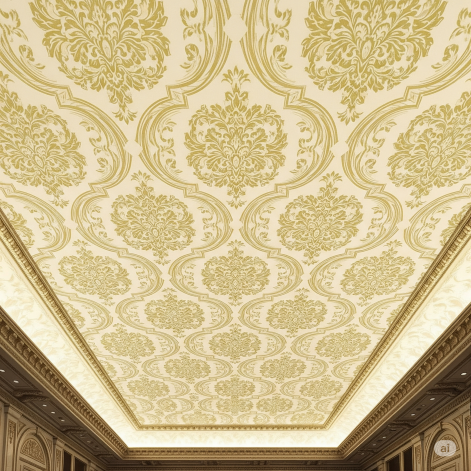
Gilded Stucco/Relief
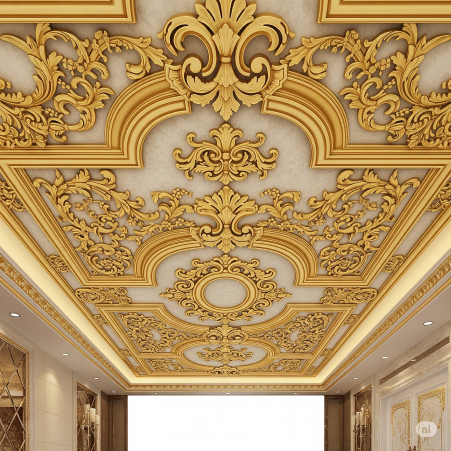
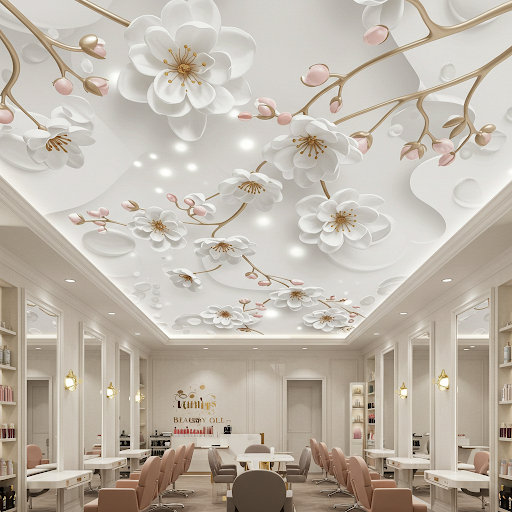
The Gilded Stucco design simulates the opulence of hand-carved, gold-leafed moldings. Through high-definition printing of ornate scrolls and floral reliefs, the mural captures the way light would catch real metallic edges. It offers a luxurious, three-dimensional aesthetic that feels traditionally handcrafted, perfect for formal dining rooms or high-end hotel lobbies.
II. Natural & Calming Mural Themes (Therapeutic)
Cloud Canopies
Utilizing a palette of soft azures and wispy whites, cloud canopy murals create a serene, airy atmosphere. These designs are scientifically favored in high-stress environments like medical clinics, as the gentle, non-threatening imagery lowers heart rates and encourages deep breathing by mimicking the tranquility of a perfect spring day.
Starry Nights/Galaxies
Deep indigo and obsidian hues transform a ceiling into a cosmic window. By featuring photorealistic nebulae and shimmering star clusters, these murals evoke a sense of quiet wonder. This theme is ideal for bedrooms or wellness centers, shifting the focus from the immediate room to the infinite, calming universe.
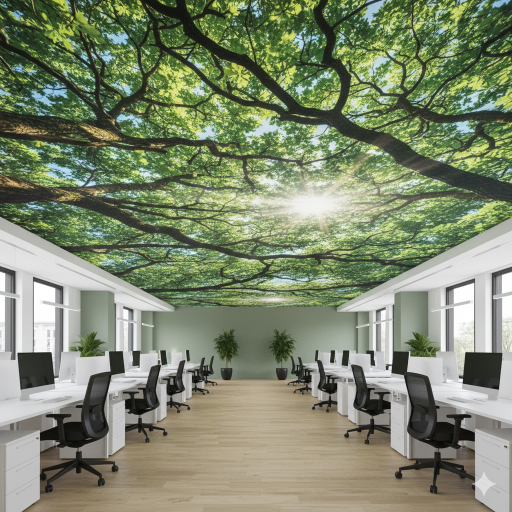
Tree Canopy/Jungle Roof
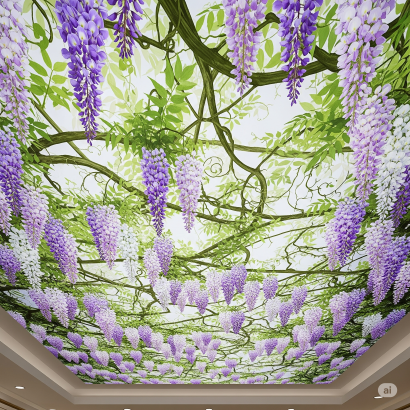
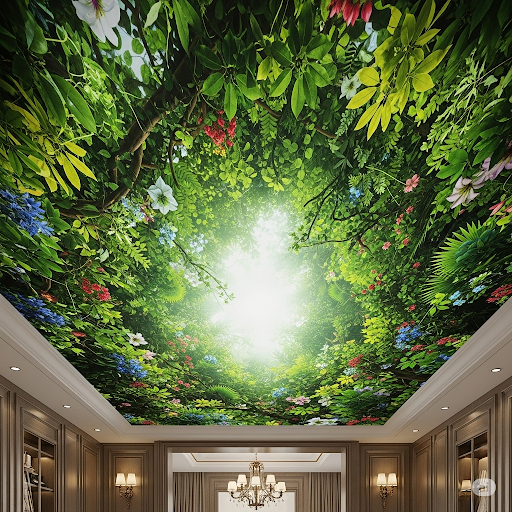
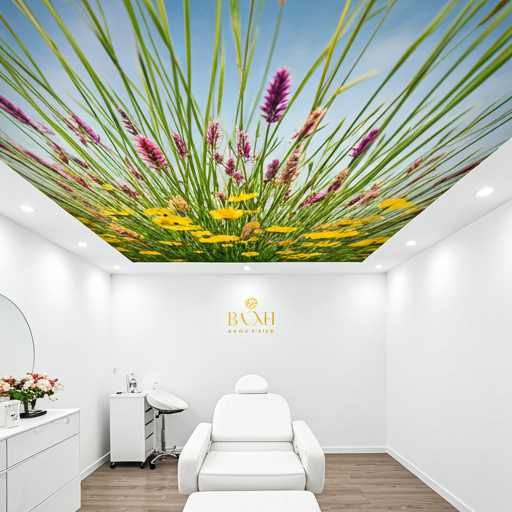
This “worm’s-eye view” of a forest creates an immediate biophilic connection. By depicting sunlight filtering through lush green leaves and sturdy branches, the mural mimics the protective feel of a natural grove. It brings the restorative power of the outdoors inside, promoting mental clarity and psychological well-being.
Water Reflection/Koi Pond
Inverting the typical perspective, water reflection design makes the viewer feel as though they are submerged in a crystal-clear pool looking upward. The dappled light and ripples simulate the fluid movement of water, creating a meditative, spa-like environment that is both visually cooling and profoundly quiet in its aesthetic.
III. Contemporary & Graphic Ceiling Mural Designs
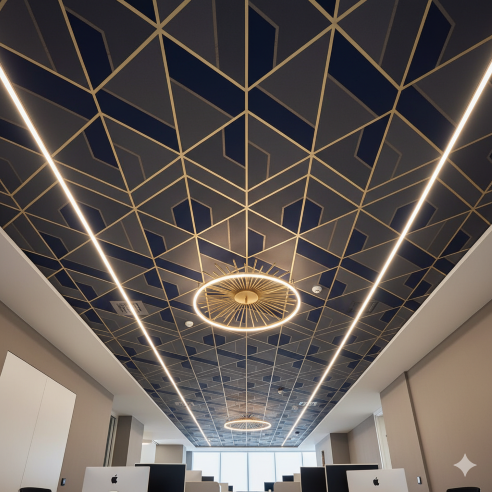
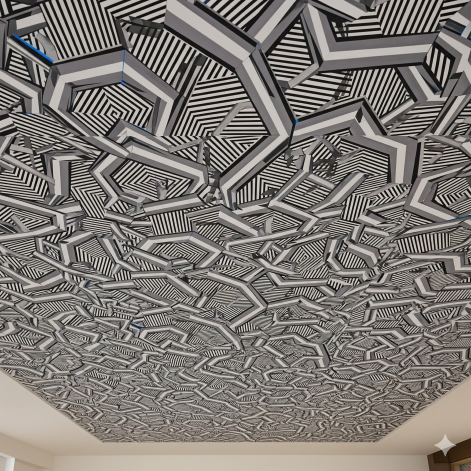
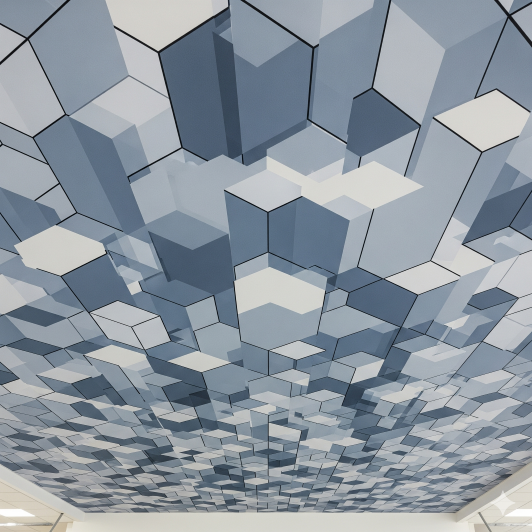
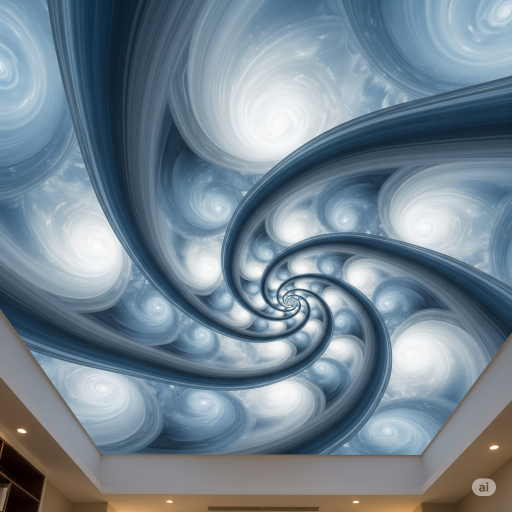
Abstract Geometry
Modern and bold, abstract geometric murals use sharp lines and interlocking shapes to define a room’s energy. Unlike traditional patterns, large-scale graphics aren’t repetitive. They act as a single, cohesive art piece. This approach adds a sophisticated, intellectual layer to a space, emphasizing clean lines and contemporary flair.
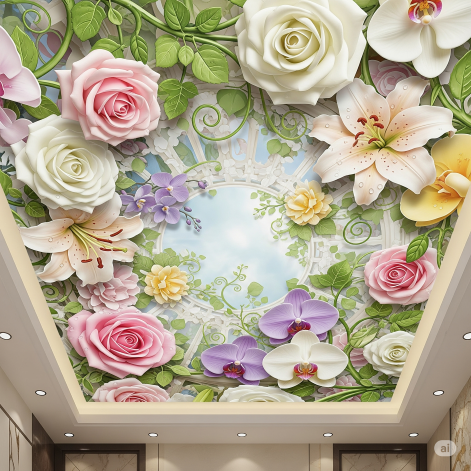
Oversized Florals/Botanicals
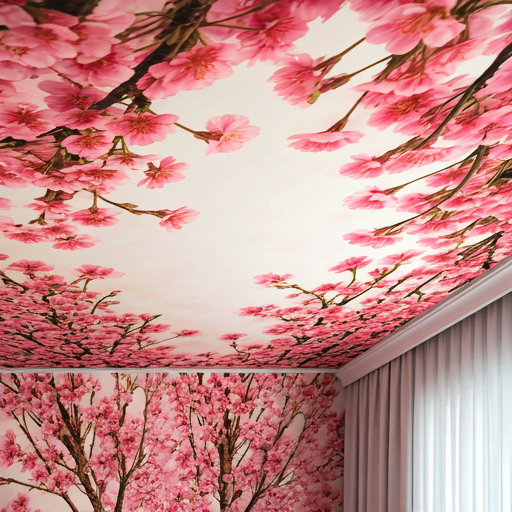
By scaling large blooms or massive leaves to cover the entire ceiling, this theme creates a dramatic, high-fashion statement. The exaggerated size turns delicate nature into a powerful graphic element. These murals serve as the room’s primary “art piece,” demanding attention while softening the architecture with organic, flowing forms.
Subtle Color Wash/Gradient
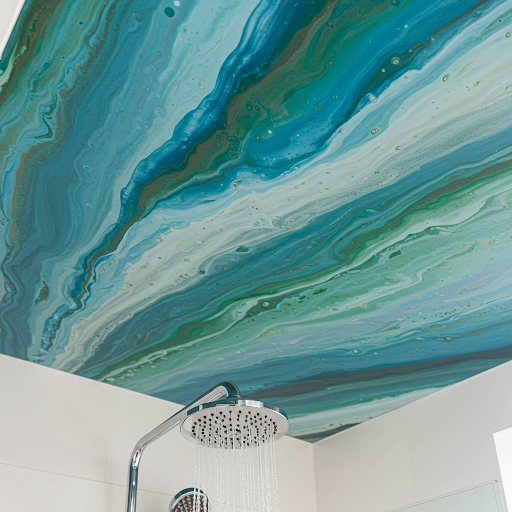
A seamless ombre transition offers a sophisticated alternative to flat paint. By blending tones—perhaps from a deep charcoal to a misty grey—this mural adds “air” to the room without the distraction of a pattern. It provides a custom, designer finish that feels expensive, intentional, and modernly minimalist.
Tiled Textures
For an industrial or rustic edge, tile texture murals replicate heavy materials like oxidized copper, marble slabs, or terrazzo. They provide the visual richness of raw minerals and aged metals without the weight or installation complexity. It is an effective way to introduce “hard” luxury textures into a soft interior.