


Description
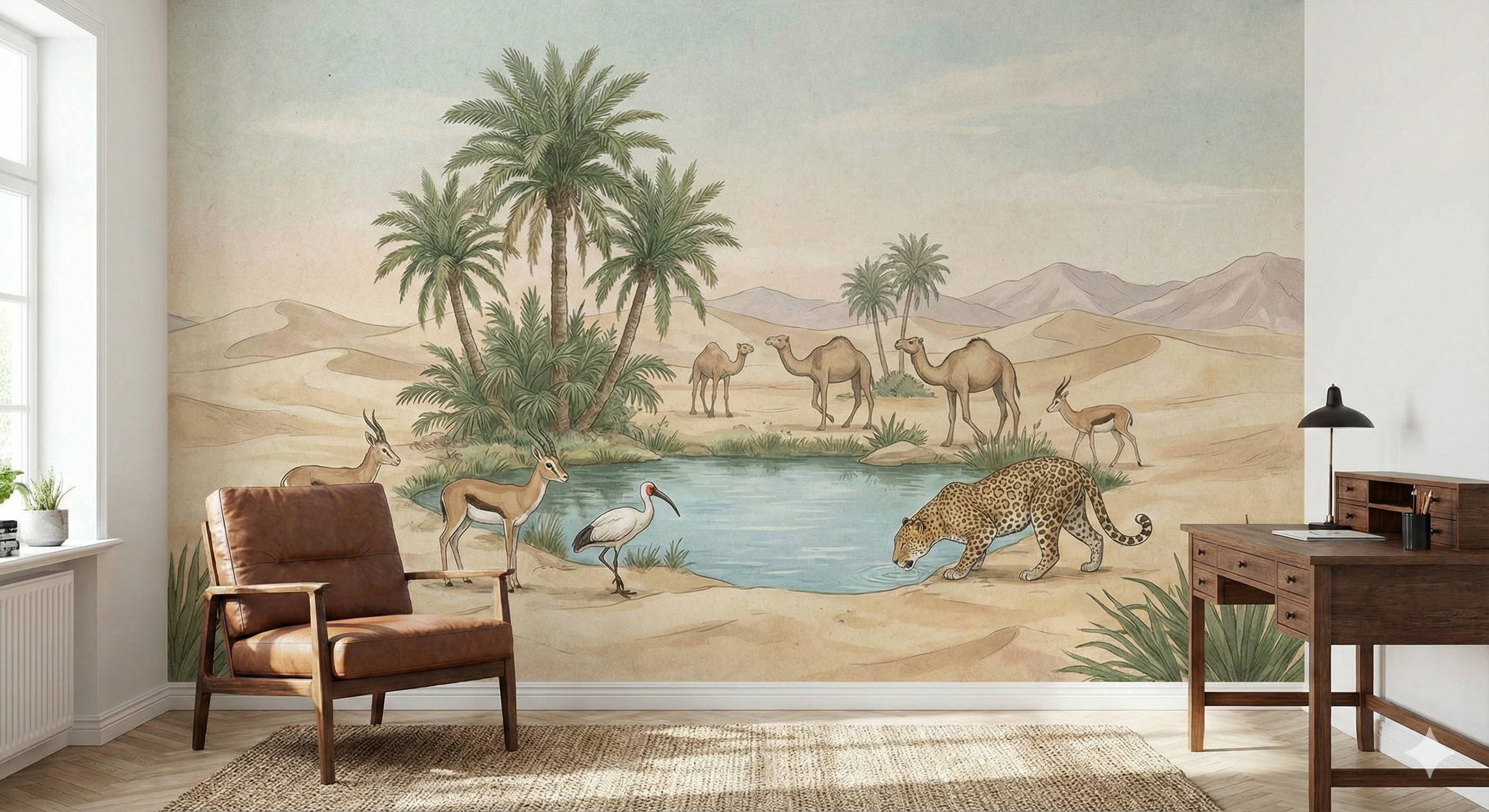
Desert Oasis Wildlife Mural
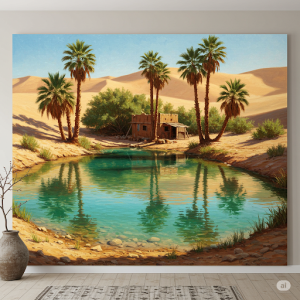
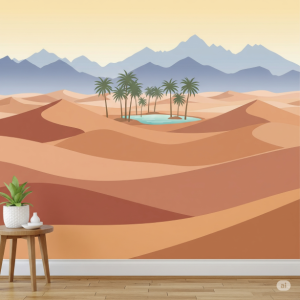
A Desert Oasis Wildlife Mural serves as a visually striking paradox, blending the harsh, golden beauty of arid dunes with the vibrant, life-sustaining lushness of water and vegetation. This theme transforms interiors into a serene sanctuary, offering a “mirage” effect that adds depth and warmth to a room. Unlike typical forest or ocean murals, the desert oasis relies on a unique high-contrast palette. Terracotta, ochre, and sand tones balanced by deep emerald greens and refreshing azures make it a sophisticated choice for spaces that need warmth and tranquility.
Desert Ecosystem
In reality, desert wildlife consists of species highly adapted to extreme heat and water scarcity. The ecosystem is dominated by reptiles. Like rattlesnakes, tortoises, and Gila monsters, whose thick, scaly skin prevents moisture loss. Mammals are often small, burrowing, and nocturnal to escape the midday sun. Including kangaroo rats, fennec foxes, and meerkats. But larger animals like camels, coyotes, and mule deer also thrive. Birdlife features hardy scavengers like vultures and ground-dwellers like roadrunners. Invertebrates such as scorpions and tarantulas are abundant. Unlike the crowded scenes in murals, real desert animals are elusive, solitary, and masters of camouflage.
1. Flora: The Contrast of Life
The defining feature of an oasis mural is dramatic. A life-affirming explosion of greenery set against a barren, golden backdrop. This high-contrast element focuses on themes of resilience and vitality, serving as the visual anchor of the design. Designers frequently layer towering date palms and fan palms to create immense vertical height. Thus, effectively establishes natural “canopies” that visually lift the ceiling and frame the room.
Textural diversity
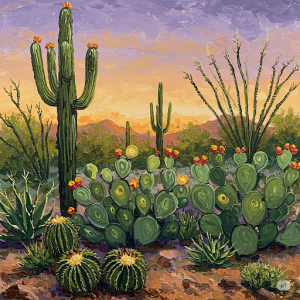
At the ground level, the flora introduces critical textural diversity through sculptural cacti—such as the iconic Saguaro or rounded Prickly Pear—alongside spiky agave and blooming desert wildflowers that burst with unexpected pops of violet and yellow. This lush, concentrated vegetation softens the inherent starkness of the desert setting, introducing fluid, organic shapes that break up the rigidity of a wall. Ultimately, these soothing emerald and sage tones psychologically “cool down” the warm, radiating earth tones of the sand, creating a balanced, restorative sanctuary.
2. Fauna: The Desert Oasis Wildlife Gathering Place
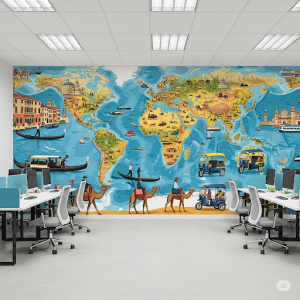
The inclusion of fauna transforms a desert oasis mural from a static landscape into a vibrant theater of survival and coexistence. As the desert’s rare jewel, the oasis functions as a biological magnet, justifying a diverse “gathering place” composition that unites typically solitary creatures. This density allows designers to weave complex visual narratives.
Popular designs
The oversized ears of a Fennec fox listening for prey, the architectural horns of a Gemsbok reflecting in the pool, or a vibrant cloud of Painted Ladies and dragonflies dancing above the reeds. In safari-inspired variations, this expands to majestic herds of zebras or elephants seeking respite. This layering of scale—from delicate, hovering wings to heavy, grounding mammals—introduces depth and kinetic energy. The animals provide an emotional focal point, making the wall feel “alive” and turning the decor into a window onto a peaceful, yet active, moment of natural harmony.
3. Scenery: Atmospheric Depth
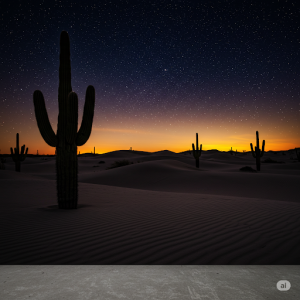
The scenery in an oasis mural creates a profound sense of depth and perspective, a clever visual tool often utilized to make small or enclosed rooms feel significantly larger. The composition is engineered to lead the eye on a journey, typically starting from a detail foreedground of lush pools or cascading waterfalls, drawing the gaze deeply into a background of rolling sand dunes or dramatic, towering rock formations.
3D Murals
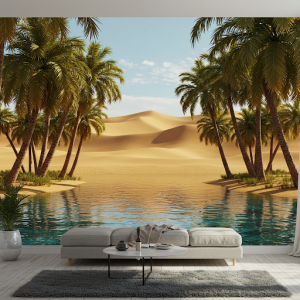
This layering creates a 3D effect where the wall seems to disappear. The interplay of elements—shimmering water mirroring the sky, rugged canyons casting long, cooling shadows, and the soft, hazy gradients of a pastel sunrise or sunset—establishes the room’s emotional mood. Whether depicting a “Tunisian” style dotted with ancient architectural ruins or a purely wild, untouched landscape, the scenery provides a powerful mental escape, evoking the serene thrill of discovering a hidden, life-sustaining gem in the middle of a vast wilderness.
4. Styles: From Realism to Whimsy Desert Oasis Wildlife
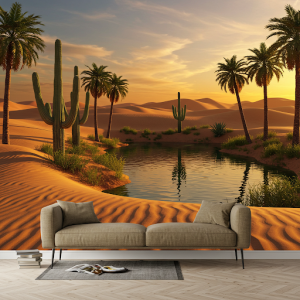
The versatility of the oasis theme allows it to seamlessly adapt to any interior design aesthetic. It bridges the gap between documentary precision and imaginative art. Photorealistic murals serve as an instant travel portal, utilizing high-definition macro photography to capture the gritty texture of sand. And the shimmering heat haze of the Sahara or Mojave. These are ideal for living rooms or luxury spas seeking an authentic “nature escape,” grounding the space in the raw, majestic beauty of the earth. Conversely, Whimsical and Folk-Art styles reject strict realism in favor of playful artistic interpretation.
Whiscal colour palettes
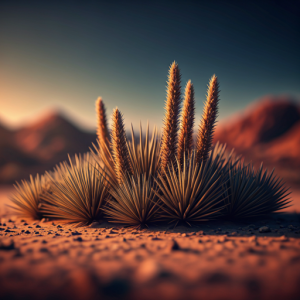
The whiscal designs often feature flattened perspectives and soft, boho color palettes. They blend muted terra cotta, sage, and blush pink to create a soothing visual rhythm. Popular in nurseries and modern apartments, they use stylized, friendly animal shapes to evoke a dreamy, storybook atmosphere. Their priority is a mood of creativity and warmth rather than literal geographical accuracy.