


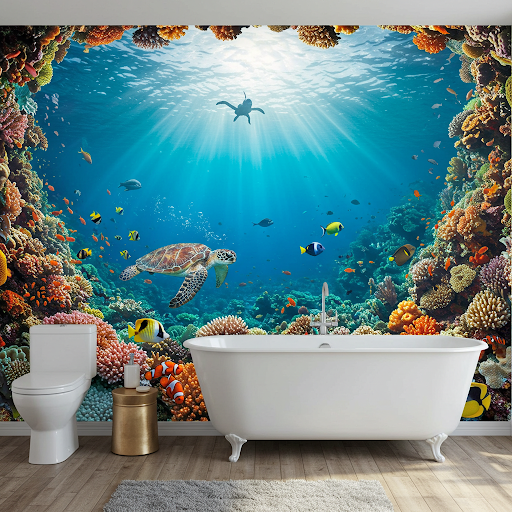
Description
The Renaissance of the Hotel Bathroom: An Overview of Wallpaper Murals
In a crowded market, use Hotel Bathroom Wallpaper Murals to communicate your personality. A mural acts as a visual shorthand for the hotel’s brand.
The hotel bathroom, once a utilitarian space defined by sterile white tiles and chrome fixtures, has undergone a radical transformation. In the modern hospitality landscape, it is no longer just a room for hygiene. It is a sanctuary, a stage for “Instagrammable” moments, and a key differentiator in guest experience. Central to this shift is the wallpaper mural.
Unlike standard repeating patterns, murals offer a large-scale, narrative-driven aesthetic that can transport a guest from a high-rise city hotel to a misty tropical rainforest or a neo-classical Italian villa. This overview explores the technical, aesthetic, and psychological impact of wallpaper murals in hotel bathrooms.
1. The Functional Bathroom Wallpaper Evolution: Why Now?
Historically, bathroom wallpaper failed due to moisture-induced peeling and mold. Today, the “taboo” has vanished thanks to Type II vinyl and fiberglass substrates. These innovations offer high-performance waterproofing and breathability, allowing murals to thrive in high-humidity zones. Now, designers can prioritize bold aesthetics without risking structural decay, merging the warmth of art with the resilience of industrial tiling.
Moisture Resistance and Durability
Scrubbable
Modern hospitality murals are engineered for high-traffic endurance. Utilizing Type II heavy-duty vinyl, these surfaces can withstand the rigorous friction of industrial sponges without color fading or tearing. They are chemically resistant, allowing housekeeping teams to use standard disinfectants and detergents to remove stains, fingerprints, or water spots, ensuring the bathroom maintains a pristine, hygienic appearance for every guest.
Breathable
Advanced non-woven substrates and micro-perforated coatings allow for essential vapor permeability. By letting moisture escape from the wall cavity rather than trapping it, these “breathable” murals prevent the formation of mold and mildew—a common failure point in older installations. This technology preserves both the building’s structural integrity and the indoor air quality, making wallpaper a healthy, long-term choice.
Waterproof
The ultimate evolution in the field is the fiberglass-based mural. Unlike traditional paper, these glass-fiber systems are completely impervious to liquid. When sealed with specialized waterproof resins, they can be installed directly inside shower stalls and above bathtubs. This allows designers to wrap seamless, large-scale art across entire “wet zones,” replacing cold grout lines with continuous, immersive imagery.
Ease of Renovation
For hotel owners, murals provide a cost-effective alternative to stone or tile. Replacing a marble slab is a noisy, dusty, multi-day construction project. Replacing a mural can be done in hours, allowing hotels to refresh their look with minimal “room out of service” time.
2. Trending Aesthetics in Hospitality Murals
The choice of mural often defines the “vibe” of the entire suite. Several key trends have emerged in the 2020s:
A. Biophilic Escapism
The most dominant trend is the use of lush, oversized botanical prints. In urban hotels where windows might overlook a brick wall, a floor-to-ceiling tropical jungle mural creates a sense of vitality.
Key Elements
Monstera leaves, palm fronds, and deep emerald greens.
Effect
Reduces guest stress and creates a “spa-like” atmosphere.
B. The “Old World” Heritage
Many luxury boutique hotels are leaning into Chinoiserie or Toile de Jouy murals. These often feature hand-painted scenes of birds, pagodas, or pastoral landscapes.
Context
Works exceptionally well in historic buildings or properties aiming for a “maximalist” luxury feel.
C. Abstract and Ombré Textures
In contemporary minimalist hotels, abstract murals serve as sophisticated focal points that avoid visual clutter. By mimicking organic phenomena—such as ethereal rising mist, fluid watercolor bleeds, or the intricate crystalline layers of an agate stone—these designs introduce soft, kinetic energy to the room. They provide a high-end, gallery-like feel that complements sleek fixtures and modern architectural lines.
Effect
The primary strength of these designs lies in their ability to manipulate spatial perception. By utilizing a gradient (ombré) effect—where colors transition from dark at the floor to light at the ceiling—designers can make compact hotel bathrooms feel significantly taller or wider. This soft transition eliminates harsh corners, creating a serene, expansive atmosphere that feels both airy and deeply luxurious.
3. Strategic Hotel Bathroom Wallpaper Placement
Designing with hotel bathroom wallpaper murals shifts the focus from repetitive patterns to compositional storytelling. Unlike tiles, which are limited by grout lines and modular sizes, murals allow a designer to treat the bathroom as a singular canvas. This requires a “spatial logic” that accounts for architectural obstructions like mirrors, towel racks, and plumbing fixtures.
The Vanity Feature: The Visual Anchor
The vanity wall is the psychological heart of the hotel bathroom. As the first place a guest visits upon waking and the last before sleep, it commands the most visual attention. Utilizing a mural here transforms a standard utility station into a high-end design statement, grounding the room’s aesthetic and serving as the primary anchor for the entire space.
The Logic
Designers strategically employ murals to create a “frame within a frame” effect. By surrounding the vanity mirror with a large-scale composition, the mural provides a rich, artistic border that elevates a simple glass pane into a curated installation. This layering adds architectural depth, ensuring that the mirror doesn’t just sit on the wall but feels integrated into a cohesive narrative.
The Effect
The vanity placement maximizes engagement. Because guests stand mere inches from the wall, they can appreciate the intricate textures and fine details of the print. Furthermore, the mirror reflects the mural across the room, effectively doubling its visual presence. This creates an immersive, “infinite” design feel that makes even compact bathrooms feel more expansive, luxurious, and intentionally designed.
The Water Closet Nook: The Element of Surprise
Often tucked away or semi-enclosed, the toilet area is frequently overlooked in standard hospitality designs. However, this confined space offers a unique opportunity for high-impact storytelling. By treating the “water closet” as a distinct architectural zone rather than a neglected corner, designers can introduce a layer of sophisticated detail that surprises and engages the guest in an unexpected moment.
The Logic
Integrating a bold, high-contrast mural within a small nook creates a “jewel box” effect. In tight quarters, the proximity of the walls allows the design to completely envelop the viewer, creating a sense of intentional luxury. This approach utilizes the small footprint to amplify the artwork’s intensity, turning what is usually a forgotten utility into a curated, high-design environment.
The Effect
This strategy transforms a purely utilitarian corner into a discovery point within the suite. For hotels embracing a “maximalist” aesthetic, the nook becomes the ideal stage for daring or whimsical patterns—such as vibrant exotic birds or lush jungle canopies—that might feel overwhelming in larger areas. These playful details delight the guest, reinforcing the hotel’s commitment to thoughtful, comprehensive design.
The Wet Zone: Immersive Boundaries
The introduction of high-performance fiberglass substrates has shattered the final barrier for wallpaper: the shower. No longer restricted to “dry” areas, murals can now be installed directly where water hits the wall. This technological leap allows hotels to replace sterile, repetitive tile grids with expansive, floor-to-ceiling artwork, fundamentally redefining the visual boundaries of the modern guest bathing experience.
The Logic
Strategically placing a mural on the back wall of a walk-in shower eliminates the jarring visual “break” typically caused by grout lines and traditional tiling. By maintaining a continuous image across the entire vertical surface, designers can mask the architectural transition between the room and the shower stall. This creates a singular, uninterrupted canvas that makes the space feel cohesive.
The Effect
This placement blurs the line between the dry and wet zones, fostering a seamless interior flow. When a guest steps into the shower, the mural—whether depicting a misty rainforest or a serene seascape—enhances the sensory ritual of bathing. It transforms a routine task into an immersive “outdoor” experience, providing a powerful psychological escape that feels more like a nature-bound sanctuary.
The Ceiling “Sky”: Negated Gravity
In luxury suites featuring soaring heights or freestanding soaking tubs, the “fifth wall” emerges as a prime candidate for a mural. Often ignored, the ceiling represents a massive, uninterrupted canvas. Utilizing this space for a mural challenges traditional design gravity, shifting the room’s decorative weight upward and ensuring that every square inch of the bathroom contributes to a premium guest experience.
The Logic
Positioning a mural overhead—whether depicting a lush jungle canopy, a drifting cloudy sky, or ethereal watercolor bleeds—directly targets the guest’s natural line of sight while they are reclining in a bath. This strategic placement acknowledges the physical posture of relaxation, ensuring that the most beautiful part of the room is exactly where the guest’s eyes rest during their most peaceful moments.
The Effect
This vertical focus draws the eye upward, emphasizing the bathroom’s volume and creating an incredible sense of grandeur. By transforming the ceiling into a piece of art, hotels provide a unique, immersive point of relaxation that standard properties rarely offer. It breaks the “box” feel of a typical bathroom, replacing a flat white surface with a sky-like expanse that feels truly limitless.
Key Layout Considerations
| Factor | Design Logic |
| Scale | Large-scale motifs (like a single 2-meter leaf) prevent the space from feeling “busy” in small bathrooms. |
| Obstructions | Important parts of the mural (e.g., a bird’s head or a landmark) must be positioned away from where a towel bar or light fixture will be drilled. |
| Balance | If one wall is a busy mural, the remaining walls should be a neutral, coordinating color to prevent sensory overload. |
4. The Psychology of the “Bathroom Selfie.”
In the digital age, a hotel’s marketing is often done by the guests themselves. A striking mural provides the perfect backdrop for social media content.
Brand Identity
A unique mural becomes a “visual signature.” If a guest posts a photo against a specific floral mural, savvy travelers immediately recognize the hotel.
Perceived Value
High-quality art (even in printed form) increases the guest’s perception of luxury, justifying higher room rates.
5. Hotel Bathroom Wallpaper Technical Challenges and Maintenance
Despite their beauty, murals in bathrooms require expert execution:
-
Surface Preparation: Walls must be perfectly smooth. Any bump in the drywall will be magnified by the large-scale print.
-
Seam Integration: In high-humidity areas, seams are the point of failure. Using professional-grade, anti-fungal adhesives is non-negotiable.
-
Lighting: Murals interact heavily with light. Designers must ensure that vanity lighting doesn’t create a “washout” effect on the colors of the mural.
6. Environmental Impact and Sustainability
The hospitality industry is under pressure to be “green.” Modern mural production has adapted:
PVC-Free Options
Many brands now offer murals made from recycled wood fibers.
VOC-Free Inks
Late-model digital printers use water-based inks that do not off-gas, ensuring better indoor air quality for the guest.
7. Conclusion
The hotel bathroom wallpaper mural is more than a trend; it is a tool for storytelling. By blending the durability of industrial materials with the soul of fine art, murals allow hotels to create deeply personal, memorable environments. Whether it’s a bold geometric print in a Shoreditch boutique or a serene landscape in a Nairobi luxury retreat, the mural ensures that the bathroom is no longer just a place to get ready—it’s a place to be inspired.
As digital printing technology continues to advance, we can expect even more tactile murals—featuring 3D textures and “smart” surfaces—to further redefine the boundaries of hospitality design.