


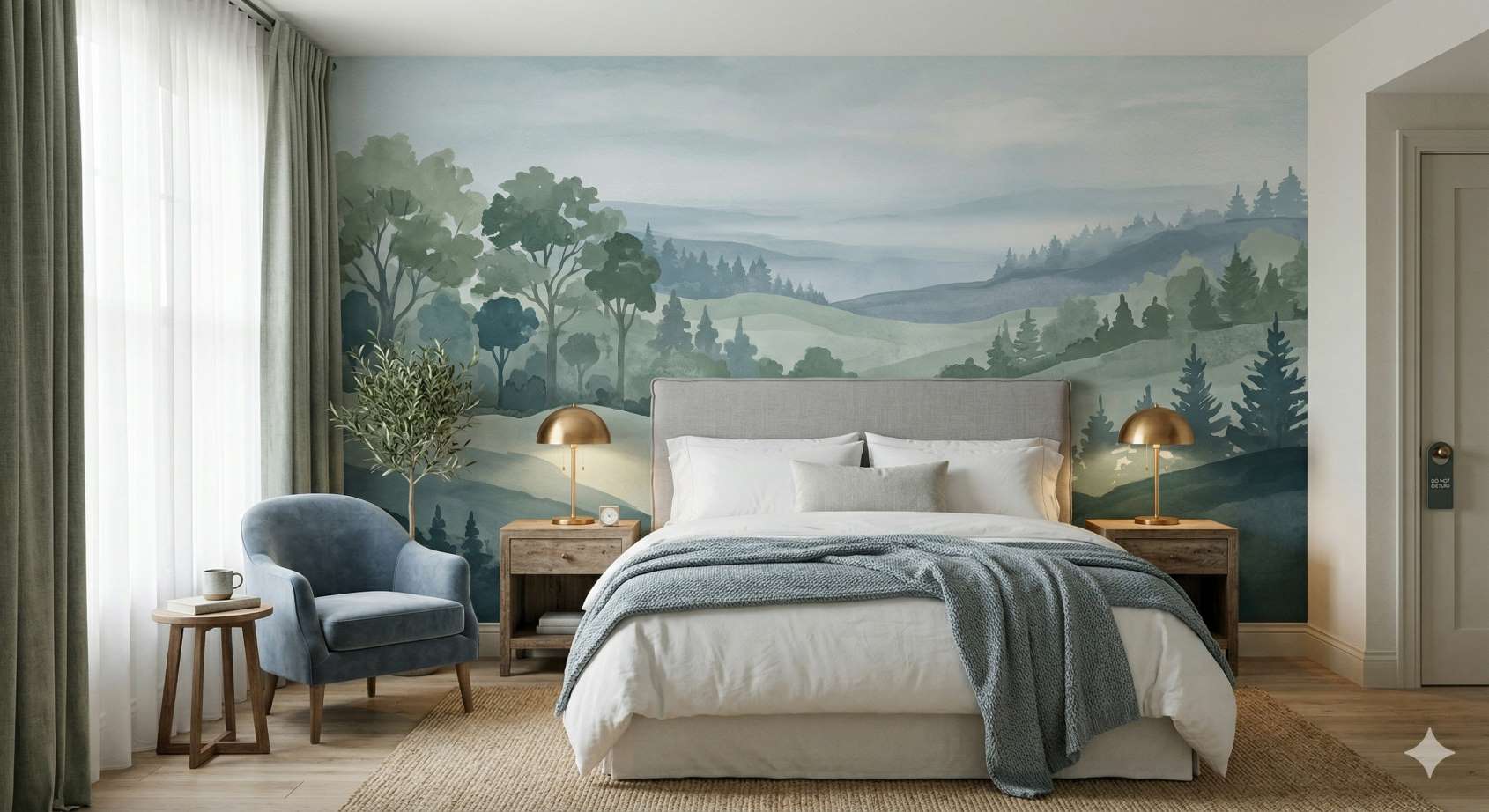
Description
Selecting the right hotel room wallpaper mural is a balancing act between high-impact aesthetics and operational durability. It isn’t just about picking a “pretty picture”; it’s about reinforcing the brand identity while ensuring the guest room remains a functional, calming space for travelers.
The “correct” design is typically determined by these five core pillars:
1. Brand Identity and Narrative
The mural should act as a visual storyteller. A luxury boutique hotel in a historic city might opt for a modern take on a local map or a vintage architectural sketch, whereas a beach resort might lean toward abstract watercolor waves.
Context
Does the design reflect the specific location (neighborhood, history, or nature)?
Cohesion
Does it match the color palette and material finishes of the furniture and flooring?
2. Scale and Spatial Dynamics
The size of the room and the height of the ceilings dictate the “weight” of the mural.
Visual Expansion
In smaller rooms, murals with a clear horizon line or deep perspective can make the space feel larger.
Focal Point
The most common placement is behind the headboard. The design should be composed so that the bed doesn’t cut off the “hero” part of the image (the main visual interest).
The “3-Foot vs. 10-Foot” Rule
A mural must look sharp from across the room. But it shouldn’t feel overwhelming or blurry when the guest is sitting right next to it.
3. Hotel Room Wallpaper Colour Palette: The Psychology of Colour and Mood
Hotel rooms are primarily for rest. The mural’s color palette significantly impacts the guest’s ability to unwind.
Cool Tones
Blues, greens, and soft greys are standard for promoting sleep and relaxation.
Warm Tones
Often used in social areas, but in guest rooms, they are usually limited to “accents” within the mural to avoid overstimulation.
Avoidance of “Busy-ness”
Highly intricate, high-contrast patterns can cause visual fatigue over a multi-night stay.
4. Hotel Room Wallpaper Technical Performance (The “Hotel Grade”)
Because guest rooms see high turnover, the material determines the design’s longevity.
Type II Vinyl
This is the industry standard for hospitality. It is durable, scrubbable, and fire-rated.
Customization
Many hotels use digital printing on Type II vinyl to allow for specific brand colors that won’t fade under the room’s UV exposure from windows.
Acoustics
In some high-end designs, murals are printed on acoustic felt or fabric backings to help dampen sound between rooms.
5. Lighting Compatibility
The mural will look different at 2:00 PM in natural light than it does at 9:00 PM under warm bedside lamps.
Finish
A matte or “suede” finish is usually preferred over a glossy finish to prevent harsh glares from task lighting.
Placement
Designers must consider where shadows from lamps or furniture will fall, ensuring they don’t obscure the mural’s key details.
Summary Checklist for Selection
| Factor | Ideal Approach |
| Material | Type II Vinyl (Commercial Grade) |
| Palette | Subdued, brand-aligned tones |
| Theme | Localized or abstract-calming |
| Composition | “Hero” elements visible above the headboard |
| Maintenance | Washable and tear-resistant |