


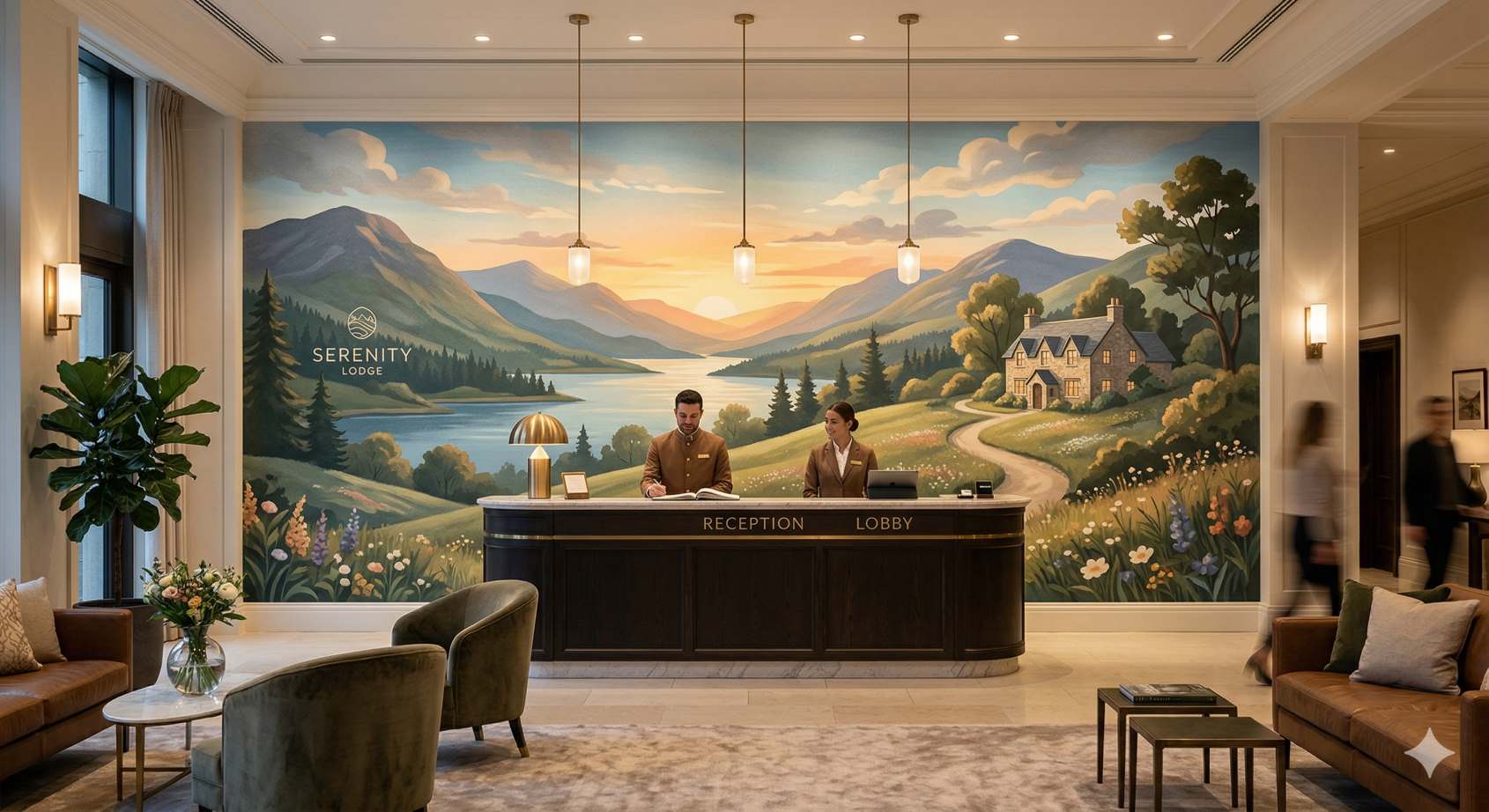
Description
Hotel wallpaper design is less about “decorating” and more about strategic storytelling.
It’s not just a surface treatment; it’s a tool for sensory zoning.
Each functional department requires a different “vibe.” The Lobby uses grand murals to establish brand identity. But Corridors employ rhythmic textures to guide movement. And Guest Rooms utilize soft, non-woven materials to signal safety and rest. By strategically varying patterns and weights—from heavy-duty Type II vinyls to acoustic fabrics—we shift the guest’s mindset. And seamlessly transition them from the public energy of the street to the private sanctuary of their room.
Here is an overview of how we approach wallpaper design across the functional layers of a major hotel.
1. Lobby & Reception Hotel Wallpaper Design
The hotel lobby wallpaper serves as the hotel’s “brand handshake,” acting as the critical first impression. This area handles constant foot traffic and luggage. Therefore, the wallpaper must be high-impact yet physically indestructible. It functions as a visual anchor that immediately communicates the hotel’s unique personality and standards to every guest who walks through the front doors.
Hotel Lobby Wallpaper Design Strategy
To establish a “sense of place,” we prioritize oversized murals or bespoke digital prints that reflect local culture or history. In high-end luxury settings, we might specify hand-painted silk or genuine metallic leaf. These focal points create an immersive environment, turning standard walls into curated art installations that define the hotel’s narrative.
Technical Specs
Aesthetic beauty must be backed by Type II Commercial Vinyl durability. These wallcoverings are engineered to withstand aggressive luggage bumps, fluctuating humidity levels, and the harsh chemicals used in constant professional cleaning. This ensures the hotel wallpaper design remains pristine for years. Protecting the investment against the daily wear and tear of a bustling public environment.
The Goal of The Hotel Lobby Wallpaper
The ultimate objective of hotel lobby wallpaper design is psychological. That is establishing a definitive “Wow” factor within the first seven seconds of entry. By utilizing scale, texture, and lighting, the wallpaper signals to the guest that they have arrived somewhere exceptional. It transforms a functional transitional space into an aspirational experience, justifying the guest’s choice and setting the tone for their stay.
2. Hotel Transition Zones Wallpaper Design
Corridors are the most challenging functional areas. Because they are long, windowless, and subject to extreme wear from housekeeping carts. These “transit arteries” lack natural focal points. That means the wallcovering must provide both visual interest and extreme resilience. Without strategic design, these spaces can feel claustrophobic or institutional, failing to maintain the guest’s emotional journey to their room.
Hotel Zoning Wallpaper Design Strategy
We avoid small, busy patterns that can cause a “dizzying” moiré effect in long hallways. Instead, we specify linear textures or gradient ombrés to pull the guest toward their destination. These directional designs break up the monotony of the corridor, creating a sense of movement and rhythm while subtly masking the inevitable length of the building’s floor plan.
The Secret Sauce
The “secret” to longevity is a split-wall approach. We use a darker color or a high-texture, scuff-resistant wallcovering on the lower half of the wall at dado height. This strategically hides the inevitable marks from suitcase wheels and housekeeping carts. This dual-material application balances high-end aesthetics on the upper half with rugged, practical protection where it is needed most.
Acoustics
Beyond visuals, heavy-duty fabric-backed vinyl is essential for noise control. These thick, multi-layered materials help dampen the sound of echoing footsteps, muffled conversations, and rolling service carts on hard floors. By absorbing mid-range frequencies, the wallpaper ensures that the corridor remains a quiet transition zone, preventing the “echo-chamber” effect from disturbing guests resting in adjacent rooms.
3. The Hotel Guest Rooms Wallpaper Design
In the guest room, we pivot from “brand impact” to “residential comfort.” While public spaces demand high energy, the room is a private sanctuary intended for decompression. The wallpaper must facilitate a psychological shift, moving the guest away from the bustling “micro-city” outside and into a soft, personalized environment that prioritizes relaxation, intimacy, and a sense of belonging.
Hotel Guest Rooms Wallpaper Design Strategy
We utilize the “feature wall”—typically located behind the headboard—to showcase the most intricate patterns or rich textures. This creates a sophisticated focal point upon entry without overwhelming the senses. By keeping the remaining three walls neutral and calming, we balance visual interest with restorative simplicity, ensuring the design enhances sleep quality rather than competing with it.
The Feel
To achieve a high-end residential atmosphere, we lean into tactile materials. Grasscloth textures (or high-quality vinyl mimics) add a layer of organic warmth and depth that flat paint simply cannot achieve. These materials catch the light softly, softening the room’s acoustics and creating a cocoon-like effect that makes the space feel expensive, handcrafted, and intentionally designed.
Functional Note
Sustainability is a primary driver in modern guest room specifications. We are increasingly moving toward PVC-free and breathable wallcoverings to ensure a healthier indoor air quality for guests. These breathable substrates are technically essential for preventing mold issues in climate-controlled rooms, particularly in humid environments, by allowing moisture to escape rather than trapping it against the drywall.
4. High-Octane Environments: Bars & Restaurants
In high-octane environments like bars and restaurants, the wallpaper acts as a vital component of the entertainment. Unlike the serene guest rooms, these social hubs demand energy and drama. The wallcoverings serve as a backdrop for the nightlife experience, enhancing the atmosphere and encouraging social interaction by transforming the physical space into a vibrant, high-energy stage for the hotel’s guests.
Hotel Bar & Restaurants Wallpaper Design Strategy
We lean into bold, moody, and theatrical designs to heighten the evening experience. In bars, we specify dark, reflective, or iridescent finishes that interact dynamically with low-level accent lighting. These sophisticated surfaces create a sense of depth and luxury, using shimmer and shadow to craft an intimate, exclusive vibe that standard matte finishes simply cannot replicate in dim environments.
Zoning
In modern open-plan hotels, wallpaper is the most cost-effective tool for “zoning” a restaurant from the lobby without constructing physical walls. By shifting patterns or color palettes at the transition point, we create a clear psychological boundary. This visual cue tells the guest they have moved from a transitional public space into a distinct, dedicated dining destination.
Hygiene
Functional integrity is paramount in hospitality dining areas. Wallcoverings must be officially rated as “scrubbable”—a higher standard than “washable”—to withstand frequent cleaning of food and drink splashes. These high-performance surfaces are specifically engineered to endure repetitive agitation and mild detergents, ensuring the design remains vivid and hygienic despite the inevitable spills of a busy food service environment.
5. Hotel Professional Spaces Wallpaper Design
Professional spaces like ballrooms and meeting rooms must be “chameleons.” Shifting effortlessly from corporate seminars by day to elegant weddings by night. Because these rooms host diverse demographics and lighting setups, the wallpaper design must remain sophisticated yet neutral. It serves as a high-end canvas that adapts to the specific decor of any event, ensuring the space feels appropriate for every occasion.
Hotel Wallpaper Design Strategy
We look for high-sheen textures or subtle geometric patterns in sophisticated tones like champagne, pearl, or soft grey. These metallic and pearlescent finishes are chosen specifically to catch “event lighting” beautifully. By reflecting various color temperatures, the wallcovering adds a layer of luxurious depth that enhances festive evening atmospheres while remaining professional and understated during bright daylight meetings.
Acoustic Wallpaper
Functionality is paramount in large gatherings, which is why we frequently specify Acoustic Wallcoverings. These specialized felt or fabric-based materials feature a high NRC (Noise Reduction Coefficient) rating, designed to absorb sound rather than reflect it. This is critical for stopping echoes during speeches and ensuring clear audio for presentations, making the room as acoustically sound as it is visual.
Pro-Tip for Big Hotels: The “Random Match” Advantage
In large-scale hospitality projects, specifying a “Random Match” pattern is one of the most effective ways to protect your budget and timeline. Unlike “Straight” or “Drop” matches—which require precise horizontal alignment across every seam—a random match allows the installer to hang strips without worrying about pattern continuity.
Increased Wallpaper Installation Speed
When installers don’t have to spend time measuring and shifting every drop to align complex motifs, they find a much faster “flow.” In a hotel with hundreds of rooms, a 20% increase in speed translates to significant labor cost savings.
Drastic Wallpaper Waste Reduction
With aligned patterns, you often discard a portion of every roll to find the “match point.” On a 5,000-meter order, random matches eliminate this waste, allowing you to use almost every inch of the material.
Seamless Maintenance
If a panel is damaged, it can be replaced with a leftover scrap without needing to match the specific repeat of the surrounding panels, making repairs invisible.
| Department | Primary Material | Design Vibe | Durability Requirement |
| Lobby | Custom Digital Mural | Grand/Identity | Extreme (High Traffic) |
| Corridors | Embossed Type II Vinyl | Rhythmic/Linear | Scuff-Proof |
| Guest Rooms | Fabric-look/Non-woven | Soft/Textural | Moderate/Breathable |
| Restrooms | Treated Vinyl/Mylar | Bold/Jewel-box | Waterproof/Sanitizable |
| Ballrooms | Acoustic Silk/Suede | Neutral/Elegant | Impact Resistant |
Pro-Tip for Big Hotels Wallpaper Design
In large-scale hospitality projects, specifying a “Random Match” pattern is one of the most effective ways to protect your budget and timeline. Unlike “Straight” or “Drop” matches—which require precise horizontal alignment across every seam—a random match allows the installer to hang strips without worrying about pattern continuity.
1. Increased Installation Speed
When installers don’t have to spend time measuring and shifting every drop to align complex motifs, they find a much faster “flow.” In a hotel with hundreds of rooms, a 20% increase in speed translates to significant labor cost savings. And allows other trades (like furniture installation) to begin sooner, hitting your opening deadline.
2. Drastic Wallpaper Waste Reduction
With aligned patterns, you often have to cut off and discard a portion of every roll to find the “match point.” On a 5,000-meter order, a 10% “waste factor” means 500 meters of expensive material goes straight into the trash. Random matches eliminate this, allowing you to use almost every inch of the roll.
3. Seamless Maintenance
For the hotel’s facility manager, random matches are a dream. If a single panel is damaged by a luggage cart, it can be replaced with a leftover scrap without needing to match the specific repeat of the surrounding panels. This makes repairs invisible and extends the life of the overall design.
Since you’re looking at this from a design perspective, are you planning a renovation for a specific brand style, or are you focusing more on the technical installation side?
Hotel wallpaper for home decor
In the interior design world, we call this “Hospitality-Grade Home Design.” Many homeowners are moving away from flimsy residential wallpapers and opting for the materials and techniques used in five-star hotel wallpaper design to achieve that “everlasting luxury” feel.
Here is how you can translate hotel wallpaper strategies into your own home:
1. The “Type II” Hotel Wallpaper Upgrade
The biggest difference between residential and professional wallcoverings is durability. Standard home wallpaper is typically paper-based or thin non-woven material, which is susceptible to tearing, staining, and moisture damage. While these options offer diverse patterns, they lack the structural integrity required to survive the daily “bumps and bruises” of a busy household, often requiring replacement after just a few years.
The Hotel Approach
To achieve professional-grade longevity, homeowners should adopt the hotel strategy of using Commercial Type II Vinyl in high-traffic areas like foyers, mudrooms, or narrow hallways. These materials are engineered with a heavy-duty fabric backing and a thick vinyl wear layer, specifically designed to withstand the constant friction and environmental stress that would quickly destroy standard residential paper.
The Home Benefit
The primary benefit is that these surfaces become virtually indestructible. Because they are “scrubbable,” you can easily clean off mud from pets or marks from children using soap and water without damaging the design. Additionally, the impact-resistant surface won’t scuff when hit by vacuum cleaners or moving furniture, maintaining a pristine, five-star appearance for decades rather than years.
2. The Boutique Hotel “Feature Wall” Mural
Hotels rarely wallpaper all four walls with a dense pattern because it can make the environment feel “closed in” and visually chaotic. In professional design, we understand that too many patterns compete with the room’s architecture and lighting. By limiting the most intense visuals to a single surface, we maintain a sense of airiness while still delivering a high-impact design statement.
The Hotel Approach
We strategically place a high-impact, expensive mural or intricate pattern behind the headboard to serve as the room’s anchor. On the remaining three walls, we specify a matching weighted texture, such as a subtle linen or silk-effect vinyl. This hierarchy of materials ensures the space feels cohesive and curated, focusing the guest’s attention exactly where it was intended.
The Home Benefit
Adopting this strategy creates a professional, “nested” look that instantly elevates a bedroom. It draws the eye toward the bed—the natural focal point—while the surrounding textured walls make the room feel significantly quieter and more expensive than standard flat paint. This layering of textures provides a sense of depth and luxury that mimics a high-end boutique hotel experience.
3. Visual “Zoning” Wallpaper
In a large hotel, wallpaper serves as a functional map, clearly signaling where the lobby ends and the bar begins. This visual shorthand is essential for guiding guests through expansive, open-plan environments. By utilizing different wallcoverings, designers establish a sense of order and purpose, ensuring that each functional area possesses its own distinct identity without the need for physical barriers.
The Hotel Approach
Designers utilize a dramatic color shift or a bold texture change to define a space’s transition. For instance, moving from a bright, neutral lobby to a dark, metallic-textured lounge instantly communicates a change in atmosphere. This strategic use of contrast allows for a seamless flow between departments while maintaining clear psychological boundaries between high-energy social zones and quieter transition areas.
The Home Benefit
In modern “open-plan” homes, this technique allows you to use a specific wallpaper in a dining “niche” or home office to separate it from the living room without building a wall. It creates a sophisticated “room within a room” effect. This approach defines functional zones visually, adding architectural interest and a sense of intimacy to large, multi-purpose living spaces.