


Description
Hotel Wallpaper Murals: The Art of the Atmosphere
In the competitive landscape of modern hospitality, the transition from a “place to stay” to an “experience to remember” often hinges on interior design. Hotel wallpaper murals have emerged as one of the most potent tools in a designer’s arsenal to achieve this transformation. Unlike standard repeating patterns, murals offer a cinematic scale, storytelling potential, and a bespoke feel that can define a brand’s identity.
From the grand lobbies of luxury resorts to the intimate corners of boutique urban stays, wallpaper murals serve as functional art. They manipulate perceived space, evoke specific emotional responses, and—perhaps most importantly in the digital age—provide the “Instagrammable” moments that drive organic marketing.
1. The Strategic Role of Murals in Hospitality
The primary objective of hotel design is to create a sense of “elsewhere.” Murals are uniquely suited for this because they break the visual monotony of four walls.
Creating a Sense of Place
Murals often serve as a bridge between the hotel interior and its geographic location. A hotel in Nairobi might feature a stylized savanna landscape or a modern interpretation of Maasai beadwork patterns, while a coastal Mediterranean villa might use a mural of sun-drenched lemon groves. This helps guests feel grounded in their destination the moment they step into the room.
Visual Architecture and Space Manipulation
Murals can physically change how a room is perceived:
Depth Perception: The Infinite Horizon
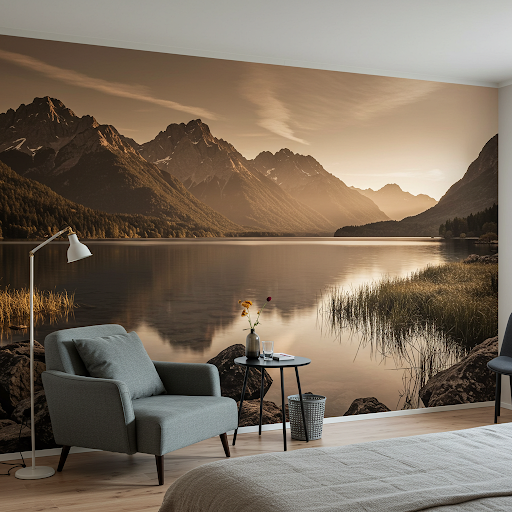
Scenic murals utilize atmospheric perspective to trick the brain into perceiving distance where there is only a flat surface. By featuring a clear foreground, middle ground, and a fading background—such as a misty mountain range or a receding forest path—the wall “disappears.” This $trompe\ l’oeil$ effect effectively pushes the room’s boundaries outward, making cramped guest rooms feel expansive and airy.
Verticality: Drawing the Eye Upward
In grand entryways, murals act as a visual anchor that celebrates the scale of the building. By utilizing vertical motifs—such as ascending geometric lines, tall birch trees, or fluid, upward-drifting abstract brushstrokes—designers can emphasize the “Y-axis” of a space. This heightens the sense of luxury and architectural drama, making a high-ceilinged lobby feel both majestic and intentional rather than cavernously empty.
3. Zoning: Defining Space Without Walls
Murals serve as “anchor points” that psychologically separate functional areas in open-concept designs. In a large suite, a bold mural behind a desk identifies a professional “office zone,” while a softer, textured mural near the sofa establishes a “relaxation zone.” This technique maintains an unobstructed floor plan and natural light flow while providing guests with clear, intuitive cues for the room’s intended uses.
2. Categorization of Hotel Wallpaper Mural Styles
To effectively align a mural with a hotel’s brand persona, designers look beyond mere decoration. They treat the wall as a narrative device. Because a mural occupies such a large visual field, it dictates the “emotional temperature” of the room.
Here is an expanded look at the primary categories of hotel wallpaper murals and how they serve specific brand identities.
1. Biophilic and Botanical Hotel Wallpaper Murals: The Wellness Retreat
Biophilic design stems from the evolutionary hypothesis that humans have an innate, biological need to connect with nature. In hospitality, this translates to using wallpaper murals that mimic the complexities of the natural world. By integrating these organic patterns, hotels satisfy a subconscious craving for the outdoors, fostering an environment that feels biologically “right” and deeply restorative for the modern traveler.
Brand Persona
This style perfectly suits brands that identify as earthy, rejuvenating, or eco-conscious. It is the hallmark of luxury-wellness retreats and sustainable “green” hotels. By choosing botanical murals, a property signals a commitment to guest health and environmental harmony, appealing to discerning travelers who prioritize mindfulness, organic aesthetics, and a soft, holistic approach to high-end hospitality and interior design.
Visual Elements
Common motifs include oversized monstera leaves, cascading ferns, and intricate, hand-drawn floral illustrations that create a lush, immersive garden effect. Designers also utilize deep forest canopies or misty woodland scenes to provide a sense of scale. These elements often feature a palette of sage, moss, and emerald, occasionally accented by vibrant tropical blooms to add a sophisticated layer of visual texture.
Strategic Impact
In high-stress environments like airport hotels or dense urban centers, botanical murals serve as a vital “mental reset.” Research suggests that viewing nature-inspired imagery can lower heart rates and reduce cortisol levels. Consequently, these murals are strategically placed in spas and guest rooms to encourage deep relaxation and improved sleep quality, transforming a standard room into a therapeutic sanctuary.
2. Abstract and Geometric: The Modern Trendsetter
Abstract hotel wallpaper murals represent a departure from literal scenery, prioritizing the evocative power of color, form, and movement. By stripping away recognizable objects, these designs engage the guest’s imagination and focus on the rhythmic flow of the space. This category is defined by its ability to create a “vibe” rather than a specific picture, offering a sophisticated, non-prescriptive visual experience.
Brand Persona
This aesthetic is the calling card of avant-garde, energetic, and tech-forward properties. It aligns perfectly with “lifestyle” boutique hotels that want to feel current, edgy, and intellectually stimulating. By utilizing abstract murals, a brand positions itself as a curator of modern culture, appealing to travelers who seek out bold design, innovation, and a break from traditional hospitality norms.
Visual Elements
The visual vocabulary of this style includes fluid watercolor washes that suggest movement, or mid-century modern geometric shapes that provide a sense of structured nostalgia. Bold “color-blocking” techniques are often used to create high-contrast focal points. These elements often feature vibrant pigments or metallic accents, resulting in a dynamic surface that changes appearance depending on the room’s lighting.
Strategic Impact
These murals are highly effective for properties targeting younger, creative professionals who value self-expression. Because abstract designs don’t dictate a specific narrative, they allow guests to project their own moods and interpretations onto the environment. This flexibility makes them ideal for social hubs like lobbies and bars, where the bold visuals act as “social glue” to stimulate curiosity and conversation.
3. Historical and Vintage Hotel Wallpaper Murals: The Heritage Storyteller
For hotels situated within landmark buildings or nestled in storied historic districts, murals serve as a vital bridge to the past. These designs do not just decorate a wall; they contextualize the property within its own timeline. By reviving archival aesthetics, the hotel transforms its interior into a living museum, allowing guests to inhabit a specific moment in local history.
Brand Persona
This style is synonymous with a sophisticated, academic, and timeless brand persona. It appeals to the prestigious “old world” traveler who values heritage over fleeting trends. By selecting vintage murals, a hotel communicates a sense of permanence and intellectual depth, positioning itself as a guardian of culture and a refined destination for guests who appreciate elegance and historical narrative.
Visual Elements
The visual palette often features sepia-toned archival maps, 18th-century “panoramique” landscapes—such as the iconic Zuber style—and detailed vintage architectural sketches. These elements prioritize fine line work and muted, aged color palettes. Whether it is a classical etch or a romanticized vista, the imagery feels curated and hand-crafted, evoking the era of grand explorations and traditional artistry.
Strategic Impact
These designs provide a palpable sense of “gravitas,” grounding the hotel in its environment. They reassure the guest of the property’s long-standing reputation and cultural importance. Implementing a mural of a 1920s street map or a local historical event adds a layer of authenticity that travelers find highly valuable, fostering a deeper, more meaningful connection to the destination.
4. Textural Illusions: The “Quiet Luxury” Aesthetic
In the realm of high-end design, the most effective mural is often one that completely camouflages its own medium. Modern digital printing enables hyper-realistic “trompe l’oeil” textures that mimic physical materials with startling accuracy. These murals trick the senses, transforming a flat drywall surface into a rich, three-dimensional architectural element that adds immediate substance and character to a hotel interior.
Brand Persona
This aesthetic perfectly aligns with a minimalist, high-end, and exclusive brand persona. It appeals to the guest who appreciates “quiet luxury”—the idea that true quality doesn’t need to shout. By utilizing textural murals, a property projects a tactile and sophisticated image, attracting a discerning clientele who values refined material palettes, structural honesty, and a serene, uncluttered visual environment.
Visual Elements
The visual library for this style includes high-resolution captures of dramatic Italian marble veining, raw industrial concrete, and weathered wood planks. Designers also utilize murals that replicate the delicate sheen of woven silk fabrics or the ruggedness of hand-hewn stone. These elements focus on micro-details, capturing the subtle shadows and highlights that give these materials their characteristic depth and realism.
Strategic Impact
These murals allow a hotel to achieve the aesthetic of premium materials—like a massive, book-matched marble feature wall—at a fraction of the traditional cost, installation time, and structural weight. This creates an atmosphere of “understated wealth” that resonates with guests. By appealing to a guest’s perceived sense of touch, the hotel enhances the overall perceived value of the stay.
5. Illustrative and Narrative: The Bespoke Experience
Illustrative murals treat the hotel wall as a canvas for storytelling, often featuring custom commissions from local artists. This category moves beyond pattern into the realm of fine art, designed specifically to communicate the unique spirit and narrative of a single property. These murals act as a visual dialogue between the hotel and the guest, offering a one-of-a-kind interior experience.
Brand Persona
This approach is ideal for whimsical, local-centric, or “story-driven” boutique hotels. It appeals to the modern traveler who seeks out “discovery-based” stays and values personality over corporate uniformity. By embracing an illustrative style, a brand positions itself as a creative curator and a passionate storyteller, attracting guests who want their accommodation to be as expressive and unique as they are.
Visual Elements
The visual language includes intricate line-art illustrations of nearby landmarks, stylized depictions of local folklore, or hand-painted scenes that reflect the city’s character. Some designers even incorporate “hidden object” murals or “Where’s Waldo” style details that encourage guests to pause and look closer. These elements often feature a hand-drawn quality, adding a sense of human touch and warmth.
Strategic Impact
This is the ultimate tool for market differentiation, creating a “unique fingerprint” for the hotel that competitors simply cannot replicate. When a guest captures and shares a photo of a property-specific mural on social media, it provides high-value organic marketing. These narrative walls turn guests into brand ambassadors, effectively communicating the hotel’s distinct identity and charm to a global digital audience.
Comparison of Brand Impact
| Mural Style | Primary Emotion | Best For… |
| Botanical | Calm / Freshness | Wellness resorts & Urban escapes |
| Abstract | Excitement / Creativity | Tech-hubs & Boutique hotels |
| Historical | Nostalgia / Respect | Luxury heritage properties |
| Textural | Sophistication / Solidity | Executive suites & Modernist hotels |
| Illustrative | Curiosity / Playfulness | Family-friendly or Art-focused stays |
3. Technical Specifications: Material and Durability
Hotel environments demand a level of durability far beyond residential standards. The choice of substrate is critical for both longevity and safety.
Vinyl Substrates (Type II)
Most commercial hotels utilize Type II Vinyl. This is a heavy-duty, fabric-backed substrate designed for high-traffic areas.
Durability
Resistant to scuffs, scratches, and impacts from luggage carts.
Cleanability
Scrubbable and resistant to harsh cleaning chemicals.
Safety
Usually carries a Class A fire rating, which is a legal requirement in most jurisdictions for public spaces.
Acoustic Murals
With the rise of “work from hotel” trends, acoustic murals have become popular. These are printed on sound-absorbing materials (like felt or high-density foam) to reduce echo in lobbies and meeting rooms. The $NRC$ (Noise Reduction Coefficient) of these materials often ranges from 0.20 to 0.45, significantly improving the auditory comfort of a space.
Sustainable Options
Eco-conscious brands are moving toward PVC-free wallpapers, recycled polyester backings, and VOC-free (Volatile Organic Compound) inks. These materials ensure that the “fresh room” smell isn’t actually a cocktail of off-gassing chemicals.
4. Strategic Placement: Where Hotel Murals Shine
The Hotel Guest Room Headboard Wallpaper
The wall behind the bed is the most common location for a mural. It creates a “feature wall” that acts as a headboard extension. Because the guest doesn’t see this wall while lying in bed, it can be bold and dramatic without being overstimulating when the guest is trying to sleep.
The Elevator Lobby and Corridors
Long hotel hallways can feel clinical and repetitive. Murals can act as “wayfinding” markers. For example, each floor could feature a different color palette or a segment of a continuous story, helping guests identify their floor intuitively.
Public Restrooms
Hotel wallpaper mural designers often use “jewel box” design for restrooms—small spaces where they can be incredibly daring. High-contrast, maximalist murals are a favorite here, creating a surprise element for the guest.
5. Hotel Wallpaper Murals Design and Customization Process
The shift from mass-produced rolls to Digital Printing has revolutionized hotel murals.
Scaling
Murals are now custom-fitted to the exact dimensions of a wall. A designer can provide the height and width, and the artwork is scaled so that key elements (like a bird or a mountain peak) aren’t cut off by a door frame or a light switch.
Color Matching
Digital files can be tweaked to match the specific Pantone colors of the hotel’s upholstery or brand identity.
Bespoke Art
Many hotels now commission local artists to create digital illustrations that are then converted into murals, ensuring a 100% unique aesthetic that cannot be found elsewhere.
6. Installation and Maintenance Considerations
A mural is only as good as its installation. In a hotel setting, the “seams” are the enemy.
Double-Cutting
Professional installers use a technique where panels overlap and are cut through both layers simultaneously, resulting in a nearly invisible seam.
Anti-Graffiti Coatings
In high-traffic public areas, a clear “top-coat” can be applied to the mural to allow for the easy removal of permanent markers or scuffs.
Replacement
One advantage of digital murals is that if a single panel is damaged (e.g., by a leaking pipe), a replacement for that specific panel can be printed, provided the original digital file and printer settings are archived.
7. Hotel Wallpaper Future Trends: The Digital Frontier
The next evolution of hotel murals involves Augmented Reality (AR). Some forward-thinking hotels are installing murals that “come to life” when viewed through a smartphone app. A botanical mural might show butterflies fluttering, or a historical map might reveal pop-up facts about the city’s history.
Additionally, 3D-textured murals are gaining traction—using UV-printing technology to create raised textures that mimic stone or embroidery, adding a tactile dimension to the visual experience.
Conclusion
Hotel wallpaper murals are more than just decoration. They are a strategic investment in guest satisfaction and brand storytelling. By combining high-performance materials with bespoke artistry, hotels can create immersive environments that resonate with travelers long after they have checked out. Whether it’s the calming influence of a forest canopy in a wellness suite or the vibrant energy of an abstract piece in a rooftop bar, the mural is the defining brushstroke of modern hotel wallpaper murals design.