


Description
Popular Lion Wall Mural Styles for 2026
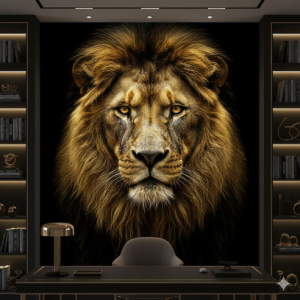
The lion wall mural is a timeless design choice that has evolved from ancient symbols of power into modern masterpieces of biophilic and atmospheric art. Whether you are looking for a bold statement of leadership or a serene, nature-inspired sanctuary, the lion offers a versatile subject that fits into nearly any interior philosophy.
Modern lion murals have evolved into sophisticated architectural tools. In 2026, the choice of style is no longer just about the image. It is about the psychological “vibe” it projects into the room.
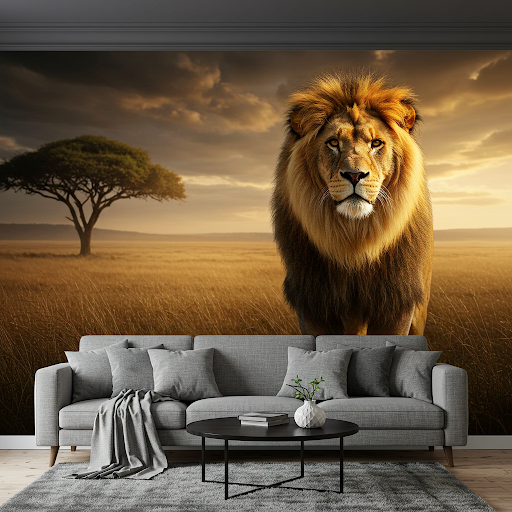
The “King of the Jungle” Portrait (Hyper-Realism)
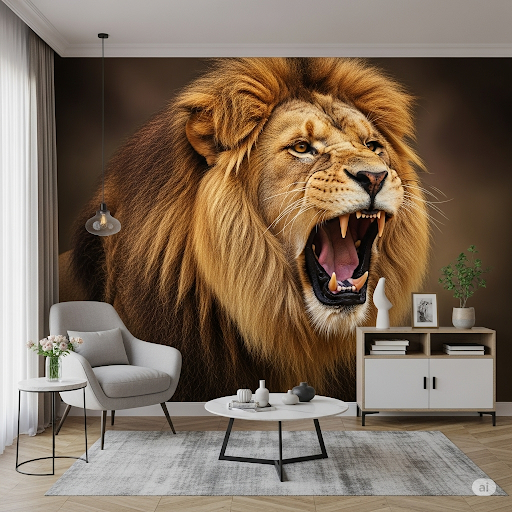
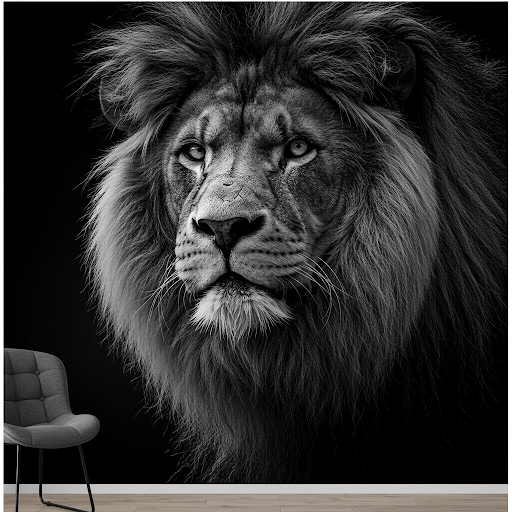
This style utilizes technical precision to create a commanding presence. By focusing on the intense gaze and the individual, tactile fibers of the mane, the “King of the Jungle” mural acts as a psychological anchor for leadership and confidence. In high-stakes environments like home offices or corporate boardrooms, these high-fidelity portraits remove the artistic “filter,” forcing a direct confrontation with the lion’s majesty.
Scientific studies on visual storytelling show that hyper-realistic imagery is processed faster by the brain. And triggers an immediate awe response. This “biological realism” helps anchor a room, making the space feel authoritative and grounded. It is particularly effective on a single feature wall where it can dominate the corridor or office with a regal, unwavering air.
Abstract & Pop Art Lion Murals (Dynamic Energy)
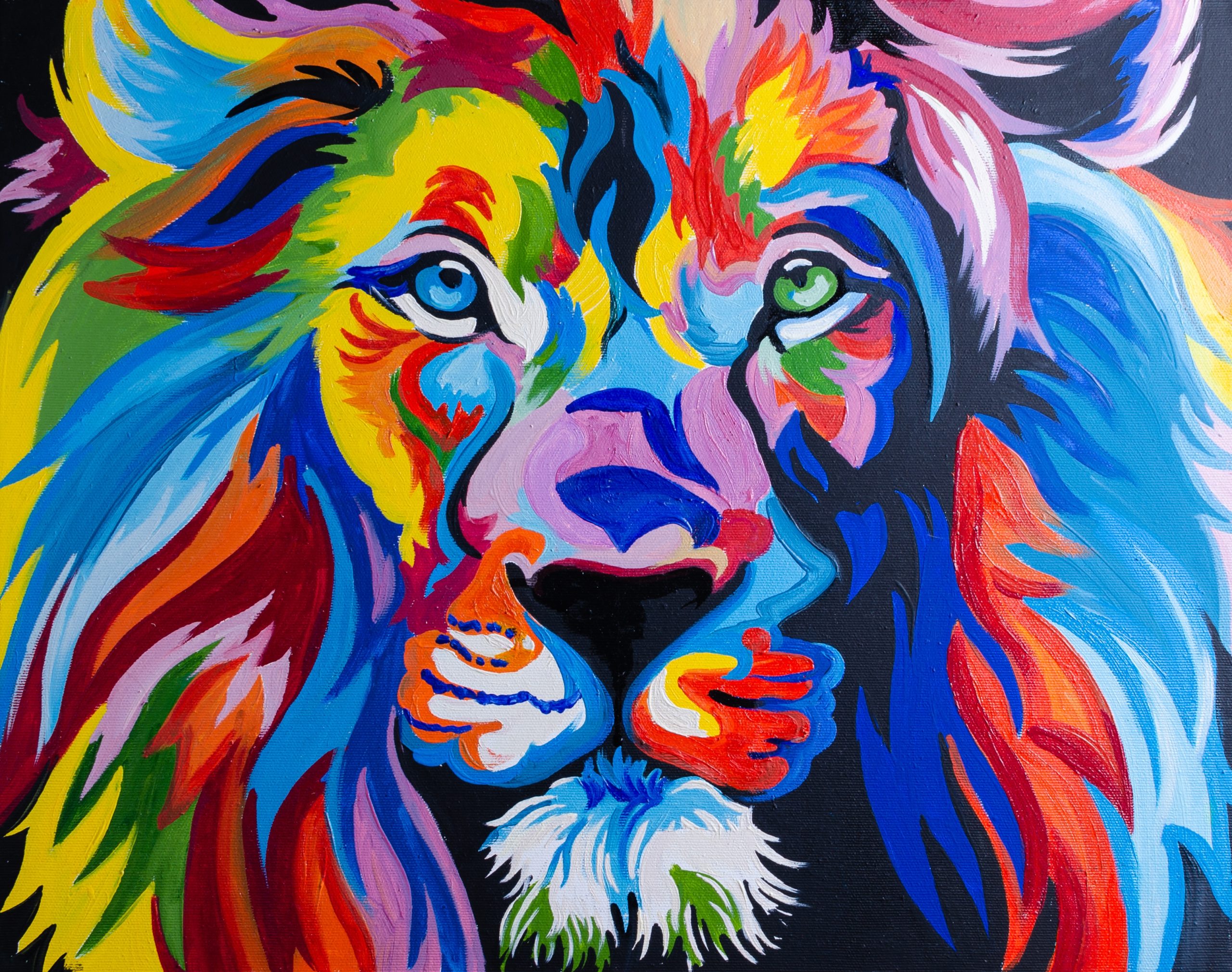
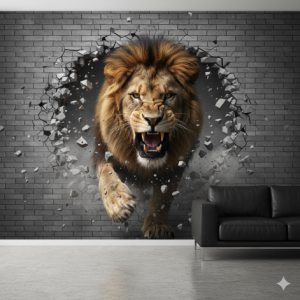
Rejecting literalism, Abstract and pop art lion murals use vibrant, explosive palettes. And often featuring neon blues, magentas, and oranges—to communicate the lion’s raw energy. Artists utilize fragmented lines and geometric shards to suggest movement and spirit rather than anatomy. In the 2026 “Retro 70s Revival” and “Floral Pop” trends, these murals serve as the “energy drink” of interior design.
This style is perfect for high-traffic, creative, or eclectic spaces. Like modern living rooms or fitness studios. By transforming the lion from a biological entity into a modern symbol of creativity and drive, these murals stimulate innovative thinking. The juxtaposition of bold colors creates visual tension. Making it an ideal choice for rooms meant to inspire social interaction and “untamable” momentum.
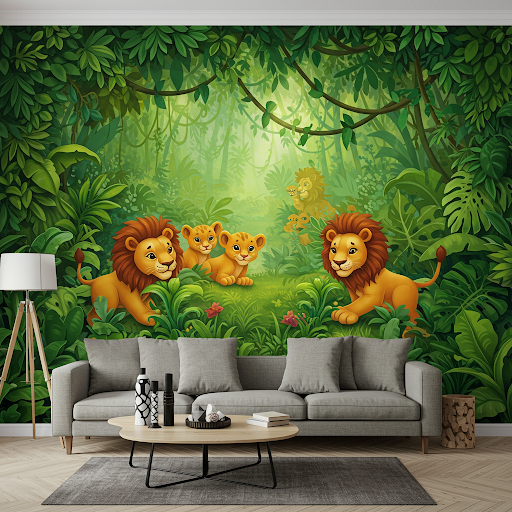
The Biophilic Lion (Atmospheric Integration)
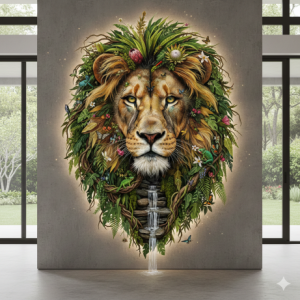
The latest shift in 2026 is the Biophilic Lion Wall Mural. Where the animal is no longer a solitary subject but part of a larger, interconnected ecosystem. Here, the lion is often partially obscured by oversized tropical leaves. Or “drenched” in a misty, watercolor-style forest using 2026’s “Midnight Palette” (midnight navy, emerald, and charcoal).
This aesthetic prioritizes serenity and “soft fascination” over intensity. Based on Attention Restoration Theory (ART), these nature-integrated scenes help reduce cognitive fatigue and stress. Designed for bedrooms and “digital detox” zones, the goal is to feel protected by nature rather than dominated by a predator. The mural provides a “collective exhale,” offering a restorative atmosphere that mimics the calming effect of an actual forest walk.
Style Comparison Matrix
| Feature | Hyper-Realistic Portrait | Abstract & Pop Art | The Biophilic Lion |
| Primary Emotion | Respect & Authority | Joy & Vitality | Peace & Security |
| Best Room | Study, Boardroom | Creative Studio, Living Room | Bedroom, Relaxation Nook |
| Color Trend | Earthy Neutrals (Ochre) | Neon & “Future Dusk” | Sage Green & Deep Inks |
| Tactile Quality | Smooth/Photographic | Glossy/Grafitti Texture | Matte/Moss-Like Textures |
2026 Lion Wall Mural Color Palettes & Textures
As we move into 2026, the aesthetic for lion murals shifts from literal “safari” themes toward a curated blend of digital mystery and grounded luxury. The focus is on how color and texture interact with light to influence the psychological “temperature” of the room.
The “Future Dusk” Lion Wall Mural Palette
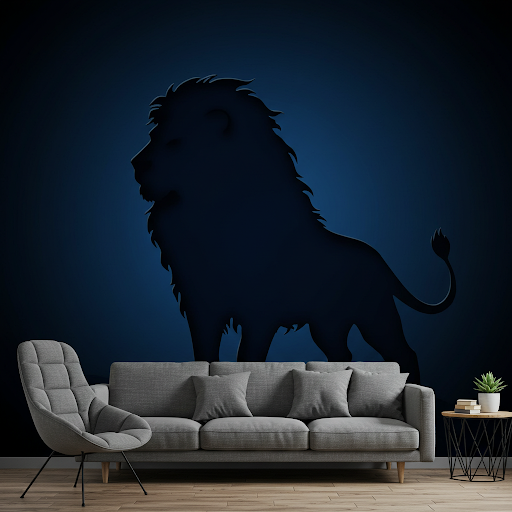
Characterized by deep indigos, moody purples, and midnight blues, Future Dusk is the defining “escapist” palette of 2026. A lion rendered in these tones moves away from the aggressive heat of the sun and into a “celestial” or “night-watchman” vibe. This palette is incredibly effective for bedrooms and relaxation zones because it mimics the transitional energy of twilight. The dark, saturated hues provide a sense of stability and introspection. This turns the lion into a quiet, nocturnal guardian that anchors the room without overwhelming it with bright energy.
Earth-Drenched Tones
In alignment with the “Quiet Luxury” and “Warm Minimalism” movements, this palette utilizes Burnt Sienna, Yellow Ochre, and Raw Umber. These are not just browns; they are “muddy” but sophisticated tones that connect the interior to the ancient earth. By using these natural pigments, the lion mural feels grounded and authentic. As if painted with the very soil of the savanna. This aesthetic works best in living areas and dining rooms, where the warmth of the sienna fosters connection and comfort. This creates a high-end atmosphere that feels timeless rather than trendy.
Lion Wall Mural 3D Sensory Elements
The next generation of interior design moves beyond the visual, transforming a simple wall into a multi-sensory experience. Here is how these 3D elements redefine the “King of the Jungle.”
Sand-Textured Paints
This technique replaces flat pigments with a tactile, gritty medium that mimics the sun-drenched Savannah. By applying these paints to the lion’s powerful physique and the surrounding earth, the mural gains a raw, organic depth. It invites touch, grounding the room with the physical essence of the wild African landscape.
Embossed Metallic Gold
By weaving raised metallic pigments and real gold leaf into the lion’s mane, the mural becomes a living entity. As sunlight shifts through the windows, the embossed strands catch the rays, creating a shimmering 3D effect. This interplay of light and shadow ensures the portrait’s expression evolves from dawn until dusk.
Acoustic Textures
Innovation meets tranquility through the use of carved cork and recycled fibers layered within the lion’s mane. These hidden materials serve a dual purpose: they provide a rich, mossy aesthetic while acting as high-performance sound absorbers. The result is a stunning masterpiece that provides the ultimate “luxury of silence.”
Symbolic Lion Wall Mural Placement (Vastu & Design)
In both modern interior design and ancient practices like Vastu Shastra, the placement of a lion mural acts as a psychological and “energetic” anchor. Positioned in the North or East, the lion symbolizes rising power and the dawn of new opportunities, making it ideal for a home office. Placing the mural in the South represents fame and strength, acting as a “Guardian” that protects the household from negative influences.
Beyond tradition, design psychology suggests that a lion placed opposite the entrance creates an immediate sense of security and authority. Conversely, placing a calm, seated lion in a bedroom promotes a sense of “quiet strength,” providing a grounded atmosphere that helps combat anxiety.
Lion Mural Placement Strategy
To ensure a balanced “temperature,” follow these placement rules:
Commanding Presence
Position the mural on the wall opposite the entrance to establish immediate authority and security.
The “Guardian” Rule
Ensure the lion faces outward toward doors or windows to symbolize protection; avoid facing it inward, which can evoke unintended aggression.
Restful Power
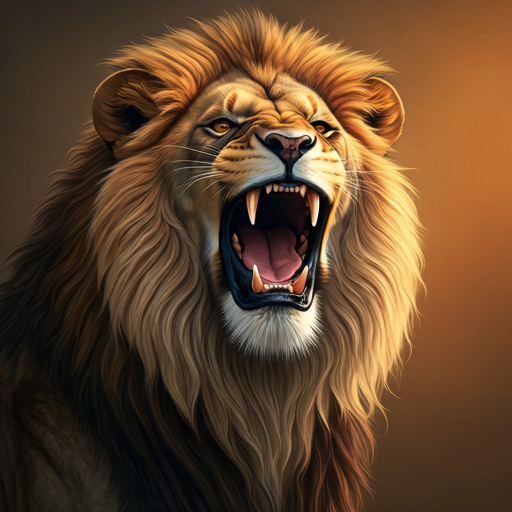
In bedrooms, avoid aggressive “roaring” poses. Instead, use a calm, seated lion to promote a sense of grounded security and “quiet strength.”
| Location | Symbolic Intent | Recommended Style |
| Home Office | Ambition & Clarity | Hyper-Realistic Portrait (North/East wall) |
| Living Room | Status & Protection | Dynamic Stylization (South wall) |
| Entrance | Warding & Security | Symmetrical Guardian (Facing the door) |
Lion Mural Design “Temperature” Check
Warm Temperature
A lion mural in the South with oranges and reds increases the room’s energy (Raja Guna), making it feel social and powerful.
Cool Temperature
A lion mural in the North with blues or “Future Dusk” tones stabilizes the room, making it feel intellectual and serene.
Historical Context of The Lion Wall Mural
Choosing a lion mural in 2026 is an act of tapping into a 30,000-year-old human lineage. Since the dawn of creative expression, the lion has served as a psychological anchor, marking spaces of safety, sacredness, and absolute power.
The Paleolithic Genesis
The tradition began in the Chauvet Cave (c. 30,000 BCE), where early humans rendered lions not as mere animals, but as dynamic, shifting spirits. These were some of the first “murals” in history—drawn with charcoal and ochre to capture the lion’s essence by flickering torchlight. To these early ancestors, the lion represented the ultimate life force of the wild.
The Architect’s Guardian Lion
By the time of the Neo-Babylonian Empire (c. 575 BCE), the lion moved from caves to city gates. The Ishtar Gate featured 120 “Striding Lions” in glazed yellow and blue brick. These weren’t just decorative; they were functional guardians designed to protect the city and its processions. Similarly, in ancient Egypt, the lioness goddess Sekhmet protected the Pharaohs, while the Sphinx stood as a monumental guardian of the transition between the human and divine worlds.
The Modern “Interior Sanctuary”
Today, this “King of Beasts” remains a symbol of leadership and internal strength. In a modern home, a lion mural acts as a “talisman”—a visual reminder of one’s own resilience. Whether it is a realistic portrait or a biophilic landscape, you are continuing a tradition that spans from the dark chambers of French caves to the high-tech walls of 2026, using the lion to transform a house into a protected, powerful sanctuary.