







Description
Music wallpaper for walls is a specialized category of interior wall covering designed to visually represent the auditory art form of music.
Beyond simple decoration, it functions as an “environmental anchor,” signaling the purpose of a room (creation, listening, or appreciation). And establishing a rhythmic visual language that complements sound.
Technically, music wallpaper is a wall covering (printed on paper, vinyl, non-woven fabric, or adhesive textile) that features motifs, imagery, or textures derived from musical theory, history, or culture.
These visual representation of music spans from the functional to the scientific and artistic.
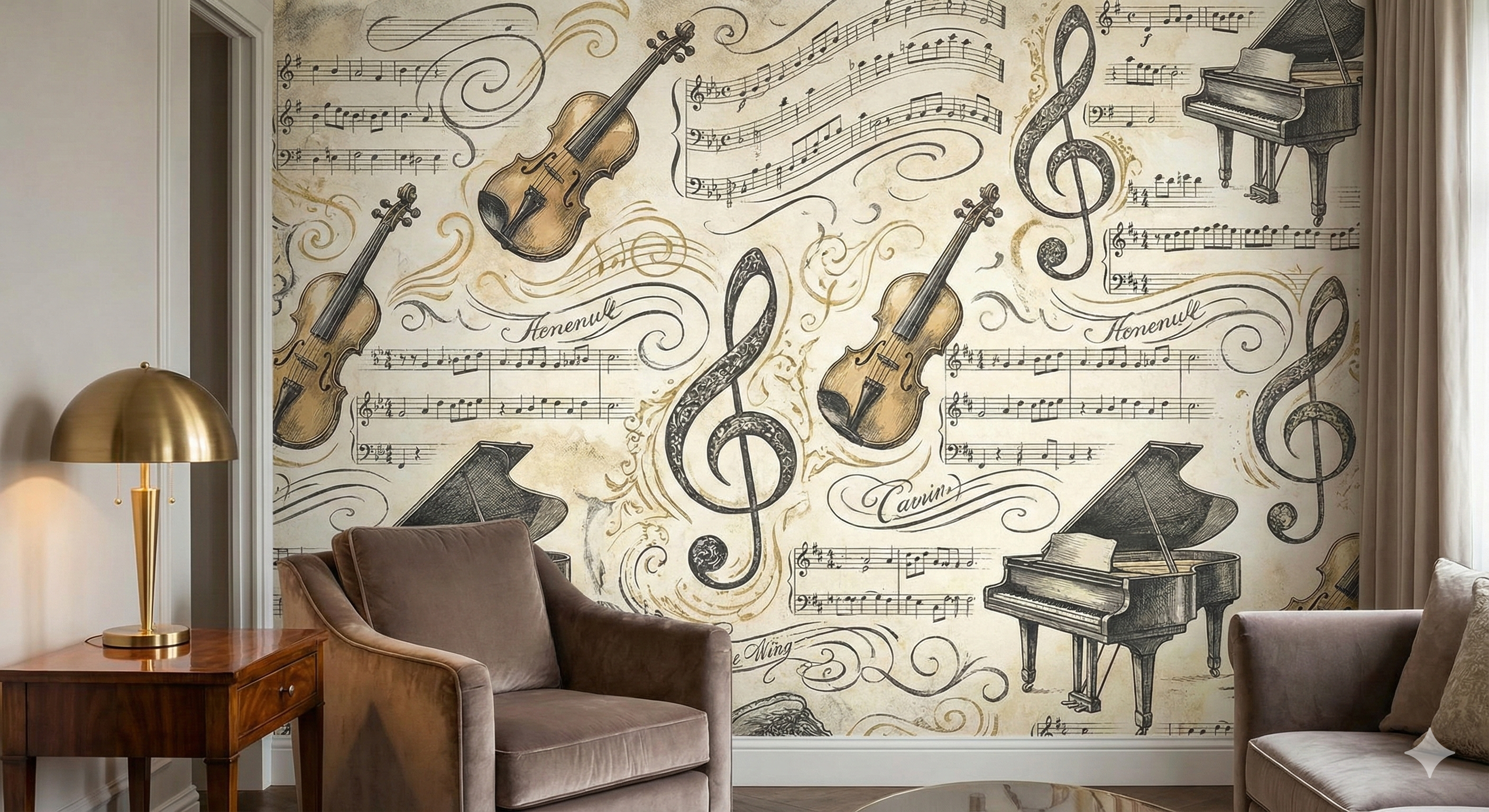
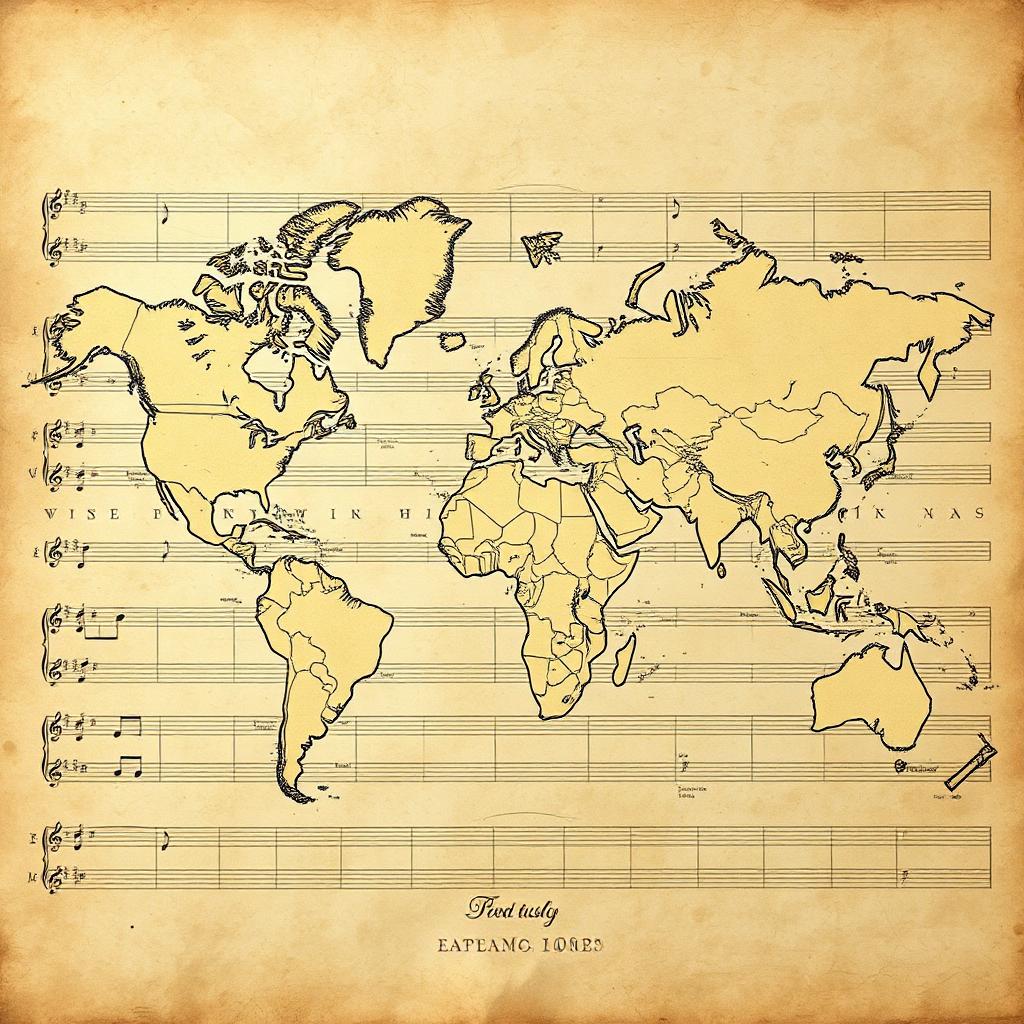
The Classic Manuscript Aesthetic Wallpaper
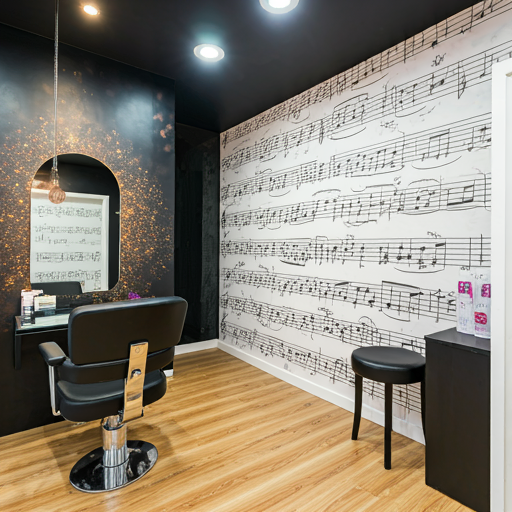
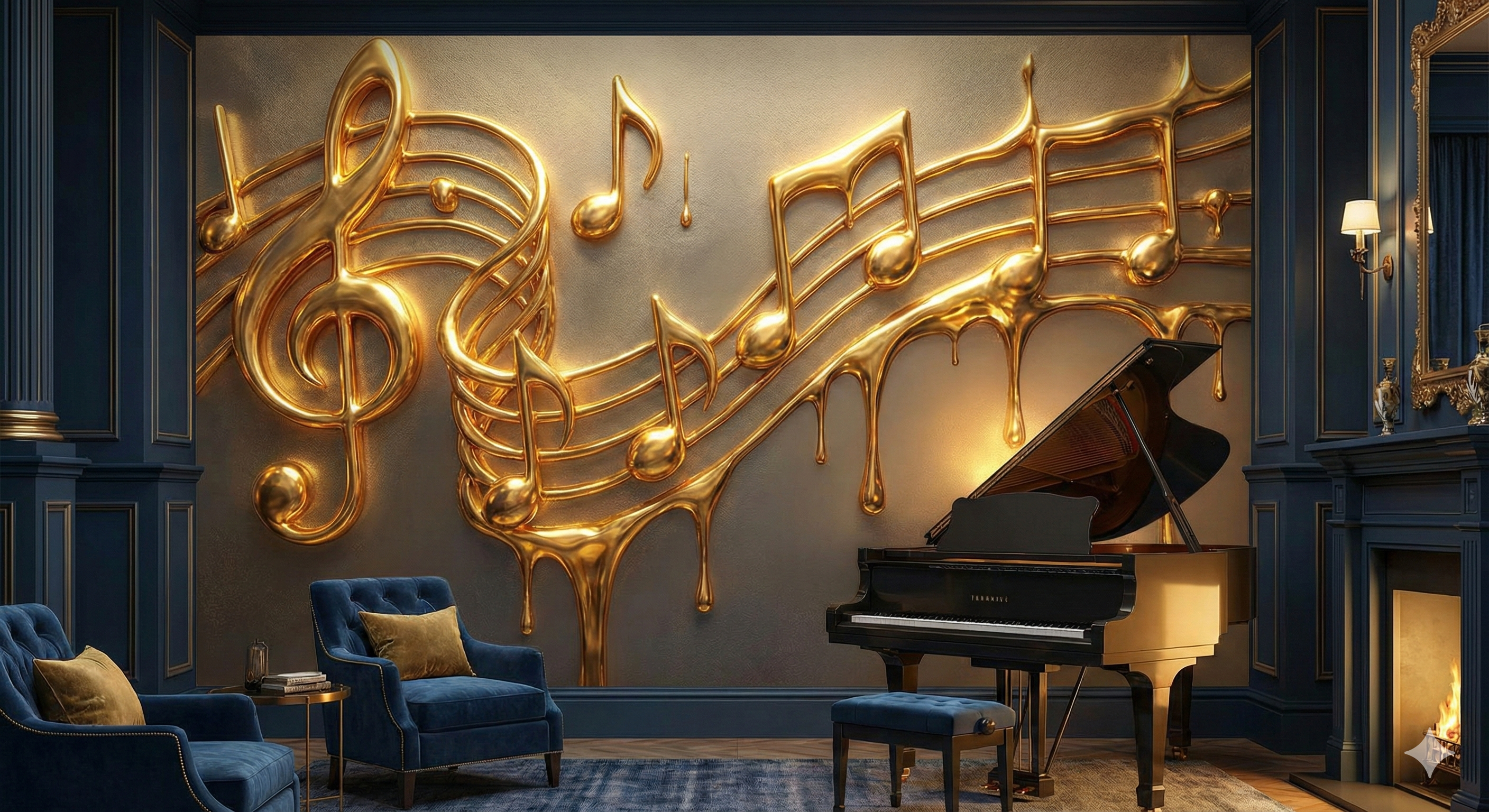
Traditional Music Notation wallpaper transforms a room into a giant, living manuscript, celebrating the intellectual foundation of the art form. This design utilizes the universal language of the five-line staff, populated by treble clefs, quarter notes, and expressive dynamic markings like crescendos and time signatures.
Visually, it typically relies on a stark, elegant monochromatic palette—black ink on white or vintage parchment—mimicking the look of a classical score from Beethoven or Bach. It is the preferred aesthetic for conservatories, piano rooms, and music schools. By displaying the raw “code” of melody and rhythm, this wallpaper creates an atmosphere of discipline, history, and academic sophistication, appealing directly to those who can “read” the wall.
The Architecture of Musical Sound Wallpaper
Digital Music wallpaper for Walls celebrates the technical architecture of audio, transforming walls into high-tech visual interfaces. Departing from the romance of classical notation, this style utilizes data-driven imagery directly derived from Digital Audio Workstations (DAWs) and analysis software.
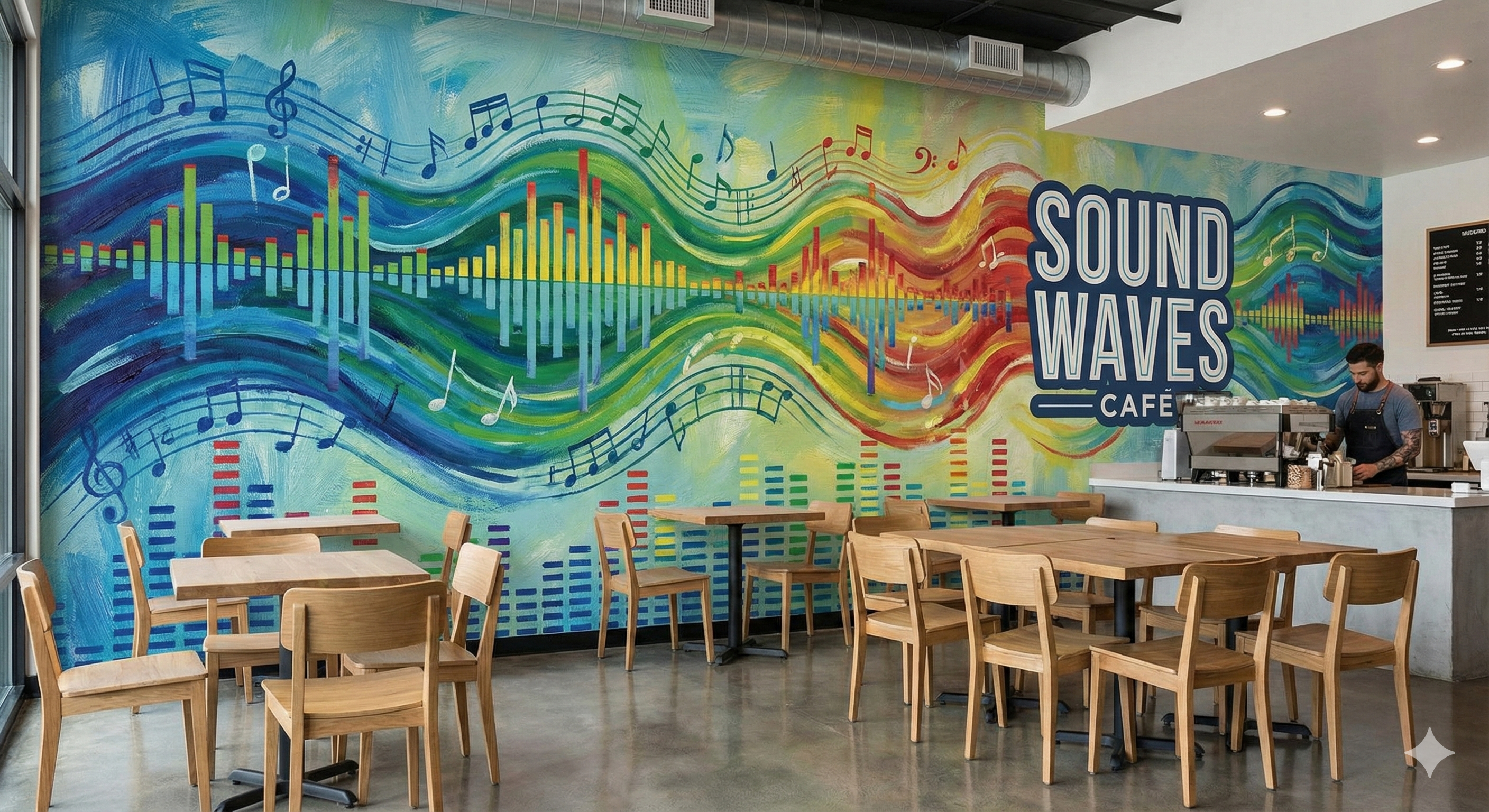
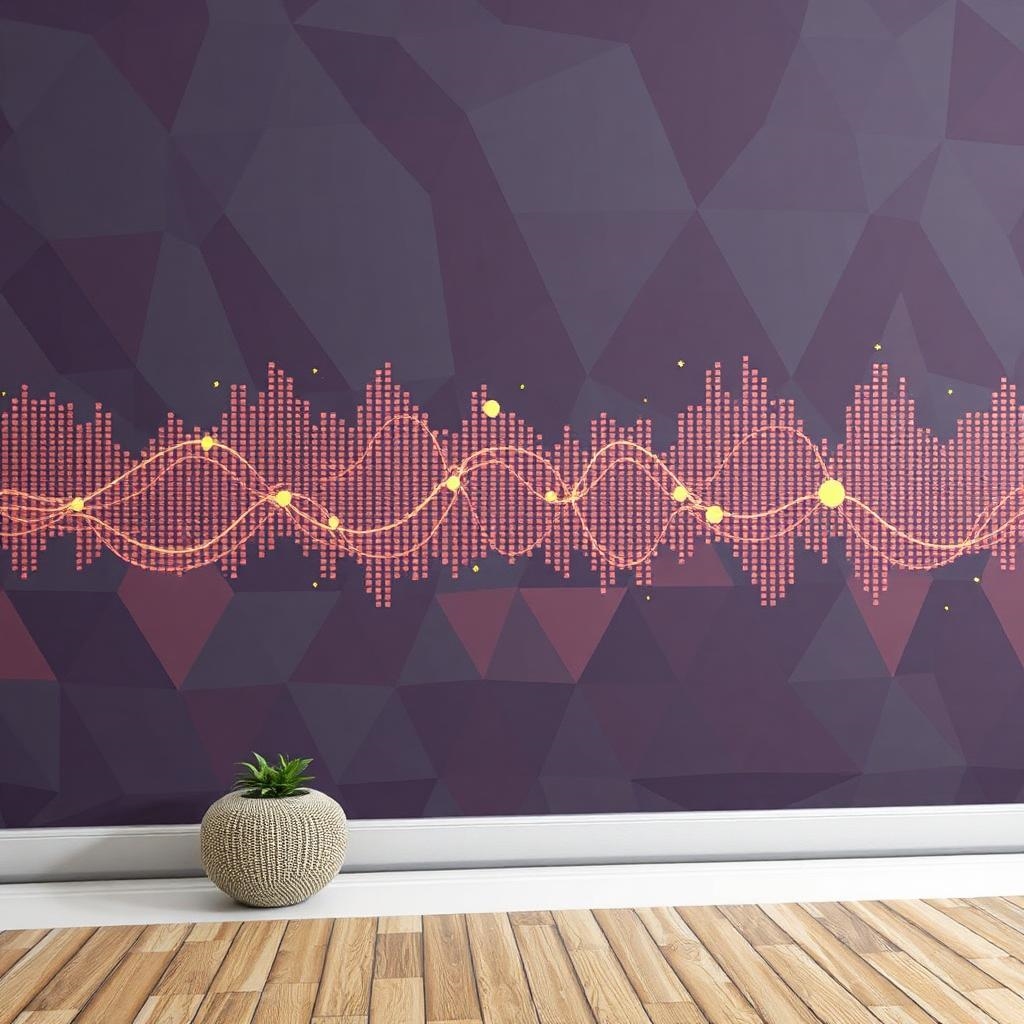
Key elements include jagged waveforms representing amplitude over time, and colorful spectrogram heatmaps showing frequency intensity. As well as the geometric precision of MIDI piano rolls. Often rendered in neon greens, cyans, and magentas against dark, grid-lined backgrounds, these designs mimic the glowing screens of a recording studio. It is the definitive aesthetic for producers, DJs, and sound engineers, turning the room into an immersive “cockpit” of audio production that emphasizes precision, physics, and the modern science of beat-making.
The Avant-Garde Score
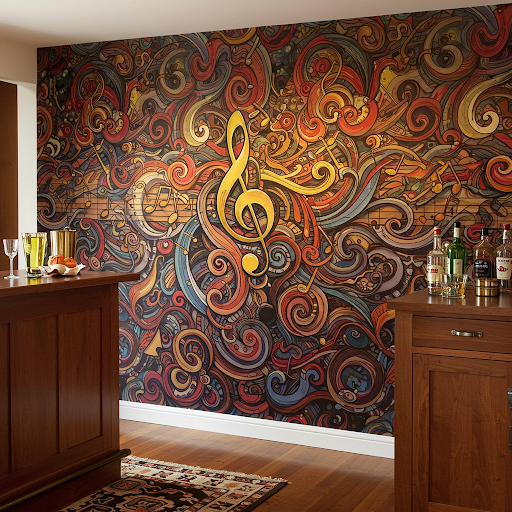
Graphic notation wallpaper breaks the rules of traditional music theory, turning walls into an experimental canvas of sound. Unlike rigid five-line staves, this style utilizes abstract visual languages—swirling lines, geometric clusters, scattered dots, and color-coded symbols—to represent pitch, texture, and duration. Originating from 20th-century avant-garde composers like John Cage, this aesthetic is inherently interpretive and chaotic. It transforms a room into a piece of indeterminate art where the “music” is felt through visual tension and release. This design is perfect for creative brainstorming spaces, modern art galleries, or the studios of experimental composers, signaling a rejection of structure and an embrace of pure, unconfined sonic expression.
Physical Patterns Music Wallpaper
Physical Patterns wallpaper shifts the focus from how music is written to how music physically looks in the real world. This category captures the tangible footprints of audio, featuring the hypnotic, spiraling ridges of vinyl record grooves magnified to show their rugged texture. It also explores Cymatics, where specific sound frequencies organize matter (like sand or water) into perfect, mandala-like geometric shapes. Unlike abstract art, these are scientific visualizations of vibration—nature’s own sheet music. This aesthetic is incredibly textural and organic, often using monochrome black-and-white or metallic palettes. It is ideal for audiophile listening rooms, science museums, or spaces that appreciate the raw, structural beauty of acoustics rather than just the melody.
Categorized Music Wallpaper for Walls
The Visual Archive of Musical Sound
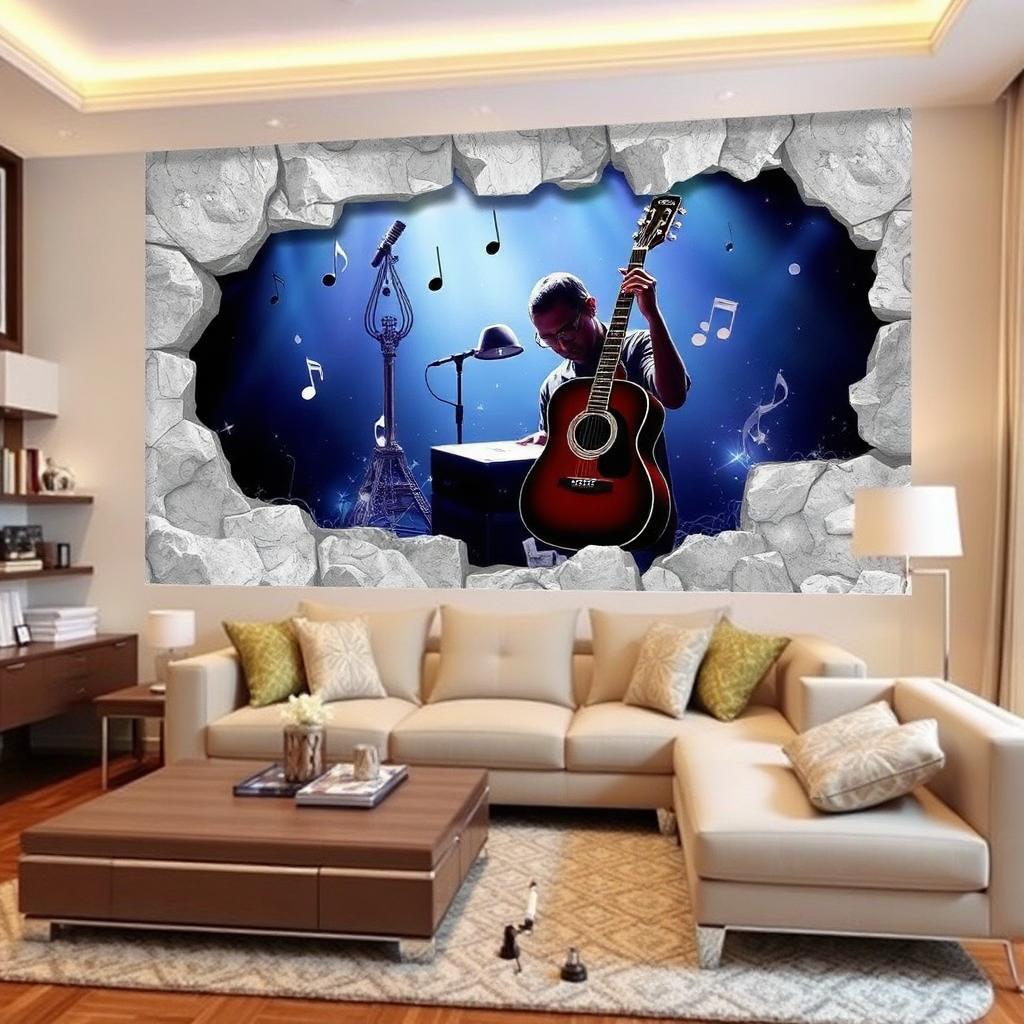
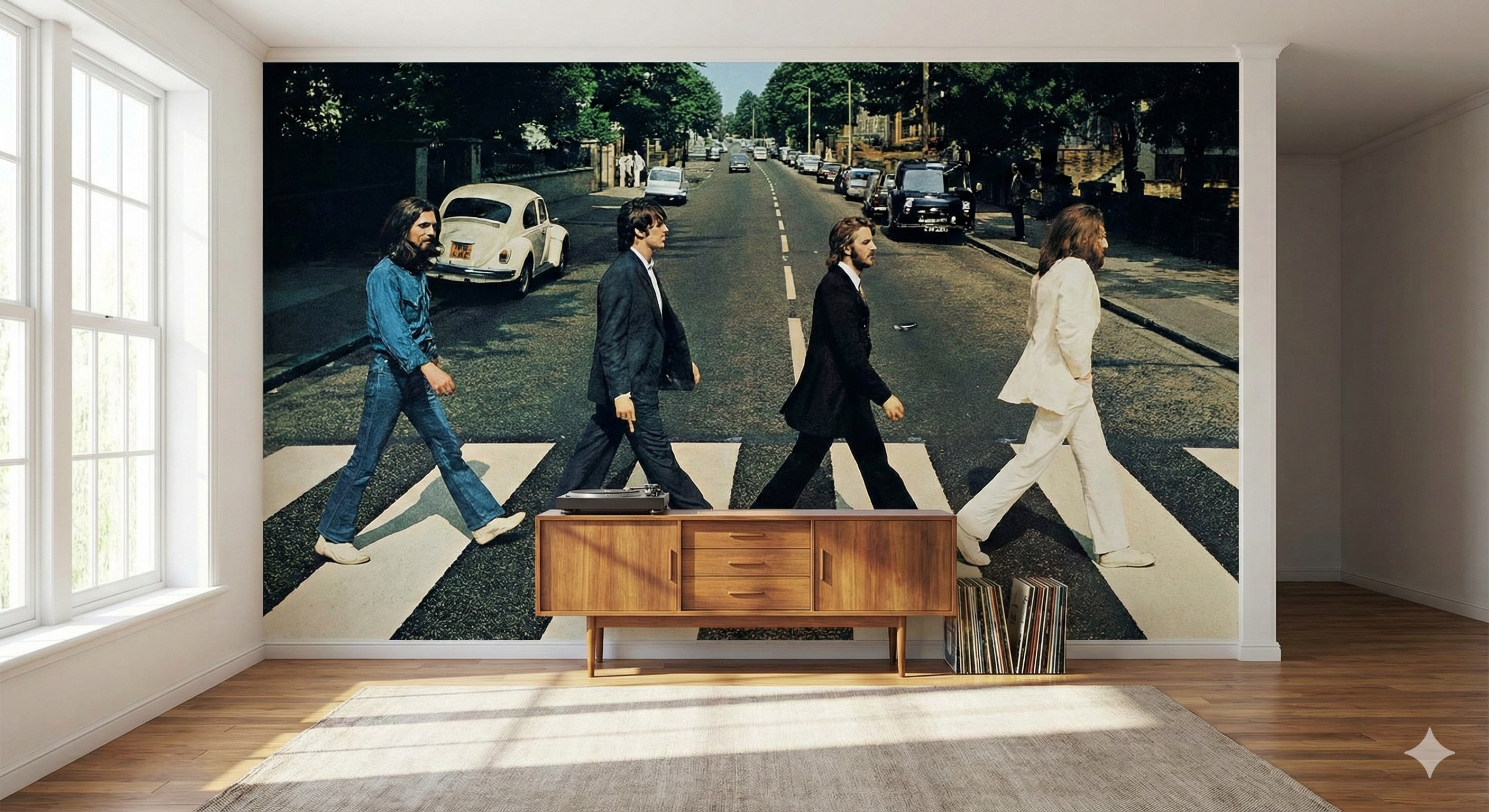
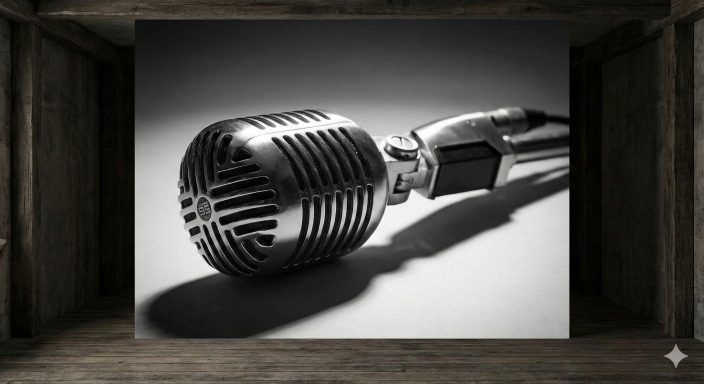
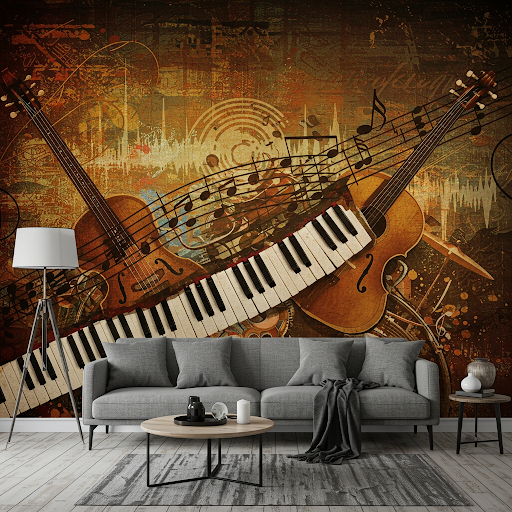
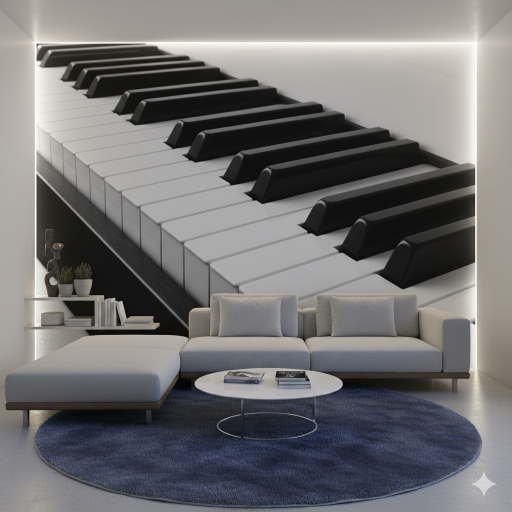
Literal representation serves as a visual archive, grounding the room in the physical reality of music-making. This category relies on high-definition photography and realistic illustration to turn a wall into a gallery of tangible artifacts. Designs often focus on the craftsmanship of instruments, such as the gleaming brass curves of a saxophone, the rich mahogany grain of a violin, or the stark contrast of ivory and ebony piano keys. When rendered in 3D styles, these images create a trompe-l’œil effect, where the instrument appears to be resting on a shelf or leaning against the wall, adding depth to the room.
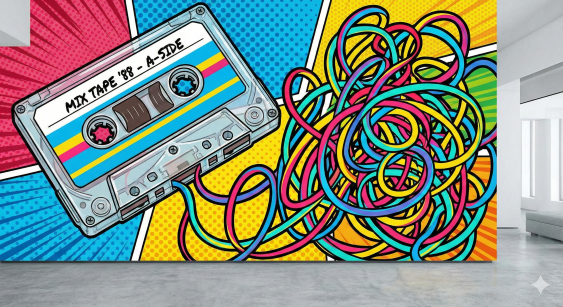
Beyond instruments, this category celebrates the intellectual and nostalgic sides of music. Vintage sheet music patterns with faded parchment textures appeal to classical sensibilities, while macro shots of vinyl record grooves or stacks of colorful cassette tapes evoke specific eras of audio history. This style is best for spaces where the appreciation of the tool is as important as the sound.
Abstract Visualization: The Geometry of Rhythm Wallpaper
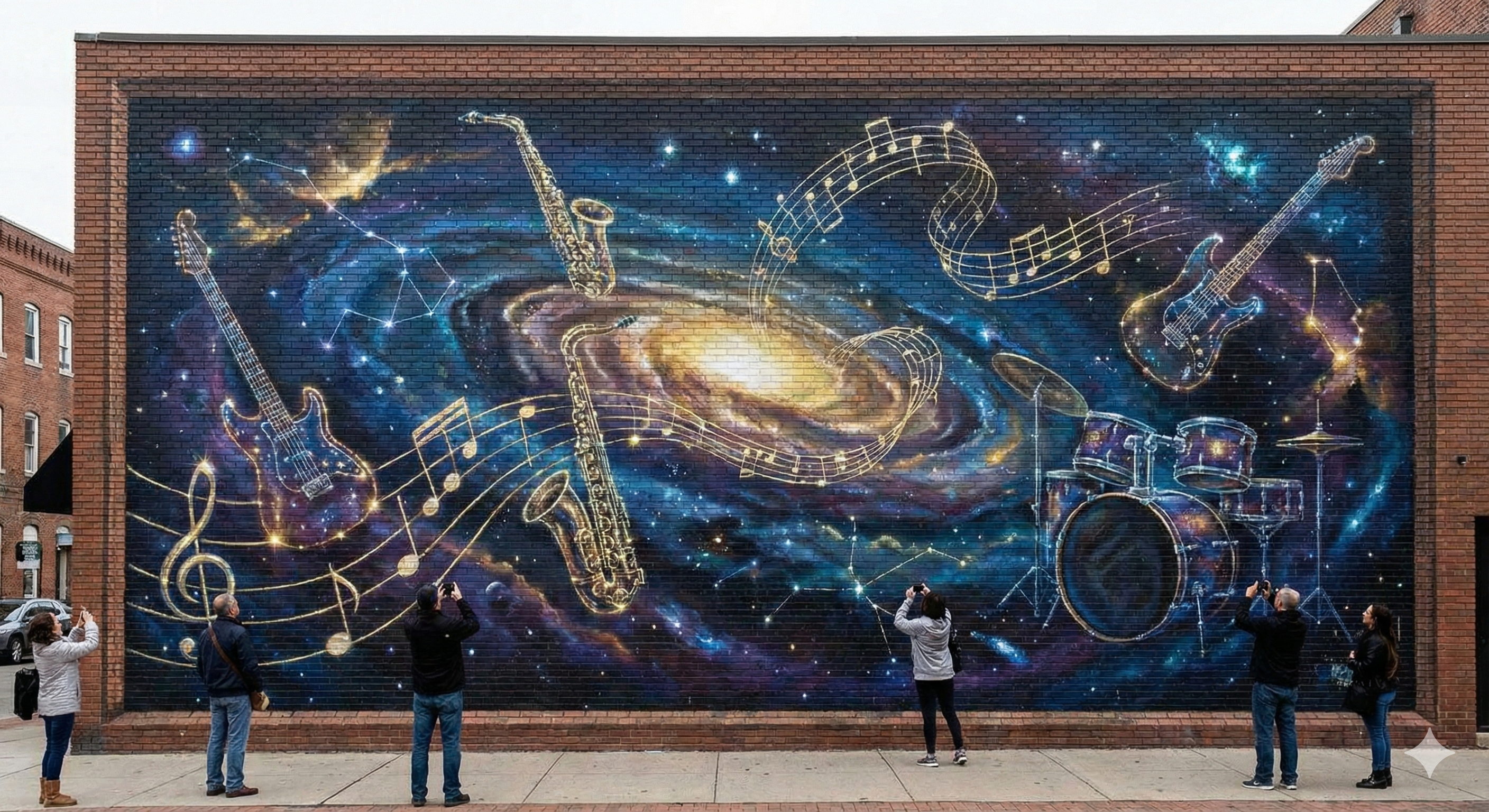
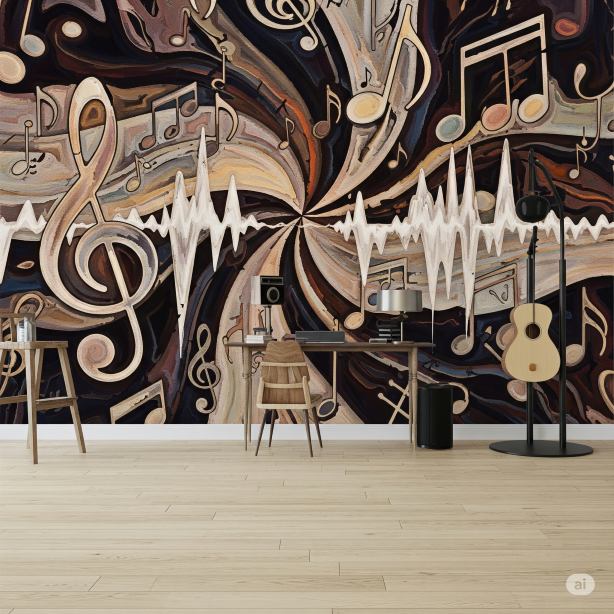
Abstract visualization attempts to capture the intangible energy of sound, translating auditory frequencies into visual geometry. This category moves away from physical objects to focus on the movement and emotion of a track. Designs often borrow from digital interfaces, featuring 3D equalizer bars that appear to glow and pulse against dark backgrounds, or jagged waveforms that mimic the peaks and valleys of a recording. These elements are perfect for modern studios, as they visually represent the technology of sound engineering.
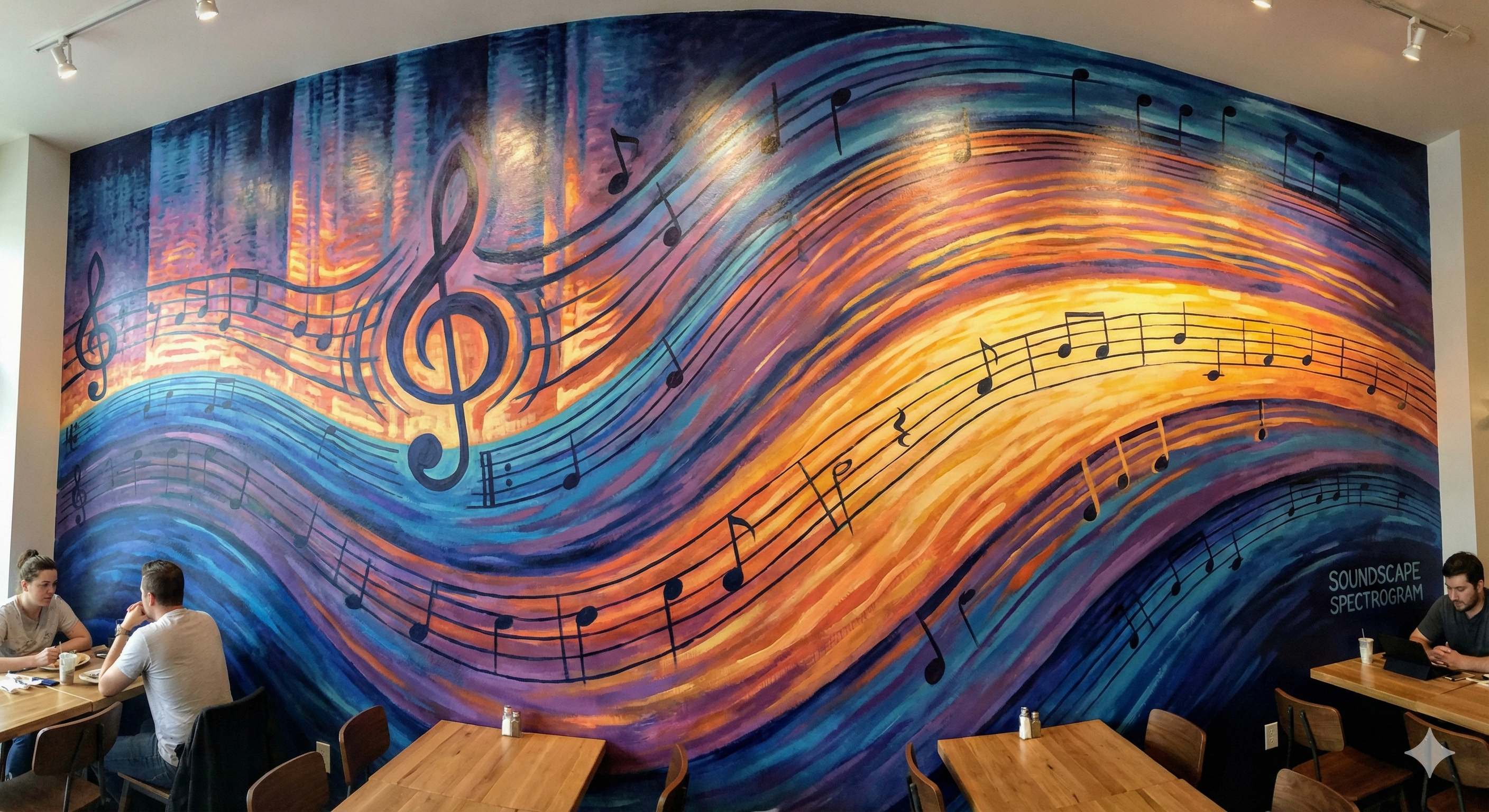
On the softer side, this category includes “melodic flow” designs—fluid, ribbon-like structures that swirl and intertwine across the wall to represent the invisible path of a melody or the vibration of a string. Geometric fractals can also be used to simulate the mathematical precision of rhythm. By visualizing the “noise” rather than the source, these wallpapers create a kinetic, dynamic energy in the room. It is essentially synesthesia applied to interior design, allowing the viewer to “see” the beat.
Cultural & Genre Specific Music Wallpaper for Walls
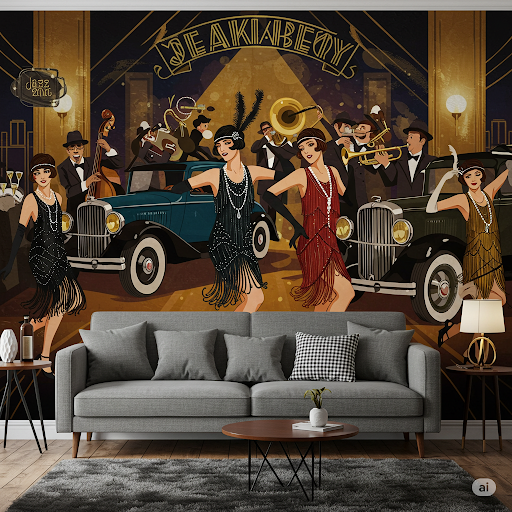
Cultural and genre-specific wallpaper acts as a narrative device, setting the stage by invoking the lifestyle, history, and “vibe” associated with a specific musical movement. This category is less about the technicalities of sound and more about the atmosphere of the scene. For a Jazz or Blues lounge, designs often utilize sepia tones, smoky textures, and silhouettes of musicians against brick walls to replicate the intimacy of a 1920s speakeasy.
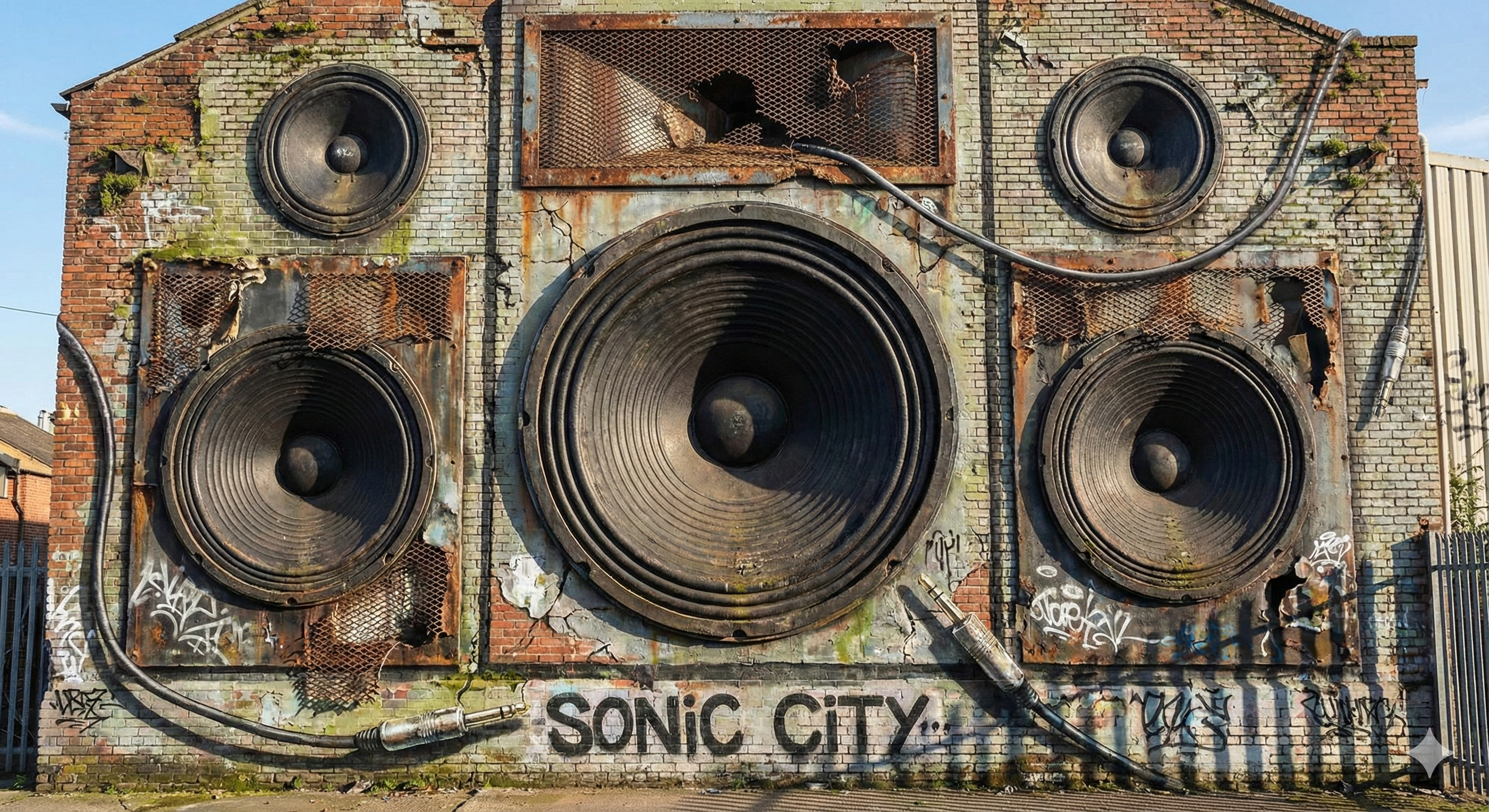
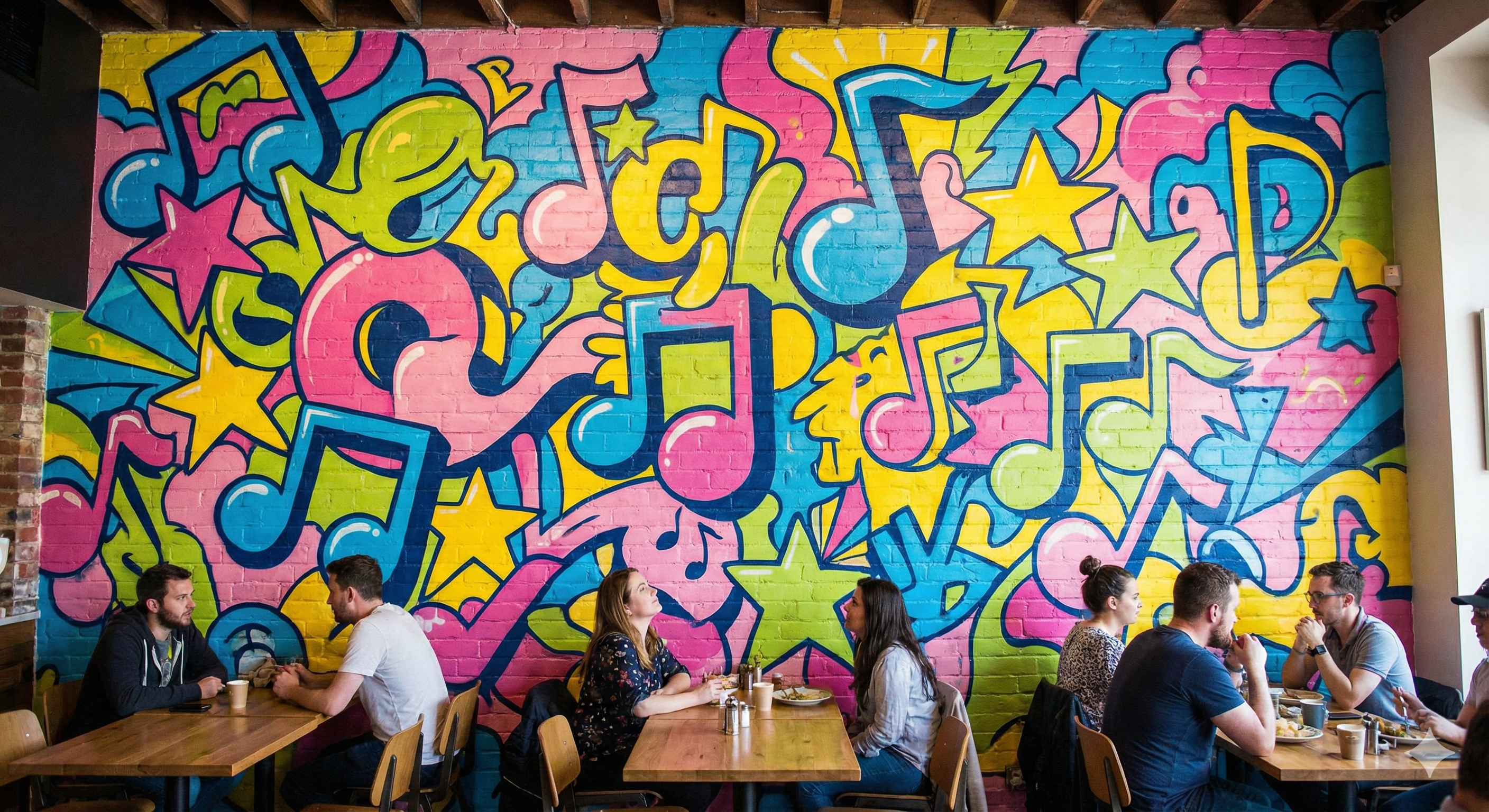
Conversely, a Hip-Hop or urban theme might employ vibrant graffiti art, boombox motifs, and bold typography to channel the raw creativity of the street. Electronic and Synthwave themes lean heavily into retro-futurism, utilizing neon grids, laser sunsets, and “Cyberpunk” aesthetics. By aligning the wall design with a specific subculture, you are not just decorating a room; you are curating an immersive experience that transports the occupant to a specific time, place, and emotional state associated with that genre.
The Essence of Musical Wallcovering
Immersion
The “essence” of music wallpaper for walls is Immersion. It is about translating a temporal experience (listening to audio) into a spatial experience (seeing the room). Music is naturally fleeting; it exists only in the moment it is heard. Wallcovering captures that ephemeral energy and freezes it in physical space, allowing the occupant to inhabit the music even in silence. It envelops the viewer, creating a sensory loop where visual cues reinforce auditory expectations. This immersion goes beyond mere decoration; it creates a dedicated “soundstage” within the home or office. By surrounding oneself with visual representations of harmony, rhythm, and tone, the room ceases to be just four walls and becomes an extension of the playlist, turning the act of listening into a complete, multisensory event.
Identity & Branding
The Creative Sanctuary
For a studio or office, it instantly communicates, “Creative work happens here.” It transforms a generic room into a specialized sanctuary. In professional and creative settings, the environment acts as a silent business card. A music-themed wall creates an immediate narrative, signaling authority, passion, and specific expertise to anyone walking through the door. For a recording studio, radio station, or music school, it visually validates the business’s purpose, distinguishing it from a standard corporate box. It acts as a badge of honor, declaring that this space is reserved for art and innovation. This branding effect also fosters a sense of belonging for the artists working within, reinforcing their professional identity and creating a workspace that feels purpose-built for their craft, rather than simply adapted to it.
Psychological Priming: Setting the Mental Stage
Just as a library’s silence encourages reading, a music-themed wall primes the brain for auditory focus. A chaotic rock-and-roll mural might energize a drummer, while a flowing, abstract melody line might calm a composer. Environmental psychology suggests that our surroundings significantly influence our cognitive state and energy levels. Music wallpaper acts as a visual trigger, shifting the brain into the specific mode required for the task at hand. A producer mixing a high-energy dance track benefits from vibrant, neon-soaked visuals that stimulate adrenaline and alertness. Conversely, a classical pianist practicing complex sonatas might find focus in the serene, structured imagery of sheet music or floating notes. By aligning the visual stimulus with the desired mental state, the wallcovering reduces the friction of “getting into the zone.”
Visual Rhythm: Kinetic Musical Wallpaper Design
Unlike standard floral or geometric wallpaper, good music wallpaper for walls creates “movement“. The eye follows the notes or soundwaves left-to-right, mimicking the passage of time in a song. Static patterns, like damask or stripes, are designed to sit still and provide a passive backdrop. Music wallpaper, however, is inherently kinetic. It relies on the concept of “flow,” guiding the viewer’s gaze across the surface in a way that parallels the linear progression of a melody. Whether it is the undulating curve of a sound wave, the scattered flight of musical notes, or the sweeping lines of a staff, the design implies direction and velocity. This creates a dynamic energy in the room, preventing the space from feeling stagnant and visually replicating the tempo and pulse of live audio.
Customization of Music Wallpaper for Walls FAQ
1. Can I use desktop music wallpaper images for customization of wallpaper for walls?
Yes, but with strict technical reservations regarding resolution and quality.
Standard desktop wallpapers are designed for screens (usually 72 DPI). Stretching a standard 1920×1080 pixel image across a large wall will result in severe pixelation and blurriness. For a crisp physical print, the artwork needs to be at least 150–300 DPI at full scale.
To make this work, you must:
1. Use Ultra-High Resolution
Source files should be at least 4K or 8K resolution.
2. Upscale Digitally
Use AI image upscaling software (like Topaz Gigapixel) to increase pixel density without losing clarity.
3. Adjust Aspect Ratio
Screens are wide (16:9), while walls vary. Be prepared to crop the image significantly or mirror the edges to fit the wall’s dimensions.
Can I use my own image or artwork for the wallpaper?
Yes, our customization services allow you to use your own high-resolution photos, graphics, or designs to create a unique mural. Our design team can assist with file preparation and cropping to fit your wall perfectly.
What image format and resolution are required?
For large-format printing, a high-resolution image is required. It should be at least 100-300 dpi at the intended print size, in a common format like JPEG or TIFF to avoid blurriness or pixelation.
How do I choose the right design and colors for my space?
Consider the room’s function and the mood you want to set. Lighter colors can make a small space feel larger, while bold, vibrant colors can create high energy. Music-themed wallpapers often use flowing lines and musical notes to create a sense of movement.
Can I see a sample before the full order is printed?
Yes, it is highly recommended to order a sample first to check the color matching, material texture, and how the design looks under your specific lighting conditions.
How do I measure my wall for a custom order?
You typically only need the overall height and width of your wall at its highest and widest points. It is advised to add an extra 2-4 inches (5-10 cm) to these measurements. This is to allow for trimming and minor measuring errors.
What kind of wall preparation is needed?
Walls should be clean, dry, smooth, and free of dust and grease. Patch any holes or cracks with spackle and apply a primer to ensure proper adhesion. Especially over new paint or existing wallpaper.