


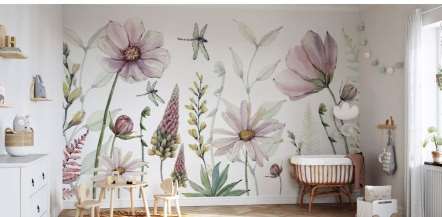
Description
Non-toxic wallpaper for Nursery
In a pediatric environment, “non-toxic wallpaper” refers to both the chemical safety of the physical wall and the psychological safety of the visual environment. As Wallpaper Kenya, we view the wall not just as a surface, but as a therapeutic tool.
1. Physical Construction: The Clinical Foundation
For a nursery, a “molecular audit” of wallpaper is paramount; infants possess higher respiratory rates and more permeable skin than adults, making them hyper-vulnerable to their immediate environment. We must ensure the physical foundation of the room supports, rather than hinders, their delicate developing systems.
PVC-Free & Phthalate-Free
Traditional vinyl wallpapers often rely on phthalates—plasticizers that can off-gas and potentially disrupt endocrine systems. In pediatric settings, we strictly specify non-woven cellulose or PVC-free polyester alternatives. This commitment ensures zero off-gassing of harmful chemicals, maintaining a pure atmosphere where infants can breathe safely without exposure to hidden synthetic toxins during their most critical growth phases.
GREENGUARD Gold Inks
We mandate that all murals are printed using water-based or UV-cured inks that carry the GREENGUARD Gold certification. This specific standard is the world’s most rigorous for low chemical emissions. By enforcing this, we guarantee the artwork meets strict health criteria for sensitive individuals, ensuring the air remains free from harmful VOCs often found in standard commercial printing.
Breathable “Non-Woven” Backing
Unlike old-school vinyl that acts as a vapor barrier, non-woven construction is highly breathable and vapor-permeable. This serves as a critical infection-control measure; by allowing the wall to “breathe,” we prevent the accumulation of moisture. This effectively stops the growth of mold and mildew behind the mural, which is a primary trigger for pediatric respiratory distress and allergies.
Bio-Based Adhesives
The final layer of safety is the glue. We’ve moved away from heavy-duty synthetic chemical glues toward bio-based options, such as wheat or potato starch-based adhesives. These natural alternatives are entirely VOC-free and hypoallergenic. By choosing starch-based bonds, we eliminate the “new room smell”—which is actually just chemical off-gassing—ensuring the nursery remains a truly neutral, safe haven.
2. The Non-Toxic Wallpaper Artwork
I’ve seen firsthand how “visual toxicity” can heighten a child’s distress. Healing decor isn’t just about decoration; it’s a clinical intervention. Here is the breakdown of how we curate artwork to support the psychological well-being of our youngest patients.
Soft Biophilia
Evidence-based design confirms that nature is a powerful healer. In a nursery or ward, we avoid aggressive, neon “cartoon” styles which can be overstimulating. Instead, we utilize soft, realistic botanical or celestial themes. These natural elements are proven to lower cortisol levels and stabilize heart rates for both the child and the anxious parent.
Fractal Patterns
We prioritize artwork featuring fractals—natural repeating patterns found in leaves, clouds, or waves. The human eye is biologically wired to process these shapes with ease. By incorporating these into wallpaper murals, we significantly reduce the “cognitive load” on a child, creating an immediate sense of visual comfort and neurological relaxation in a stressful clinical environment.
Positive Distraction
For toddlers and older children, murals serve as a “positive distraction.” By integrating subtle “Search and Find” elements—like a hidden bird or a specific star—we provide a vital clinical tool. This engagement distracts the child during painful procedures or high-anxiety moments, offering a mental escape that is engaging without being visually overwhelming or loud.
Age-Appropriate Sophistication
Design must evolve with the patient. For a nursery, we specify calming pastels and soft textures to encourage sleep and growth. Conversely, in a pediatric ward, we use sophisticated, educational themes like STEM, geography, or history. This promotes a sense of “normalcy” and curiosity, helping children feel like students and explorers rather than just patients.
Summary Table: The Non-Toxic Balance
| Aspect | The “Toxic” Standard | The “Healing” Standard |
| Material | Vinyl / PVC | Non-woven Cellulose / PETG |
| Inks | Solvent-based | GREENGUARD Gold Water-based |
| Visuals | High-contrast / Cluttered | Biophilic / Soft Fractals |
| Adhesive | Chemical/Synthetic | Starch-based / Bio-based |