

















Description
Decorative vs Acoustic Recording Studio Wallpaper
Recording studio wallpaper is a specialized niche that balances high-end aesthetics with the demanding acoustic requirements of a sound-controlled environment. Unlike standard residential wallpaper, these materials often pull double duty by addressing sound reflection while creating an inspiring creative atmosphere.
Here are the key categories, materials, and design considerations for recording studio murals and wallpapers.
It is important to distinguish between “acoustic wallpaper” and “decorative wallpaper used in a studio.”
Acoustic Wallpaper (Functional)
Usually made of thick, non-woven polyester or felt-like fibers. These materials are designed to have a specific NRC (Noise Reduction Coefficient). They help dampen high-frequency “flutter echo” and reduce reverberation.
Decorative Vinyl/Non-Woven (Aesthetic)
These are standard high-quality murals. While they don’t provide significant sound absorption, they are often applied over existing acoustic treatments (like fiberglass boards) or used in “dead” spaces like control room rear walls where heavy absorption isn’t the primary goal.
Recording Studio Wallpaper Materials and Finishes
Materials and finishes for recording studio wallpaper require looking at both the visual behavior of the surface under studio lighting and its acoustic transparency. In a space where sound and light are meticulously controlled, the wrong finish can cause “slap echo” or distracting screen glare.
Here is a deeper dive into the technical characteristics of these materials.
1. Matte Non-Woven (The Professional Standard)
Non-woven wallpaper is a blend of natural and synthetic fibers. For studios, it is often the “gold standard” because it is breathable and dimensionally stable.
Aesthetic Performance
The matte finish is non-reflective. In a control room filled with LED strips, computer monitors, and gear displays, a glossy wall creates “hot spots” of light that cause eye strain. Matte surfaces diffuse this light, creating a soft, immersive environment.
Acoustic “Breathability”
While not a sound absorber on its own, non-woven material is more porous than solid vinyl. This allows a small amount of sound energy to pass through the paper into the wall (or the acoustic treatment behind it) rather than bouncing off a hard plastic surface.
Installation Advantage
It is “paste-the-wall,” meaning it doesn’t expand or contract. This is vital in studios where temperature and humidity are tightly regulated to protect sensitive instruments.
2. Fabric-Backed & Textured Vinyl
Vinyl is often avoided in high-end rooms because it is a hard, reflective plastic. However, textured or fabric-backed versions are used strategically.
Diffusion by Texture
Heavy embossing (patterns with physical depth like faux stone, linen, or geometric ridges) helps with diffusion. Instead of a sound wave hitting a flat wall and bouncing back perfectly (specular reflection), the texture breaks the wave and scatters it in multiple directions.
Durability
In “live rooms” where drum kits, guitar amps, and mic stands are constantly moved, walls take a beating. Fabric-backed vinyl is tear-resistant and can be scrubbed clean if scuffed by gear.
The “Vibe” Factor
These materials can mimic high-end studio finishes like wood paneling or suede at a fraction of the cost.
3. Acoustic Felt & Polyester “Wallcoverings.”
Acoustic felt and polyester wallcoverings represent a hybrid innovation, merging decorative mural aesthetics with high-performance sound management. Typically ranging from 3mm to 12mm in thickness, these dense, non-woven materials absorb mid-to-high frequency sound waves, significantly reducing echo and reverb. This makes them indispensable for professional home studios where audio clarity is paramount, providing a soft, tactile finish that functions as both a custom visual centerpiece and a functional acoustic treatment.
NRC Rating
These materials have a Noise Reduction Coefficient (NRC), usually ranging from 0.20 to 0.45. This means they can absorb 20% to 45% of the sound hitting them, specifically in the mid-to-high frequency range (speech and cymbals).
Material
Usually made from recycled PET (plastic bottles). It feels like a stiff felt.
Seamless Look
Unlike bulky acoustic panels, these can be applied floor-to-ceiling across an entire wall to create a seamless, “soft” look that completely kills flutter echoes in small vocal booths.
4. Perforated & Micro-Perforated Finishes
If you have high-quality acoustic mineral wool or foam on your walls but want a custom mural design, you cannot use standard wallpaper. Because it would “seal” the acoustic foam and reflect sound back into the room, rendering your treatment useless.
These specialized wallpapers feature thousands of tiny, laser-cut holes—often invisible to the naked eye from a distance—that allow sound waves to pass through the material and into the absorbent core behind it. This maintains the mural’s visual integrity while ensuring the room’s NRC (Noise Reduction Coefficient) remains high, preventing high-frequency “flutter” or unwanted reflections.
The Physics
Sound waves pass through the holes and get trapped in the insulation behind the paper, while the eye only sees the printed image. This allows for a “hidden” acoustic treatment where the entire room looks like a beautiful mural but sounds like a professional “dead” room.
Modern Recording Studio Wallpaper Designs
1. The “Visual Sound” Series (Synesthesia)
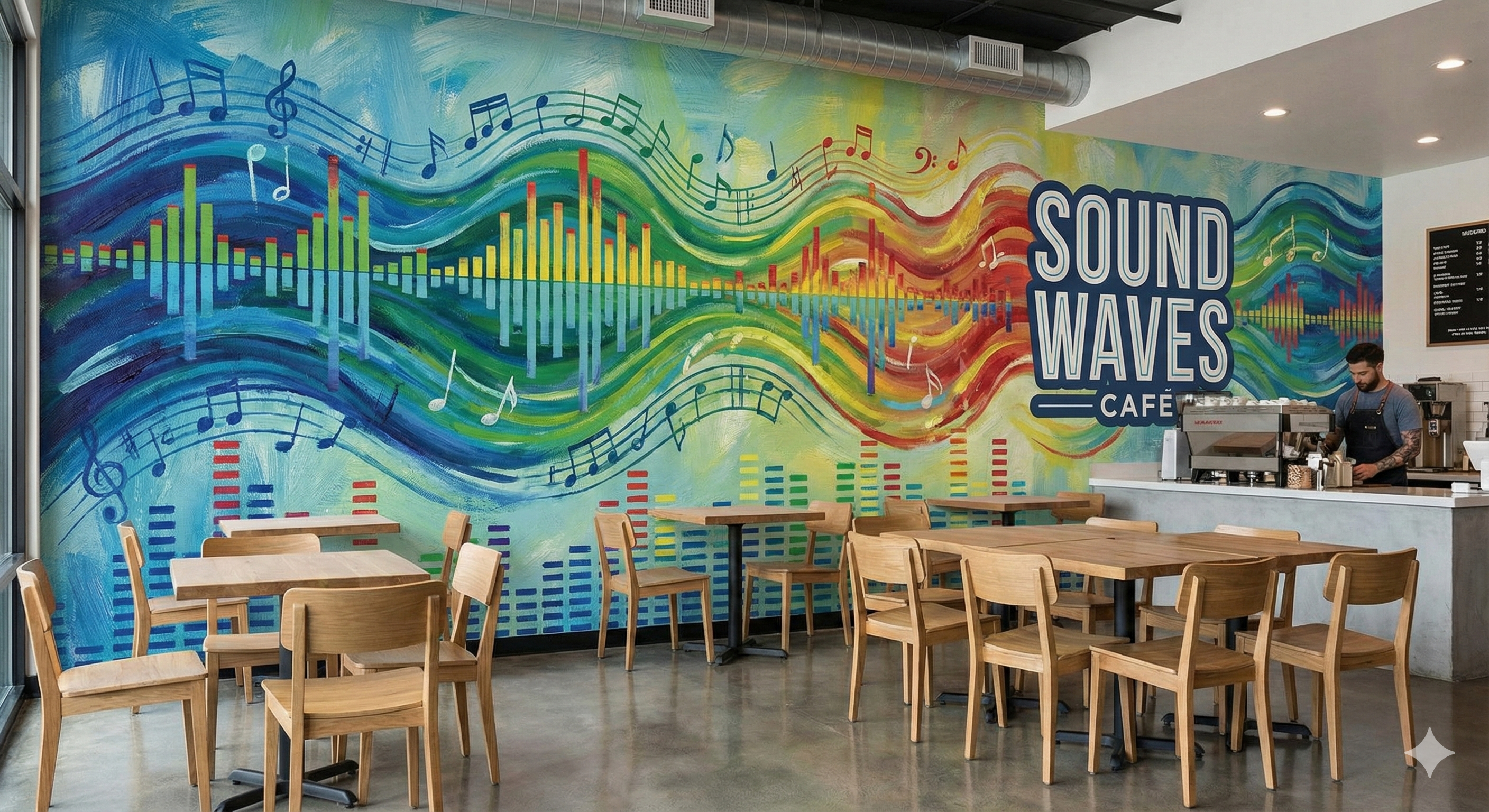
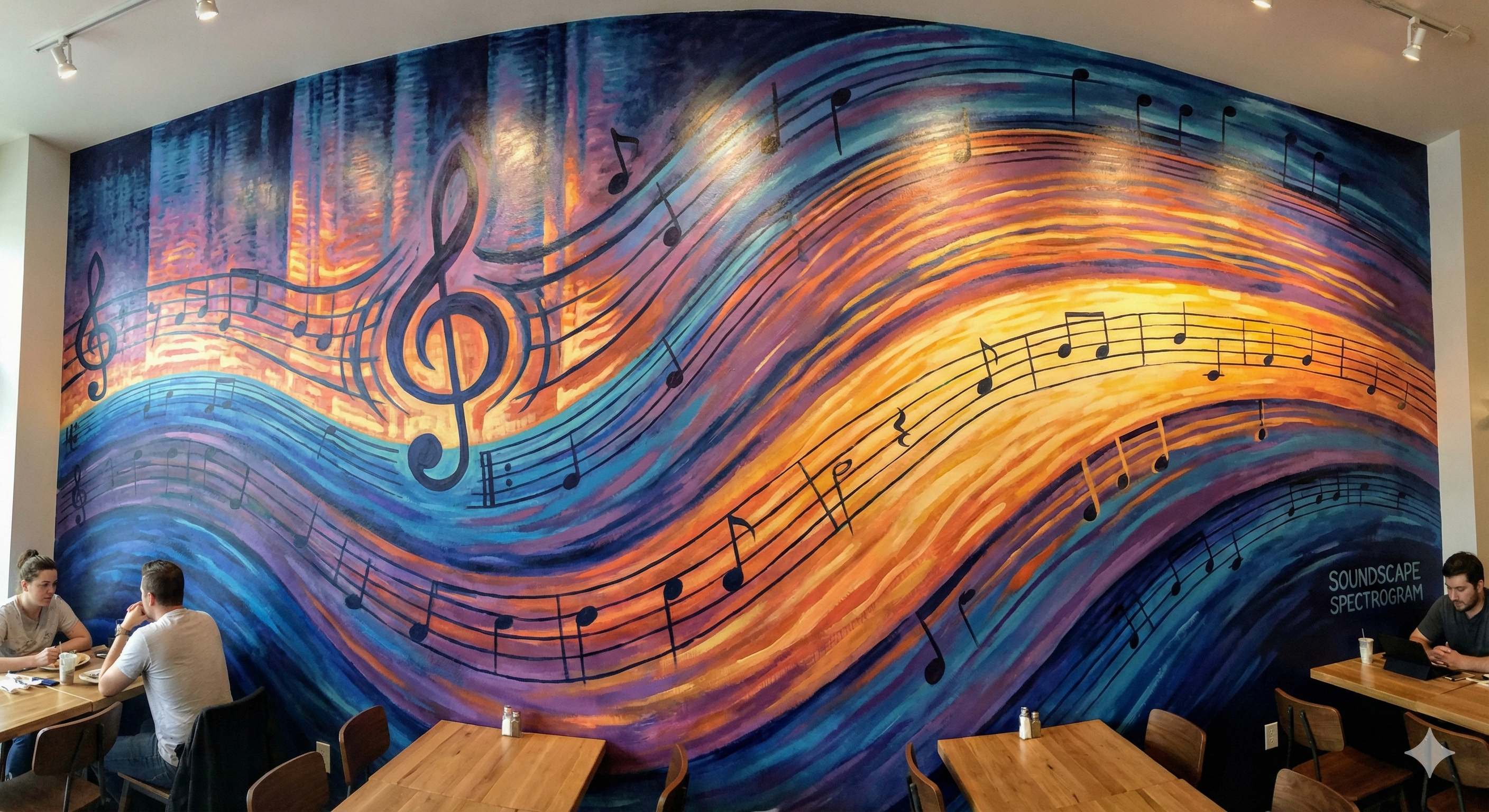
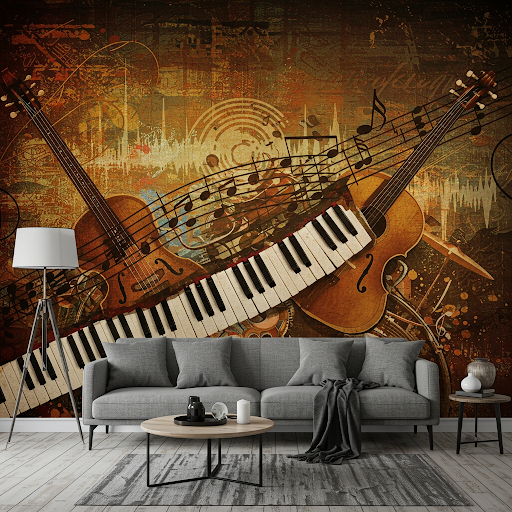
These visual sound designs translate the invisible nature of sound into a compelling visual medium, making them ideal for high-end mixing and mastering suites. By bridging the gap between auditory and visual stimuli, these murals create an immersive environment that stimulates creativity. They allow engineers and artists to “see” the music, fostering a deeper sensory connection to the sonic landscape during production.
Dynamic Waveforms
High-resolution renders of specific sound waves—perhaps a favorite song’s hook or a signature vocal take—stretching boldly across the main console wall. These murals serve as a unique, personalized focal point that celebrates the literal architecture of audio. Available in minimalist line art or vibrant gradients, they provide a clean, modern aesthetic that feels both technical and deeply artistic.
Digital EQ Bars
Stylized, glowing frequency bars in neon or muted tones give the room a high-tech, “always-on” energy. This design mimics the movement of a live spectrum analyzer, injecting a sense of rhythm and momentum into the studio space. Whether opting for a retro “80s synth-wave” look or a sleek, modern interface style, these bars create a professional, high-energy production atmosphere.
Abstract Vibrations
Fluid, organic shapes that mimic the way sound travels through water or air, often rendered in deep blues, purples, or charcoal tones. These abstract vibration designs focus on the movement and flow of energy rather than rigid technical data. By utilizing soft edges and natural gradients, they help lower stress levels, creating a calm, focused “zen” space perfect for long tracking sessions.
Genre & Era-Specific Recording Studio Tributes
Tailoring the mural to the studio’s primary musical output can set the right “mood” for artists, instantly signaling the creative identity of the space. By choosing a design that aligns with a specific musical legacy or culture, you create an environment where performers feel naturally inspired. These tributes transform a sterile room into a curated sanctuary of musical history.
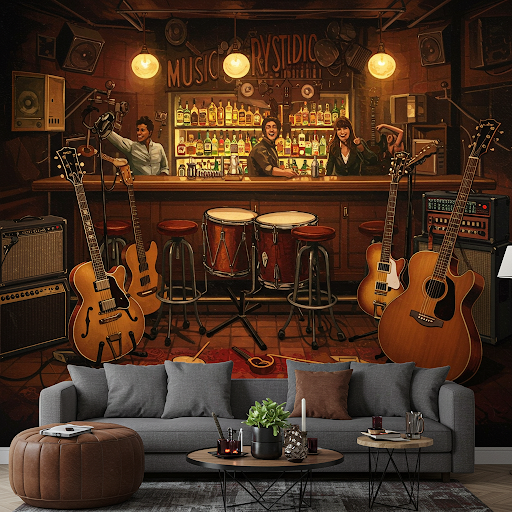
Vintage Analog
Deconstructed views of classic gear—close-ups of glowing vacuum tubes, intricate reel-to-reel tape paths, or the beautiful internal wiring of a legendary condenser microphone—bring a sense of heritage to any session. These detailed, macro-photography murals celebrate the “warmth” of analog sound. They are perfect for studios that prioritize high-end signal chains and the timeless craftsmanship of traditional audio engineering.
Graffiti & Urban Recording Studio Wallpaper
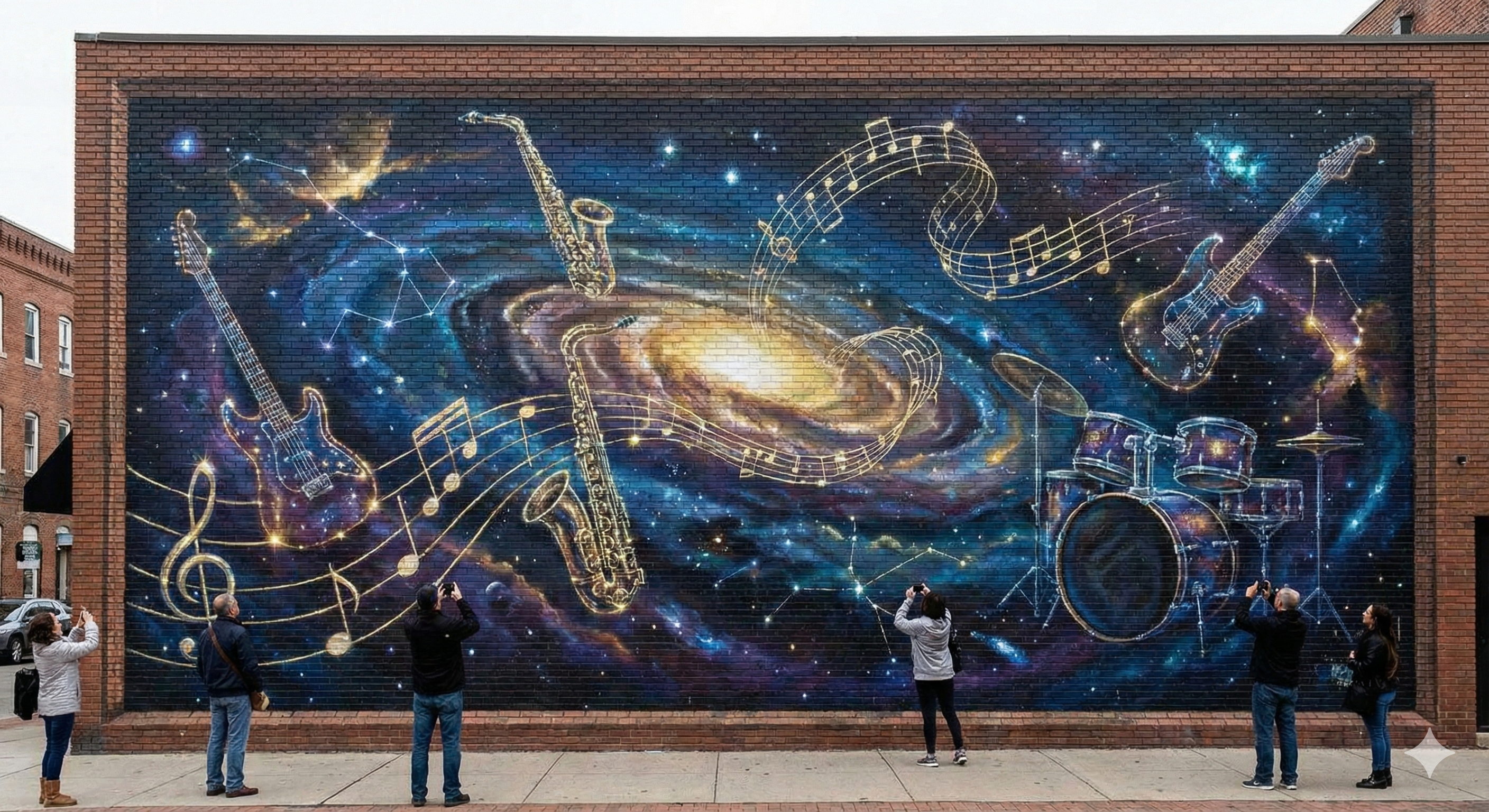
For Hip-Hop or electronic studios, large-scale street art murals provide a raw, high-energy backdrop that is perfect for video content and social media sessions. These designs often feature bold typography, vibrant spray-paint textures, and gritty cityscapes. This aesthetic injects the room with an underground, rebellious spirit, making it a favorite for artists who thrive in high-intensity, modern urban environments.
Iconic Silhouettes
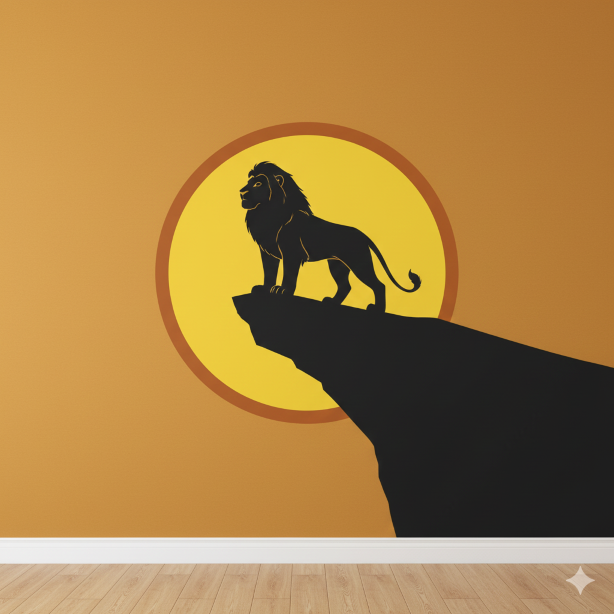
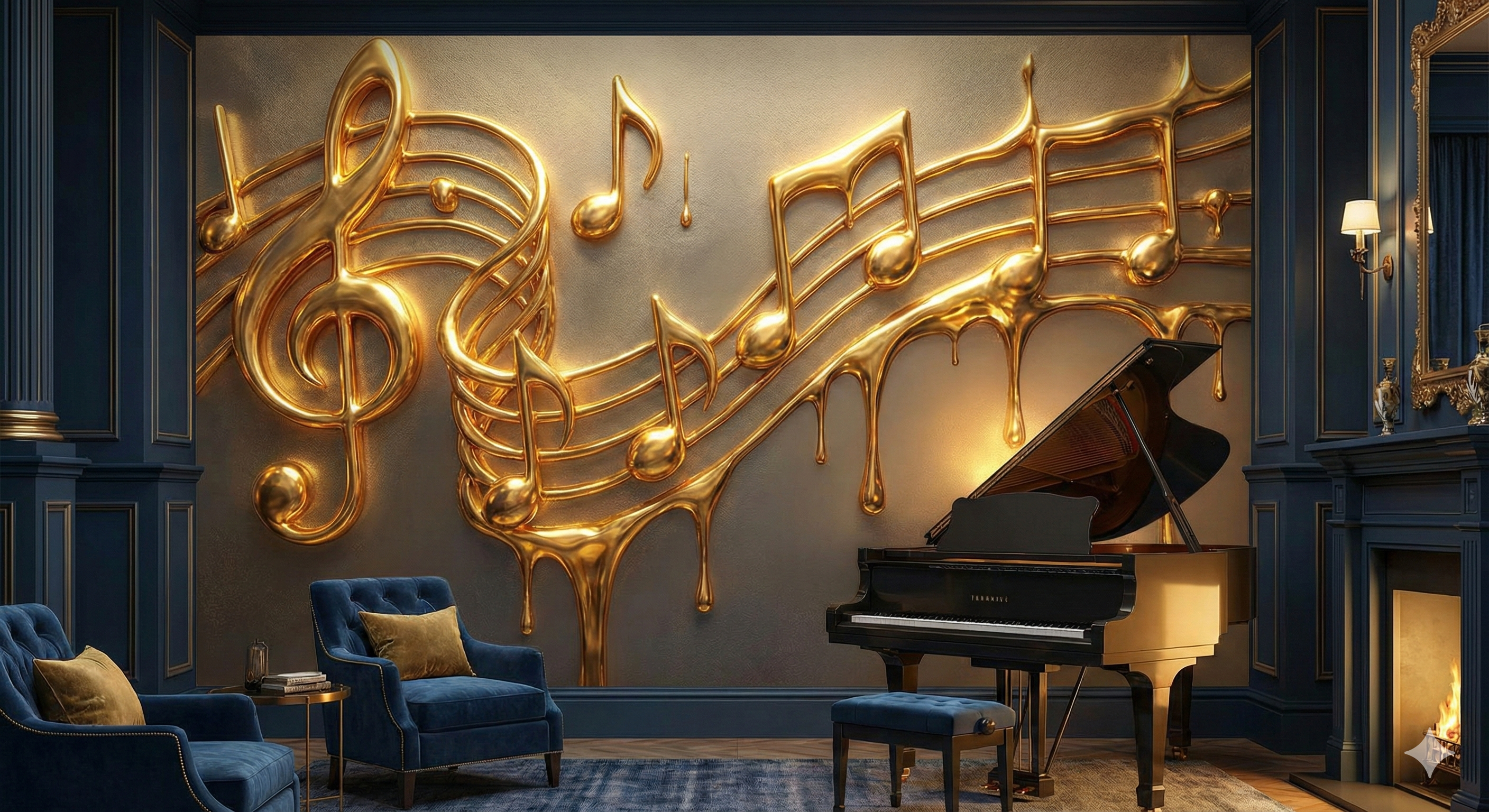
Minimalist, high-contrast silhouettes of legendary musicians or instruments—like the sleek curves of a classic Fender Stratocaster or the grand profile of a piano—inspire without being visually “busy.” These murals provide a sophisticated, clean aesthetic that doesn’t distract the eye during deep focus. They serve as subtle nods to greatness, reminding everyone in the room of the legends who paved the way.
Technical Focus Recording Studio Wallpaper Designs
Technical murals celebrate the intricate craft of music production, blending engineering precision with artistic flair. These designs are perfect for studios that want to showcase a professional, detail-oriented identity. By focusing on the structural beauty of instruments and media, these wallpapers turn the technical side of audio into a sophisticated visual narrative that resonates with both engineers and musicians.
The “Exploded” View
A technical, blueprint-style mural of a drum kit or an electric guitar adds a sophisticated, “craftsman” feel to the workspace. These designs deconstruct complex instruments into their individual components—screws, pickups, and hardware—rendered in clean architectural lines. This style is ideal for producers who appreciate the mechanical precision behind every note, creating a workspace that feels both intellectual and inspired.
Macro Music
Extreme close-ups of textures—the rich grain of a cello’s aged wood, the tight winding of a heavy bass string, or the microscopic grooves of a vintage vinyl record—provide an immersive visual experience. These high-detail murals celebrate the tactile nature of sound. By highlighting the physical materials that create music, they ground the studio in a sense of warmth, history, and organic beauty.
Sheet Music Overlays
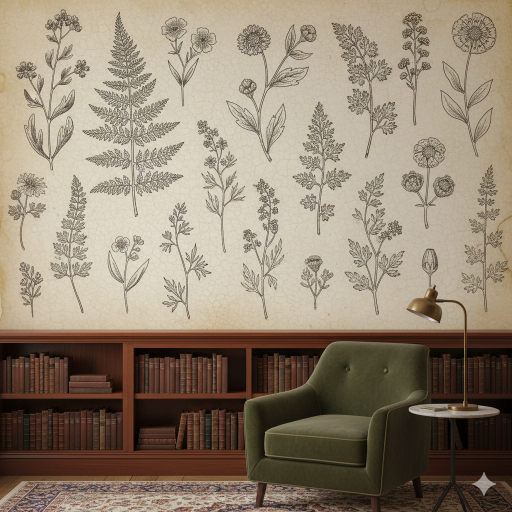
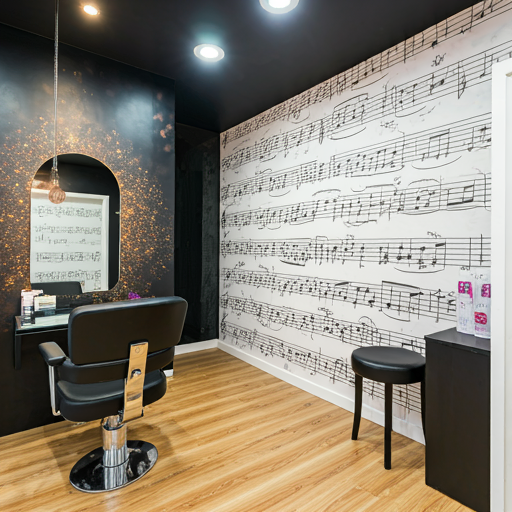
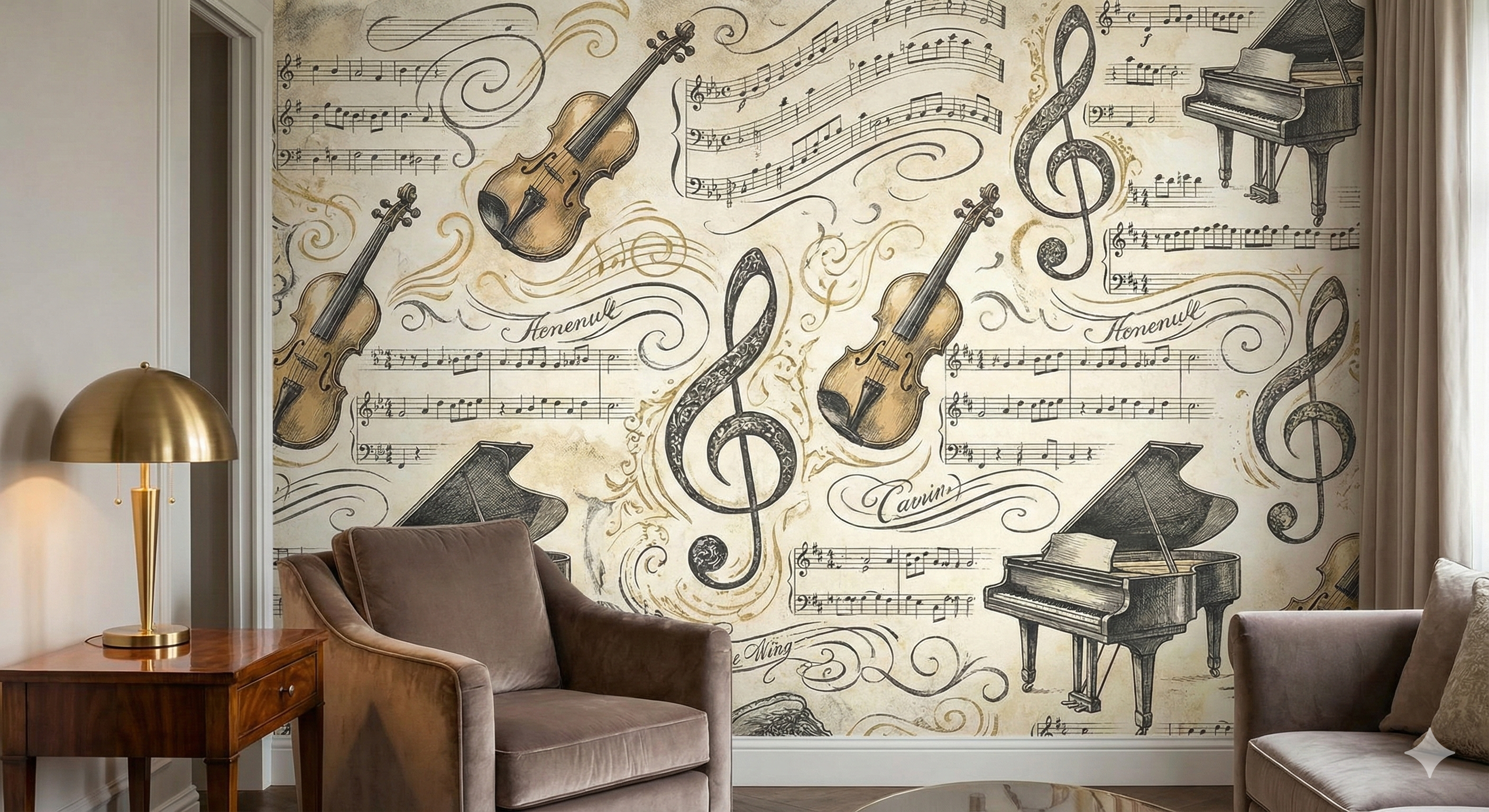
A subtle, aged-parchment background featuring classical compositions or handwritten jazz charts is perfect for acoustic or scoring rooms. These murals provide a timeless, scholarly atmosphere that honors the art of composition. The layered textures of ink on paper create a non-distracting backdrop that feels elegant and historic, making it the ultimate choice for spaces dedicated to songwriting and orchestration.
Implementation Strategy
| Design Type | Best Room Placement | Primary Benefit |
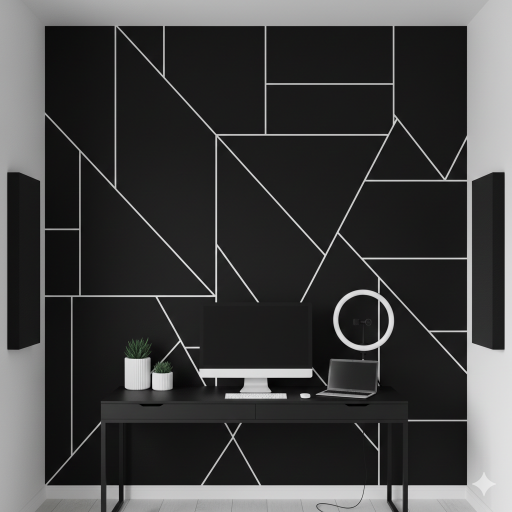
| Minimalist Geometric | Tracking Room (Live Area) | Reduces visual distraction for performers. |
| Dark Matte Textures | Control Room (Console Wall) | Minimizes screen glare; creates a “cocoon” feel. |
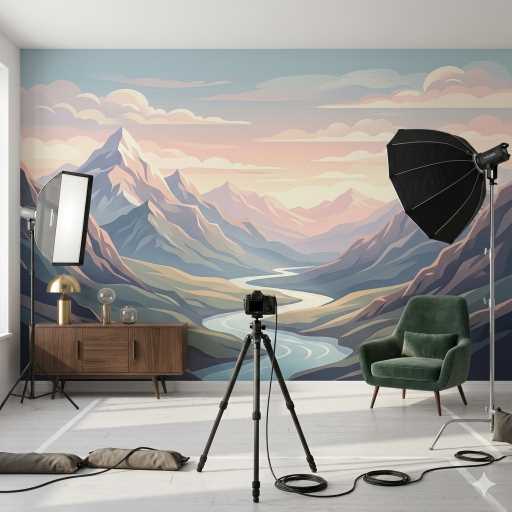
| High-Contrast Bold | Social Media/Interview Corner | Ideal for “Vlog” style content and artist photos. |
Critical Feature: The “Low-Glare” Backdrop
For modern production studios that film content or use multiple monitors, Matte Non-Woven materials are essential. Standard glossy wallpaper creates hotspots from studio lights that can ruin video quality and cause eye fatigue during long sessions.
Recording Studio Wallpaper Technical Installation Tips
Avoid High-Gloss
High-gloss surfaces are a dual threat in professional studios. Acoustically, they act as hard mirrors, causing harsh high-frequency reflections and “slap echo” that color the sound. Visually, they reflect glare from studio monitors and LED gear, leading to significant eye fatigue during long mixing sessions. Always prioritize matte, eggshell, or “suede” finishes to ensure a diffused, neutral environment.
Adhesive Choice
Because recording studios are often highly insulated, airtight environments, humidity can become trapped behind wall coverings. It is essential to use a heavy-duty, permeable, and mold-resistant adhesive. Standard pastes can fail under the heat generated by racks of analog gear or trap moisture in windowless booths. A high-quality, anti-fungal adhesive ensures long-term bond strength and protects the air quality.
Strategic Placement
The placement of your mural should be dictated by your speaker position. Avoid installing standard wallpaper at the “first reflection points”—the spots on the side walls directly between the monitors and your ears—unless it is a micro-perforated material over acoustic batting. Instead, use decorative murals on the front wall behind the monitors or the back wall to ground the room’s aesthetic.