








Description
I view school murals not merely as decorative but as expansive canvases for inspiration, cognitive development, and cultural identity. From the very first day a child enters a primary classroom to the final, complex research projects of a doctoral candidate, the physical environment speaks a silent language to the student.
Transitioning our institutions from “blank” to “brilliant” through strategically designed school murals is more than an aesthetic upgrade. It is a profound investment in our pedagogical future. By turning empty corridors into vibrant “teachers”, we ensure that every square inch of our schools actively cultivates a student’s potential and sense of belonging.
The School Staff Room Murals: A Sanctuary for Educators
I believe the staff room is the intellectual engine of the school. Too often, these spaces are neglected. Yet they are where the most critical interdisciplinary collaboration and teacher wellness occur. A strategic mural here isn’t just decoration. It is an investment in staff retention, morale, and professional inspiration.
In a high-pressure academic environment, the staff room must serve two distinct functions. A place for restorative rest and a hub for collaborative innovation.
1. Restorative “Calm Zones” (Biophilic Design)
Teachers spend their day in high-energy environments. The staff room mural should provide a visual “reset.”
Biophilic Benefits
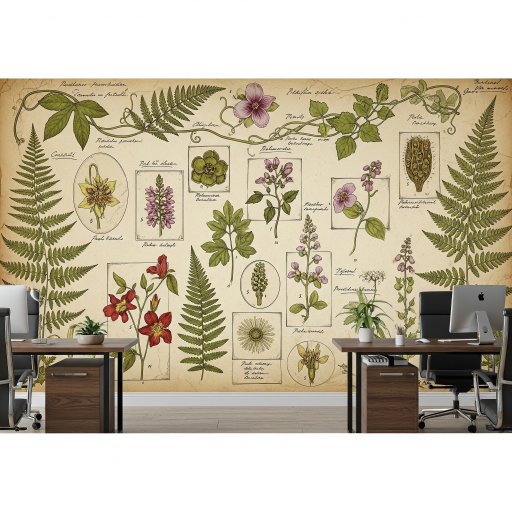
Murals featuring deep forest canopies, mountain ranges, or minimalist botanical patterns have been proven to lower blood pressure and mental fatigue.
The Matte Advantage
Using a matte non-woven finish is critical here. It absorbs light, creating a soft, sophisticated atmosphere that feels more like a professional lounge than a sterile cafeteria.
The Innovation Hub (Intellectual Inspiration)
The walls should celebrate the “Life of the Mind.”
Legacy and Vision
A mural that incorporates inspiring quotes from educational pioneers or depicts the history of local entrepreneurship reminds staff of their higher purpose. It builds Institutional Pride, connecting their daily labor to a larger historical narrative.
Abstract Sophistication
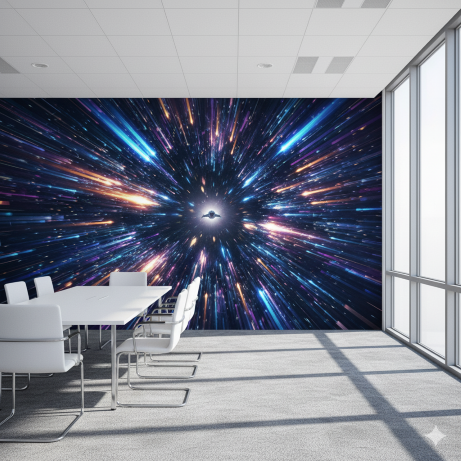
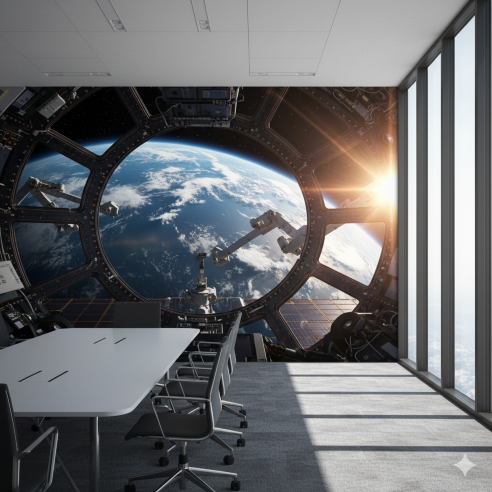
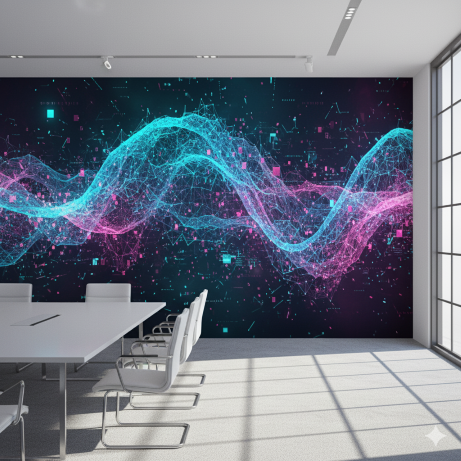
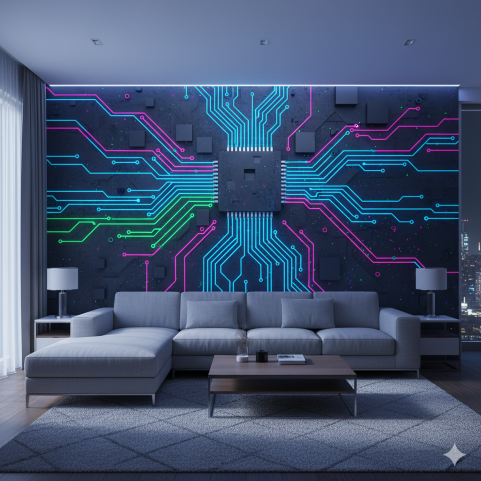
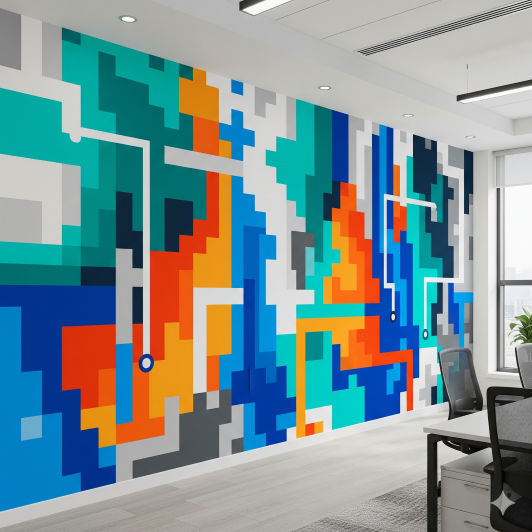
Geometric patterns in muted tones—navy, charcoal, or sage—can foster a sense of modern professionalism, signaling that the school values high-level thinking.
Our Challenge
Take a walk into your staff room today. Is it a place that inspires your best teachers to stay? Or is it a space that they merely “tolerate”? By transitioning from a blank wall to a brilliant mural, you are telling your staff that their mental well-being and professional collaboration are top priorities.
The Pedagogical Evolution of School Murals
The role of school murals shifts as students mature. Serving a specific psychological and educational purpose at every milestone:
1. Early Childhood & Primary School Murals: The Third Teacher
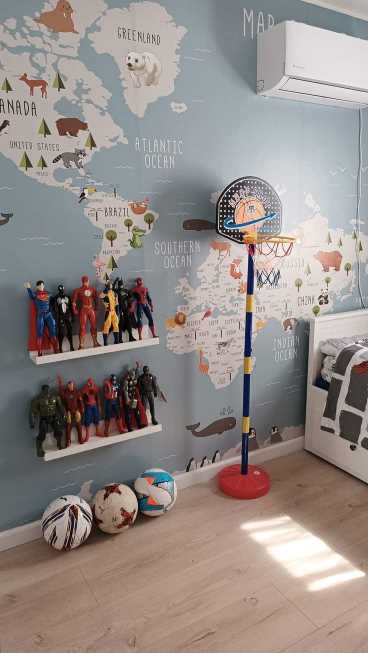
At the Early Childhood and Primary levels, school murals are far more than “decorations.” They are essential pedagogical tools that bridge the gap between abstract concepts and a child’s physical reality. By transforming static walls into dynamic, visual lessons, we provide young learners with the constant, environmental reinforcement necessary for cognitive development.
Cognitive Anchors: The Blueprint of Literacy and Logic
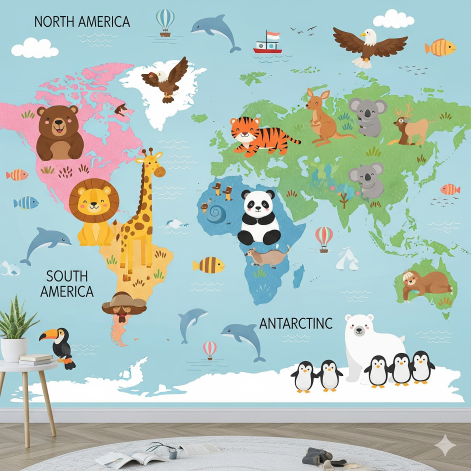
In the formative years, a child’s brain is a sponge for patterns. By integrating Cognitive Anchors directly into the architecture via murals, we facilitate “passive learning.” The subconscious absorption of information during play and transition times. A school mural depicting the butterfly’s metamorphosis or a vibrant, illustrated number line transforms a sterile hallway into an interactive textbook.
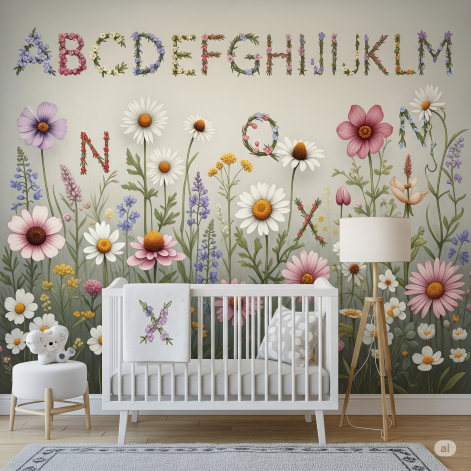
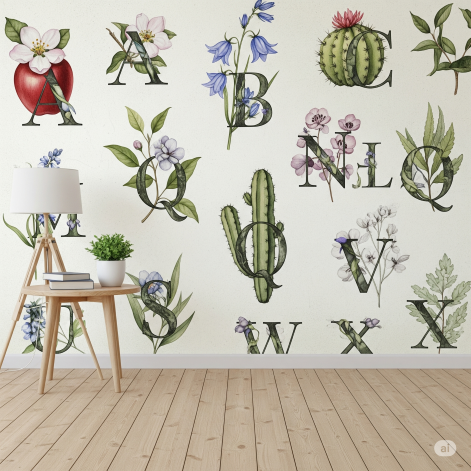
These visual landmarks provide a constant reference point. Allowing students to verify their thoughts independently. When a child can look up and see the water cycle or the alphabet woven into a story-driven landscape, the curriculum becomes a living part of their world rather than a fleeting lesson on a screen.
Emotional Safety: Building a Sanctuary for Growth
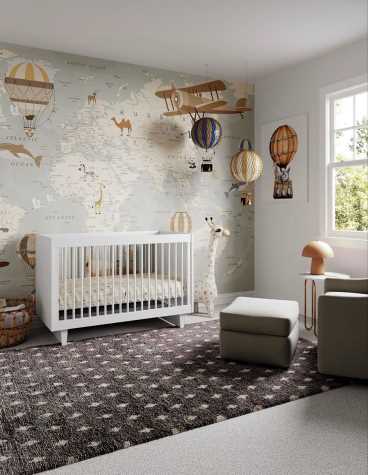
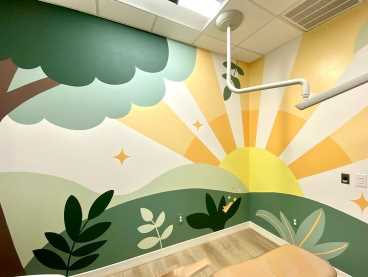
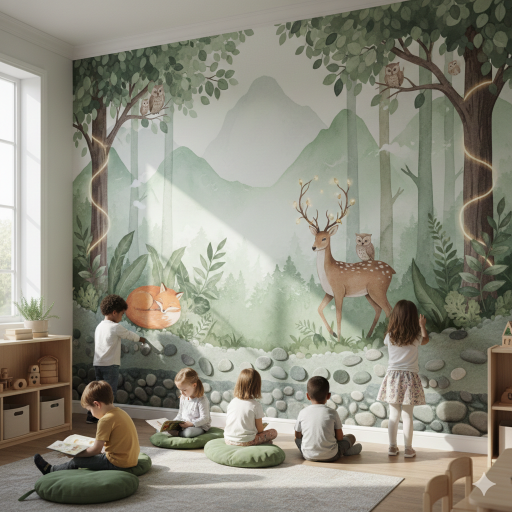
The transition from home to school can be daunting for a young learner. Emotional Safety is the foundation upon which all academic success is built. Soft, nature-inspired school murals—featuring tranquil forests, rolling hills, or gentle celestial maps—act as “environmental stabilizers.” These designs utilize biophilic principles to lower heart rates and reduce separation anxiety.
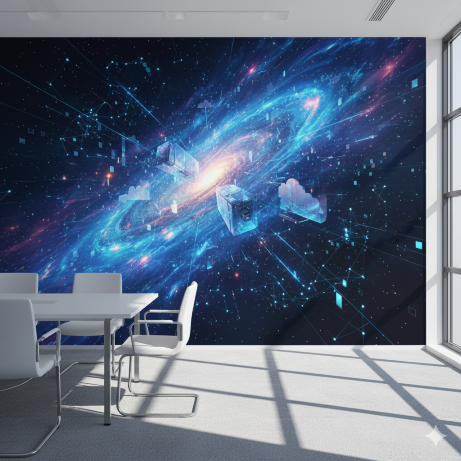
By replacing cold, industrial walls with scenes of natural wonder, we provide students with a sense of “place” and protection. A well-designed celestial mural doesn’t just teach about stars. It creates a dreamlike atmosphere that sparks curiosity while signaling to the child that they are in a safe, nurturing space.
Tactile Learning: The Power of Matte and Texture
For a child, learning is a full-body experience. Tactile Learning through wall surfaces is often overlooked but is deeply impactful. Utilizing matte-finish murals is a strategic choice for inclusivity. Unlike high-gloss paints that create distracting glares and sensory “noise,” matte surfaces offer a grounded, sophisticated aesthetic that is easier on the eyes. Furthermore, non-woven textures invite a gentle touch. Turning the wall into a sensory boundary that defines the classroom’s “edge.” This tactile engagement helps children with different sensory needs feel more connected to their physical surroundings. It transforms a flat surface into a durable, touchable landscape that feels premium, permanent, and personal to every student who walks by.
2. Secondary School Murals: Identity & Social Narrative
As we transition into the secondary phase of education, the role of our walls matures alongside our students. Adolescence is a period of intense identity formation and social awakening. Therefore, our murals must evolve from simple cognitive anchors into sophisticated mirrors of the world and windows into the future.
Representation Matters: Seeing a Future Self
In secondary school, a mural’s most potent function is providing a “roadmap of possibility.” By depicting a diverse array of historical figures, local heroes, and contemporary pioneers in STEM, the arts, and skilled trades, we foster a deep sense of belonging. When a student sees someone who looks like them excelling in a complex field, it bridges the gap between ambition and reality. These visual narratives serve as a daily reminder that their potential is not limited by their background. By celebrating both global icons and the entrepreneurial spirit of local leaders, we create an environment that validates every student’s unique journey and “possible self.”
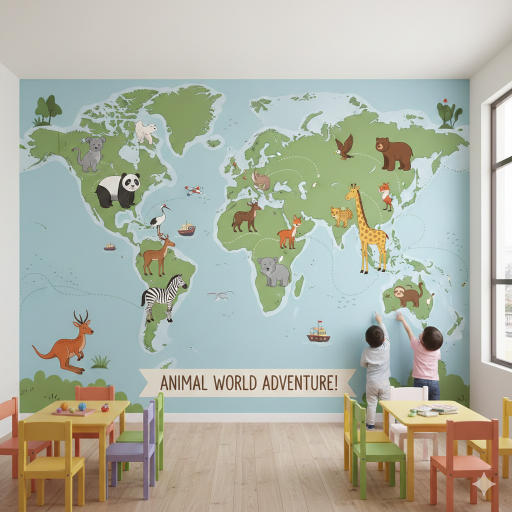
Subject Integration: Turning Transit into Learning
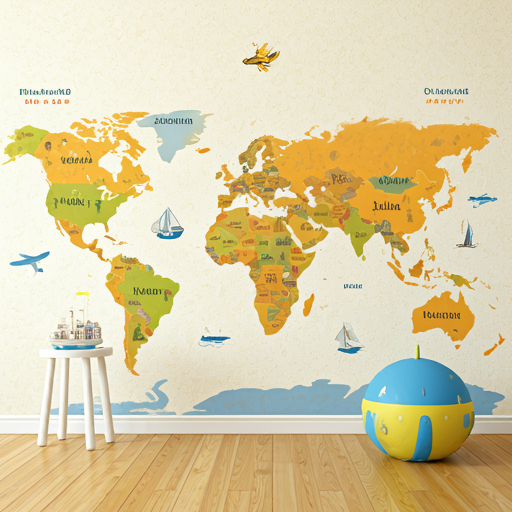
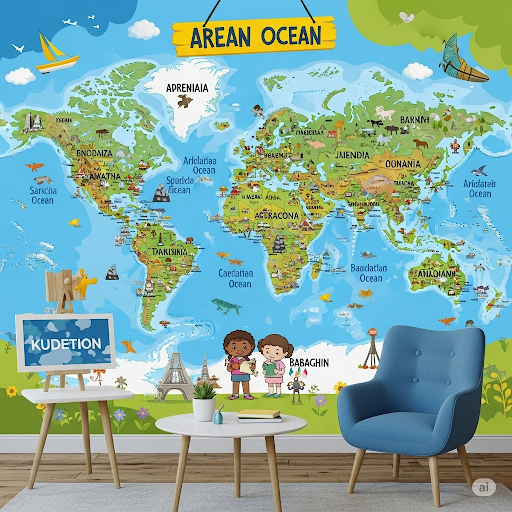
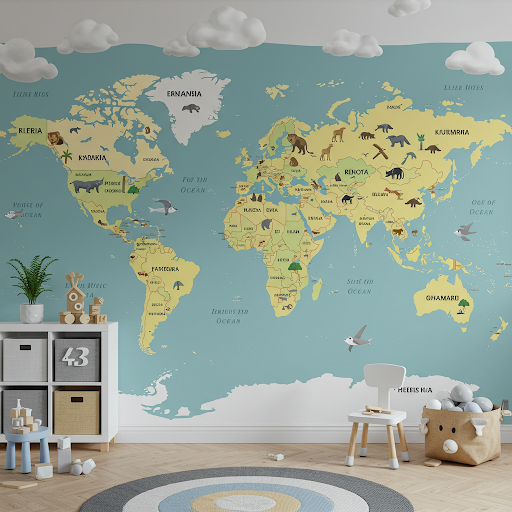
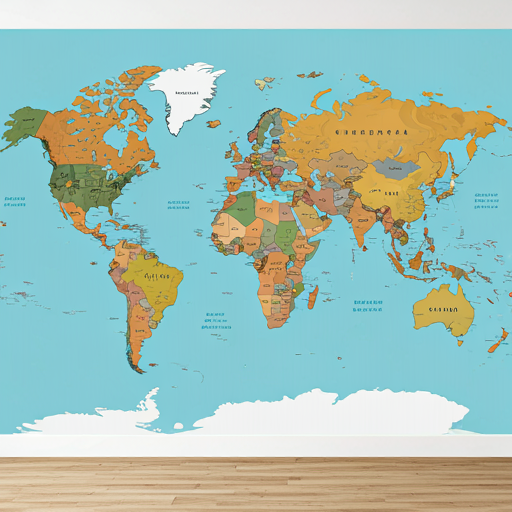
The corridors of a secondary school should never be “dead space.” Through strategic Subject Integration, we turn every square foot into a teaching tool. Imagine a chemistry wing where a massive, stylized periodic table isn’t just a poster. But a wall-to-ceiling mural that contextualizes elements within modern technology. In the humanities department, a sprawling, detailed map of the Silk Road or a timeline of national history turns a walk to the next period into a moment of discovery. This continuous exposure reinforces classroom lessons. Encouraging students to engage with academic content in a low-pressure, high-impact visual format that sticks long after the bell rings.
Mental Health: Designing for Calm in High-Pressure Zones
The academic rigors of secondary education can lead to significant stress. We prioritize Mental Health by recommending “calm zones” in high-traffic or high-stress areas like exam halls and counseling wings. Utilizing abstract geometric patterns or biophilic designs—such as soothing forest canopies or rhythmic oceanic waves—can physically lower cortisol levels. These murals provide a necessary visual “break,” allowing the teenage brain to decompress between intense cognitive tasks. A matte, non-woven finish is particularly effective here, as it absorbs light rather than reflecting it, creating a soft, tactile atmosphere that promotes mindfulness and emotional regulation during the school day.
3. Higher School Murals: Innovation & Legacy
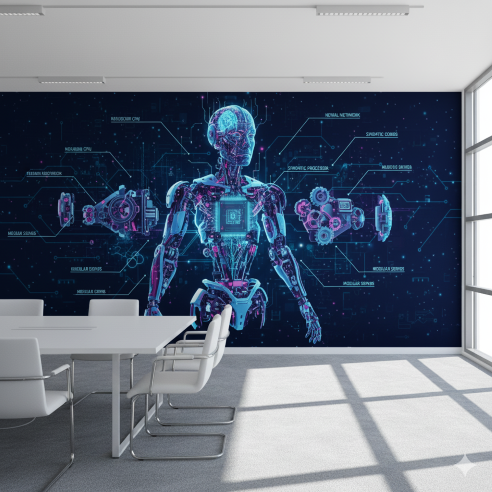
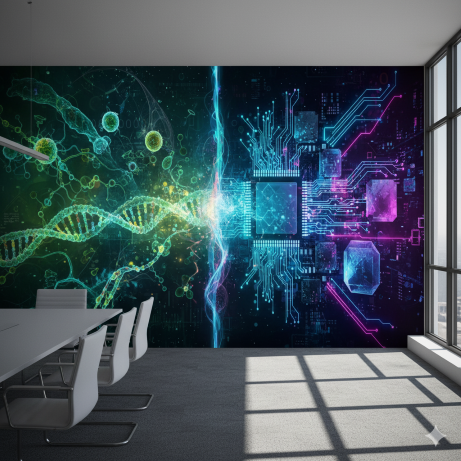
As students transition into the world of higher education, the academic environment must reflect the gravity and ambition of their professional aspirations. At this level, murals transcend simple instruction. They become a bridge between theoretical mastery and real-world application. They transform lecture halls and research corridors into spaces that breathe innovation, grounding students in a rich historical context while simultaneously propelling them toward the frontiers of their chosen fields. A university’s walls should act as a constant, silent mentor, reinforcing the standards of excellence and the vastness of the global professional landscape they are about to enter.
Institutional Pride: Narrating the Legacy
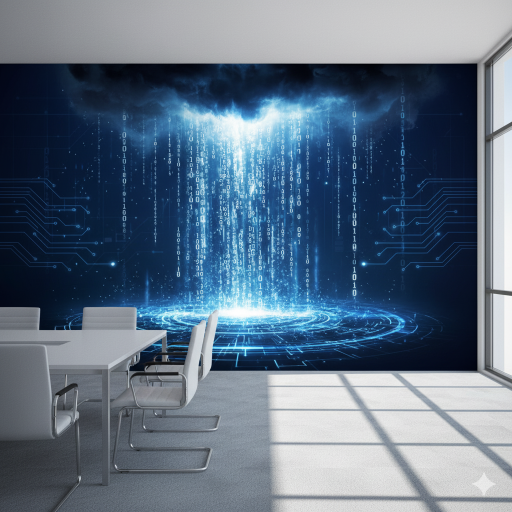
In our universities, every stone tells a story. Institutional Pride murals serve as a visual archive of a college’s soul. By illustrating the journey from a modest founding to groundbreaking modern research, these large-scale installations instill a sense of stewardship in the student body. They highlight key breakthroughs—whether in Kenyan entrepreneurship or global medical science—and project a clear vision of the institution’s future trajectory. When a student walks past a mural detailing the lineage of scholars who came before them, they realize they are part of a living legacy, motivating them to contribute their own chapter to the school’s history.
Collaborative Spaces: The Architecture of Dialogue
Innovation rarely happens in isolation. Collaborative Spaces equipped with interactive murals or “chalkboard-finish” sections are vital for the modern campus. By designating common areas as zones for spontaneous brainstorming, we encourage interdisciplinary dialogue between engineering, philosophy, and business students. These “living walls” allow ideas to be mapped out in real-time, turning a simple hallway or café into an incubator for the next big startup or social movement. This interactive element breaks down the hierarchy of the classroom, fostering a culture of peer-to-peer learning and creative problem-solving that is essential for 21st-century success.
Sophisticated Aesthetics: Mirroring Professionalism
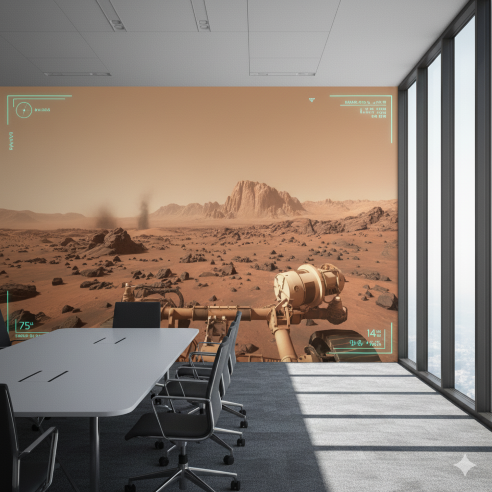
The aesthetic quality of a higher education environment sets the psychological tone for professional conduct. I advocate for Sophisticated Aesthetics through the use of high-end materials like non-woven matte murals. Unlike temporary posters or dated gloss paints, these professional-grade installations mimic the high-stakes environments of corporate headquarters, research labs, and design studios. The matte finish eliminates distracting reflections, providing a refined, gallery-like atmosphere that commands respect. By surrounding students with top-tier design and durable, textured materials, we subconsciously prepare them for the executive and specialized spaces they will inhabit throughout their careers.
The Strategic Benefits of School Murals
To conclude this, we must address the pragmatic and social foundations that make school murals a vital administrative strategy. As we modernize our educational infrastructure, the transition from traditional paint to high-performance wall coverings represents a shift toward sustainability and cultural relevance.
Durability and Hygiene: Built for High-Traffic Excellence
The primary concern for any educational facility is longevity. Durability and Hygiene are where modern non-woven wallpaper murals outshine traditional hand-painted alternatives. These materials are engineered to withstand the daily rigors of student activity, resisting the flaking and fading that often plague standard paint. Because they are often “scrubbable” or easy to sanitize, they meet the rigorous health standards required in post-pandemic school environments. By choosing professional-grade non-woven substrates, administrators ensure that the visual environment remains pristine and vibrant for years, even in the busiest primary school corridors or university common areas.
Cost-Effectiveness: A Strategic One-Time Investment
From a budgetary perspective, a high-quality mural is a masterclass in Cost-Effectiveness. While the initial procurement may be higher than a bucket of standard beige paint, it functions as a one-time investment that defines a room’s character for up to a decade. This significantly reduces the recurring costs of repainting and the constant turnover of temporary decorations that quickly become cluttered and dated. By investing in a permanent, high-impact visual landscape, schools effectively “future-proof” their interiors, allowing maintenance teams to focus resources elsewhere while the walls continue to provide educational and aesthetic value.
Community Cohesion: The Wall as a Cultural Bridge
A school should be a reflection of the society it serves. Community Cohesion is fostered when students see their specific culture and history. Such as the entrepreneurial legacy of local leaders integrated into their daily surroundings. When a school mural depicts local landmarks, indigenous flora, or the stories of national pioneers, it builds a powerful bridge between the institution and the families it supports.
This visual representation creates a sense of ownership and pride that extends beyond the classroom, signaling to every visitor that the school is a sanctuary for local identity and a launchpad for community growth.
Recommended Sunday School Murals
For a Sunday School environment, the mural serves as a spiritual “Third Teacher,” bridging the gap between ancient scripture and a modern child’s imagination. I advocate for designs that move away from dated illustrations toward vibrant, high-quality matte non-woven murals that inspire reverence and joy.
To expand on our Sunday School mural strategy, we must ensure these designs function as “Living Parables.” As the Director, I recommend moving beyond simple cartoonish figures toward sophisticated, narrative-driven art that invites children to enter the story.
Here is an expansion of the most impactful themes for a faith-based learning environment:
1. The Creation Narrative Murals
This theme serves as the ultimate “Cognitive Anchor” for understanding our place in the world. A mural depicting the emergence of light, the separation of seas, and the diversity of the animal kingdom teaches students that the world is a designed, intentional gift.
Educational Goal
To foster a sense of responsibility and “Environmental Stewardship” from a young age.
Design Tip
Use a wide-angle landscape style that transitions from the celestial stars on one side of the room to deep oceanic life on the other.
2. The Good Shepherd Mural: Emotional Security
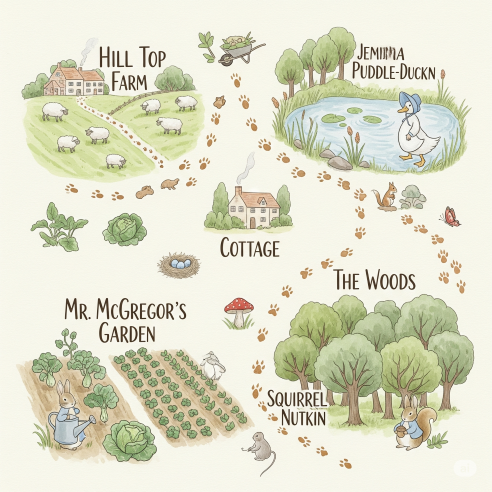
For many children, the concept of a protector is vital for their emotional development. A mural featuring a pastoral scene with a shepherd tending to his flock creates a “Safe Zone” within the classroom.
Educational Goal
To provide Emotional Safety and reduce anxiety by visually representing care and guidance.
Design Tip
Utilize soft, biophilic greens and earthy “matte” textures to create a grounded, peaceful atmosphere that lowers heart rates during quiet reflection time.
3. The Fruits of the Spirit: Character Development
Instead of just listing the virtues (Love, Joy, Peace, etc.), a mural can depict a flourishing “Community Tree.” Each branch can represent a different virtue, showing how they are interconnected and lead to a healthy life.
Educational Goal
To provide a visual mnemonic for Social-Emotional Learning (SEL) rooted in faith values.
Design Tip
Use vibrant, modern botanical illustrations. This “Subject Integration” allows teachers to reference the wall whenever a student demonstrates kindness or patience.
4. The Global Village: Diversity and Inclusion
In an increasingly connected world, Sunday School should be a place where every child sees themselves. A mural depicting children from various cultures and backgrounds standing together under a shared sky reinforces the concept of a global family.
Educational Goal
To promote Global Citizenship and the understanding that faith transcends borders and ethnicity.
Design Tip
Focus on Representation by including diverse clothing, architectural styles from around the world, and local flora.
Our Advice
I encourage every administrator to conduct a “visual audit” of their corridors and classrooms today. Stand in your lobby and ask yourself: “What is this wall teaching my students right now?”
If the answer is “nothing,” you are wasting your most valuable passive teaching tool. A blank wall is a missed opportunity for inspiration. It is time to move past the era of sterile, industrial interiors and embrace a canvas that challenges, comforts, and educates. Reimagining your walls is not just an aesthetic upgrade. It is an essential commitment to the psychological and academic success of your students.