






![Vintage-Map-with-Raised-Details-highlighted-continents-with-a-tactile-3D-effect-perfect-for-a-travel-themed-restaurant[1]](https://interiordesign.co.ke/wp-content/uploads/2025/04/Vintage-Map-with-Raised-Details-highlighted-continents-with-a-tactile-3D-effect-perfect-for-a-travel-themed-restaurant1.png "Vintage-Map-with-Raised-Details-highlighted-continents-with-a-tactile-3D-effect-perfect-for-a-travel-themed-restaurant[1]")
Description
Core Travel Mural Themes & Characteristics
A travel mural is a large-scale artwork—usually painted on a wall, ceiling, or building interior or exterior—that focuses on themes of exploration, geography, and the spirit of journeying.
Unlike general street art, travel murals are defined by their intent to evoke a sense of wanderlust or to document specific locations. They serve as visual portals, either bringing a distant destination to the viewer or anchoring a physical space (like a train station or hotel) to its geographic identity.
Travel murals are typically categorized by three main visual directions:
1. Geographic Icons Travel Mural
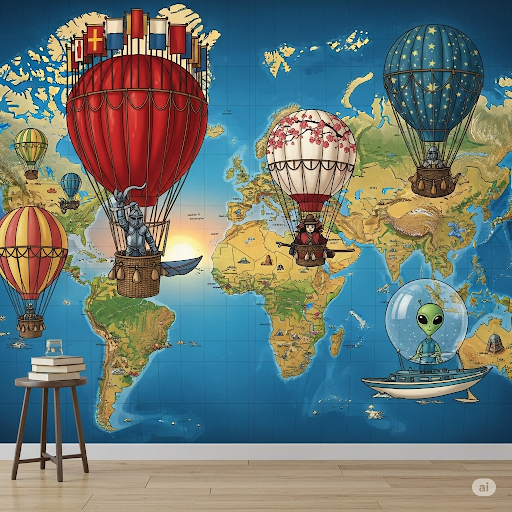
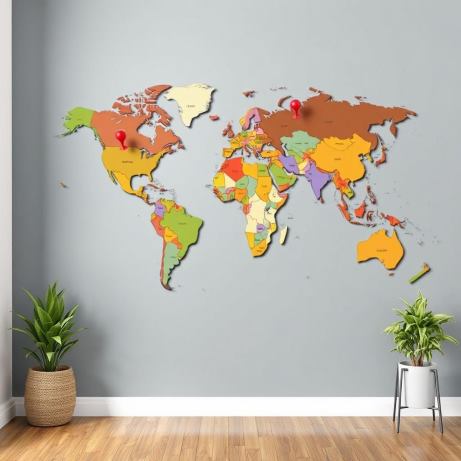
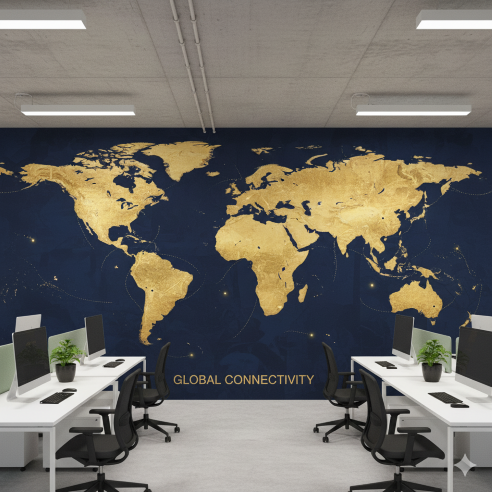
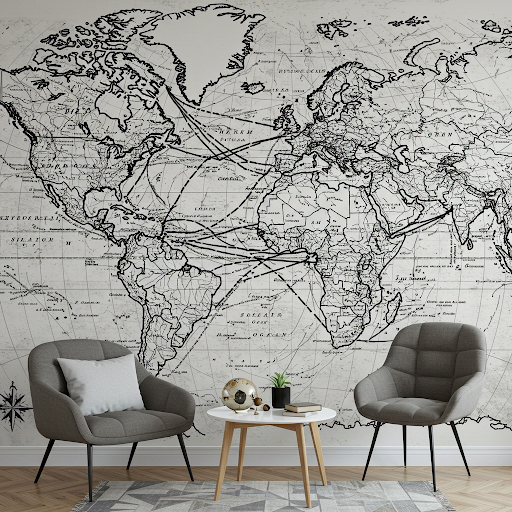
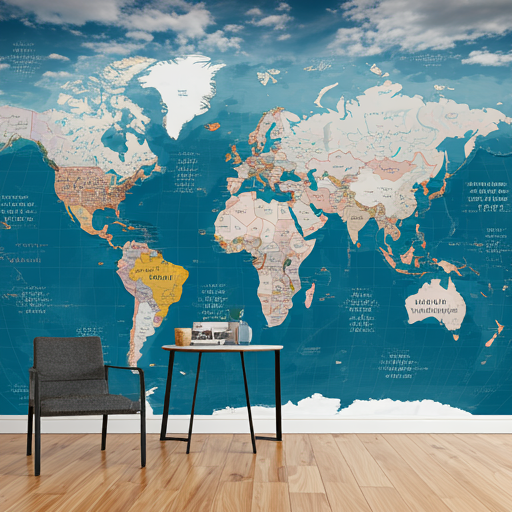
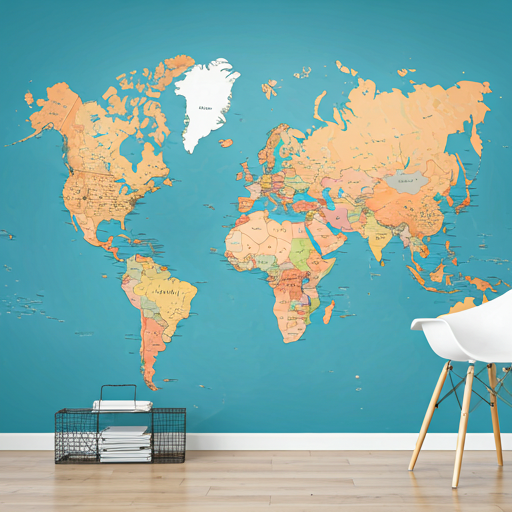
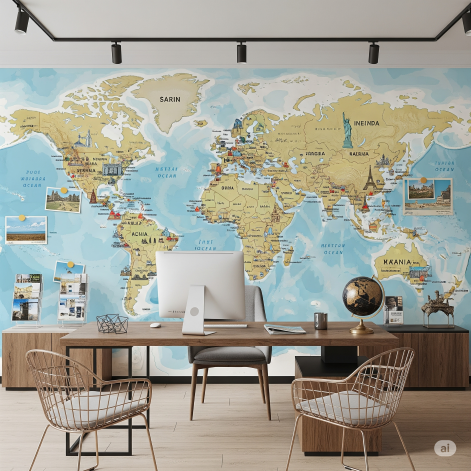
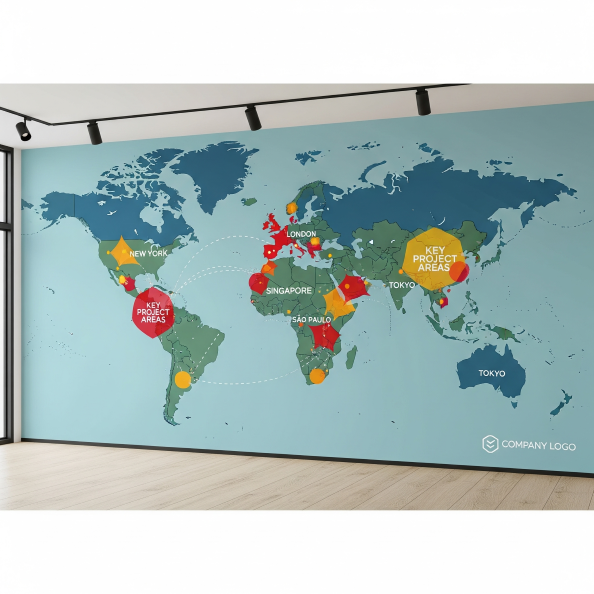
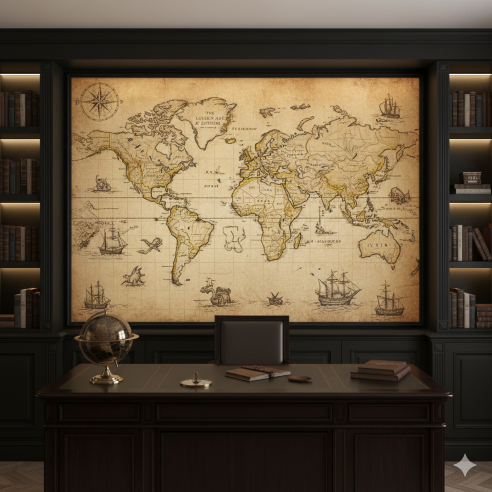
Geographic icons serve as the universal shorthand of the travel world. These murals utilize instantly recognizable landmarks—such as the soaring spires of the Taj Mahal or the jagged peaks of the Swiss Alps—to act as visual magnets for the viewer. By distilling a vast country into a single, iconic silhouette, these works spark immediate recognition and a sense of global interconnectedness. Stylized cartography and vintage-inspired maps often accompany these icons, turning a flat wall into an invitation for exploration. They appeal to our innate curiosity, encouraging us to trace routes across continents and dream of the distances we have yet to cover.
2. Narrative Journeys Travel Mural
Narrative journey murals focus on the kinetic energy of movement rather than the final destination. These compositions often feature the romantic tools of transit. Leather-bound vintage suitcases, steam locomotives billowing clouds of white smoke, or the sleek wings of an airplane slicing through a sunset. Beyond the machinery, these murals frequently depict the “wanderer”. Such as a solitary figure overlooking a sprawling valley or a misty horizon. This imagery taps into the “liminal space” of travel, capturing that fleeting, expectant feeling of being between two worlds. They celebrate the process of discovery. Suggesting that the transformation occurring within the traveler is just as significant as the landscape passing by.
3. Cultural Windows
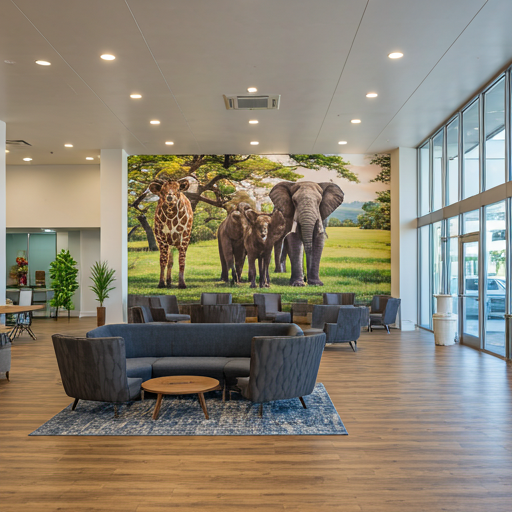
Cultural windows move beyond generic sightseeing to offer an intimate, “soul-level” look at a specific community. These murals prioritize the unique textures of a region, from the intricate patterns of indigenous textiles and the weathered faces of local elders to the specific vibrant hues of native wildflowers. By focusing on traditional architecture—like the tiled roofs of a Mediterranean village or the carved wood of a Nordic hut—the artist anchors the viewer in a specific moment in time. These works act as a bridge, fostering empathy and deep appreciation for the human element of travel. They remind us that every destination is a living, breathing tapestry of history and heritage.
Types of Travel Murals
In the world of travel murals, the “where” is just as important as the “what.” Because these murals are often large-scale and permanent, they are designed to solve specific problems or enhance the psychology of the people moving through those spaces.
Here is an expansion on the four primary types of travel murals and the functions they serve.
Transit Travel Mural (Functional Art)
Found in airports, subway stations, and bus terminals, these murals act as psychological anchors in high-stress environments.
Wayfinding & Landmark Status
In a sprawling airport, “Turn left at the mountain mural” is easier to follow than a small sign. They help travelers orient themselves in unfamiliar territory.
Anxiety Reduction
Transit hubs are often “non-places”—sterile, cold, and frantic. Murals humanize these spaces, offering a “visual rest” that can lower heart rates and reduce the perceived wait time for a flight or train.
The “First Impression” Gateway
For many, the airport mural is their first interaction with a new country. It serves as a visual handshake, summarizing the culture or landscape of the destination immediately upon arrival.
Hospitality Murals (Experience Art)
In hotels, hostels, and Airbnbs, travel murals shift from being functional to being immersive and social.
The “Local Vibe” Shortcut
Travelers often stay in hotels to experience a city, but they spend 8–10 hours a day inside the building. A mural depicting local street life or native flora brings the “outside in,” ensuring the guest never loses that sense of place.
Instagrammability (Digital Marketing)
In the modern travel economy, a hotel mural is a free advertisement. A well-designed wall becomes a backdrop for guest photos, which are then shared globally on social media, creating “FOMO” (fear of missing out) and driving future bookings.
Identity & Differentiation
In a sea of cookie-cutter hotel chains, a custom travel mural gives a property a “soul” and a specific personality that makes it memorable.
Destination Travel Murals (Economic & Civic Art)
Located in city centers and historic districts, these murals function as powerful tools for urban branding. By transforming derelict surfaces into vibrant landmarks, they signal a neighborhood’s rebirth. This strategic “outdoor gallery” approach revitalizes neglected areas, attracting investment. And turning ordinary streets into recognized cultural corridors that boost the local economy.
Placemaking
Placemaking murals convert overlooked spaces into social hubs. By turning a blank brick wall into a visual anchor, artists create a “sense of place” that encourages people to linger. This increased foot traffic directly benefits surrounding small businesses, as travelers who come for the art stay for the coffee and shopping.
Civic Pride
These murals act as monumental archives, celebrating local legends and pivotal historical milestones. For residents, seeing their heritage honored on a grand scale fosters deep community belonging. For visitors, these works provide an educational gateway, revealing the unique identity and cultural resilience that define the city’s heart and soul.
The “Postcard” Effect
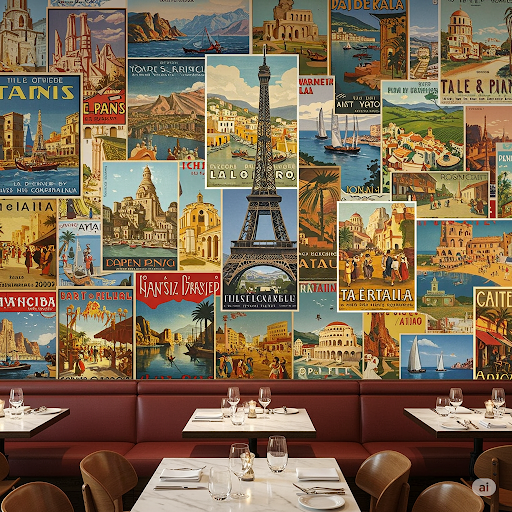
Large-letter “Greetings From” murals function as physical souvenirs in a digital age. By providing a human-sized stage for photography, they allow travelers to “verify” their arrival. These images become viral endorsements on social media, turning a single wall into a globally recognized symbol that reinforces the city’s status as a destination.
Interior & Home Travel Murals (Emotional Art)
Found in private residences or home offices, these serve a deeply personal and psychological function.
Visual Escapism
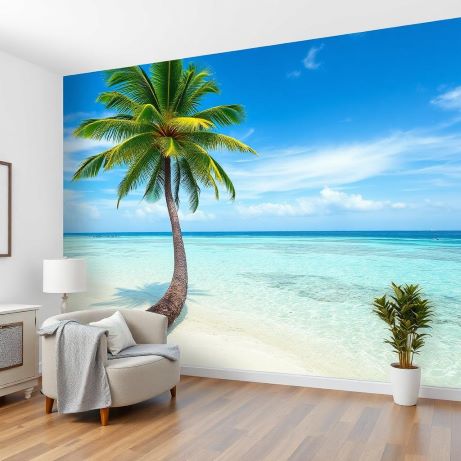
For the person working a 9-to-5, a mural of a Mediterranean coastline or a Himalayan peak provides a “mental exit.” It serves as a reminder of past adventures or a “vision board” for future ones.
Memory Preservation
Many homeowners commission murals based on their favorite travel photos. This transforms a fleeting vacation memory into a permanent part of their daily environment, boosting mood through nostalgia.
Space Expansion
In small city apartments, a mural of a vast horizon or an open landscape can “trick” the eye into feeling like the room is larger and more open to the world.
The “Postcard” Travel Mural Movement
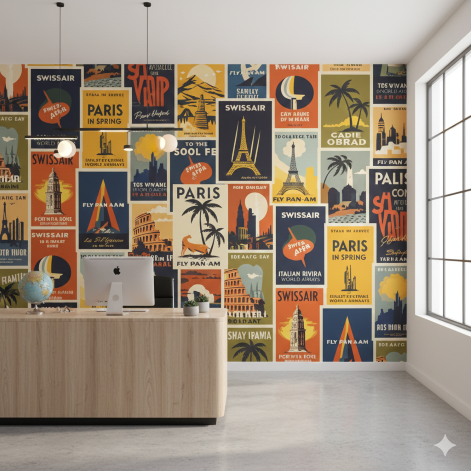
A major sub-genre of the travel mural is the Interactive Postcard. Popularized by artists like Victor Ving and Lisa Beggs (Greetings Tour), these murals feature the name of a city in large “large-letter” typography, with each letter containing a different local landmark. These are specifically designed for travelers to stand in front of, photograph, and share, effectively turning the art into a digital travel brochure.
Travel Mural Cultural & Economic Impact
Destination Branding
Murals can transform a “gray” neighborhood into a tourist destination (e.g., Shoreditch in London or Wynwood in Miami), boosting the local economy through foot traffic.
Storytelling
They preserve the history of a location, showing how people used to travel or highlighting the indigenous roots of a region.
Connection
They bridge the gap between the local community and the visitor, offering a shared visual language of discovery.
Pro-Tip for Travelers
If you are looking for these in the wild, many cities now offer mural maps or “street art walks” that allow you to tour these works as a self-guided itinerary.
To maximize your urban exploration, think of the city as an open-air museum where the collection is constantly rotating. Many metropolitan areas have formalized their mural scenes into “Street Art Districts,” such as Miami’s Wynwood or London’s Shoreditch.
Finding Your Route
For a successful self-guided itinerary, leverage specialized digital tools that act as a personal curator:
Street Art Cities
The gold standard for mural hunting, featuring an interactive global map with 85,000+ works. It provides artist bios and precise GPS coordinates.
CANVS
A dedicated public art guide that uses “smart search” to help you find murals by specific themes, like geographic landmarks or cultural portraits.
Google Arts & Culture
Their “Street Art” project offers virtual walking tours and high-resolution stories behind world-famous works.
Expert Exploration Tips
Go Early
The “golden hour” (just after sunrise) provides the best lighting for photography and ensures you won’t have crowds blocking your view.
Look Up and Behind
While large travel murals often face main boulevards, “hidden gems” are frequently tucked into narrow alleys or placed high on the corners of historic buildings.
Check Local BIAs
Business Improvement Areas (BIAs) or local tourism boards often provide free PDF “mural maps” that detail the history and cultural significance of each piece.