




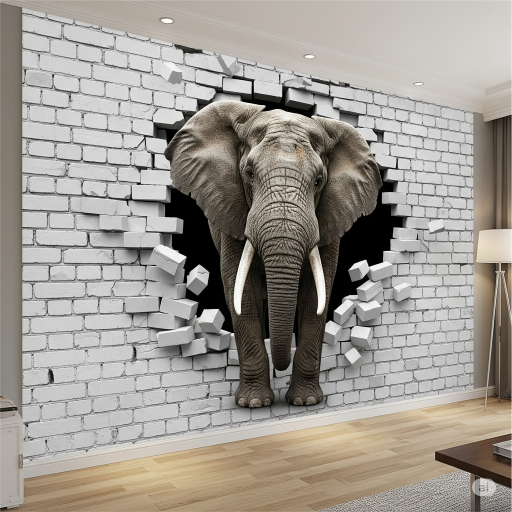
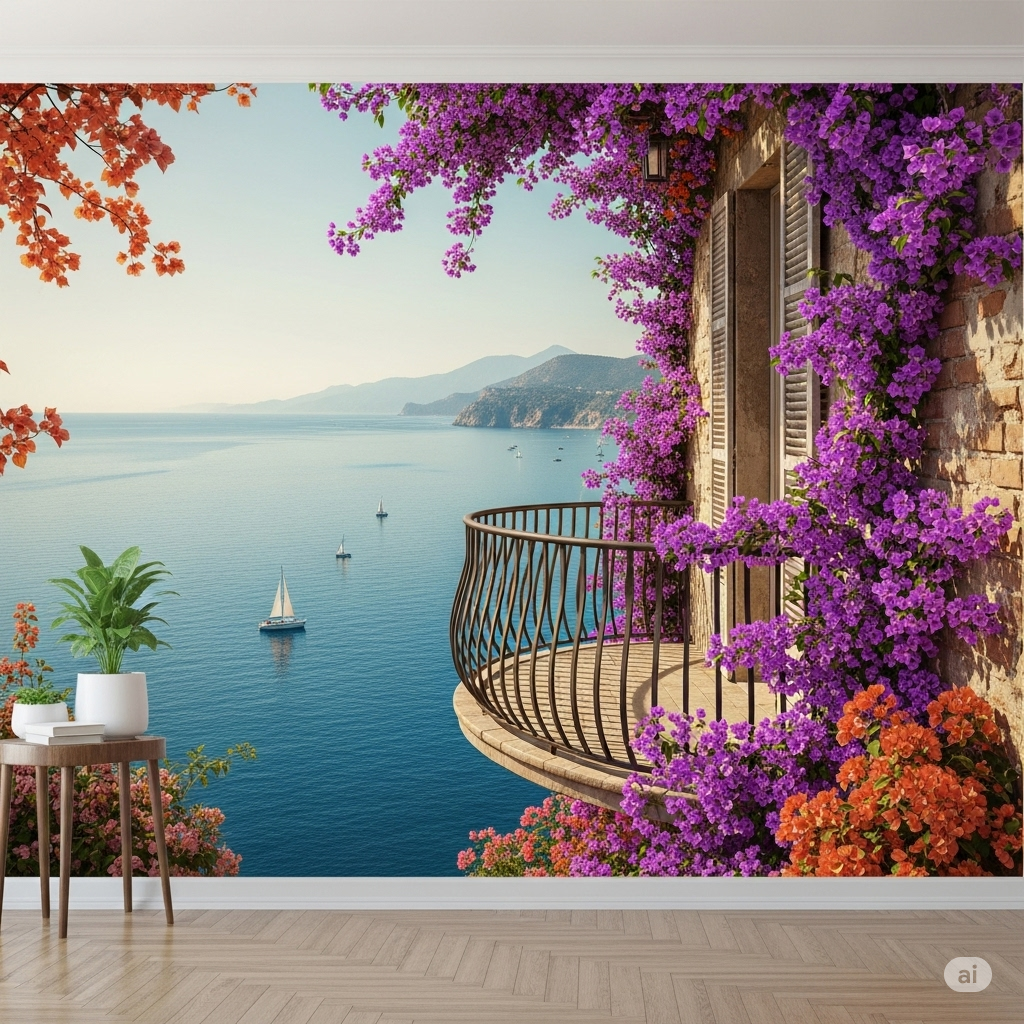
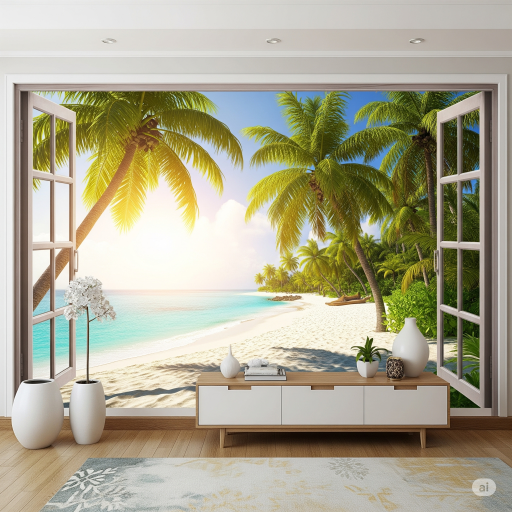
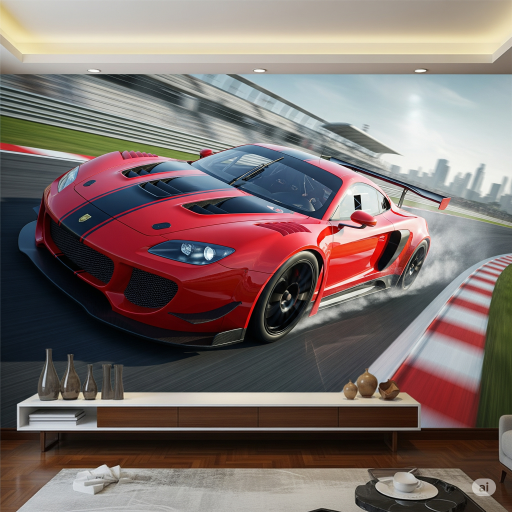
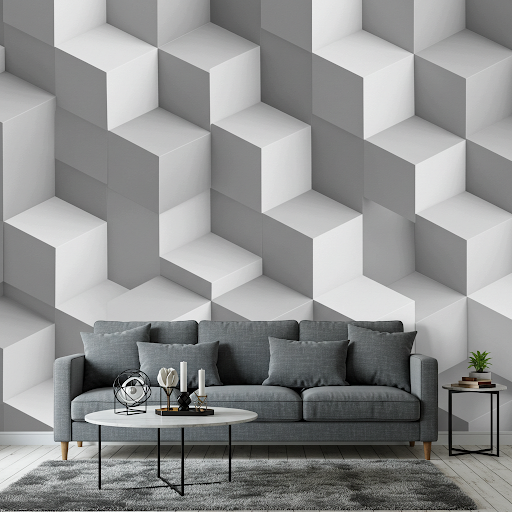
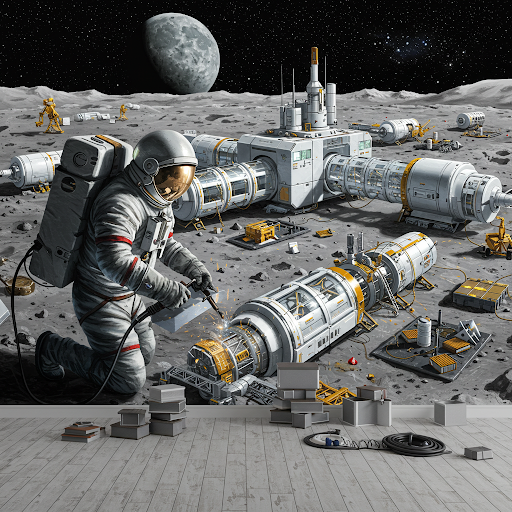
Description
Trompe l’oeil wallpaper Mural
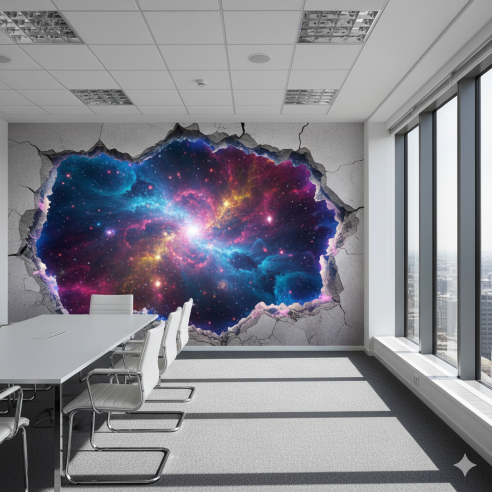
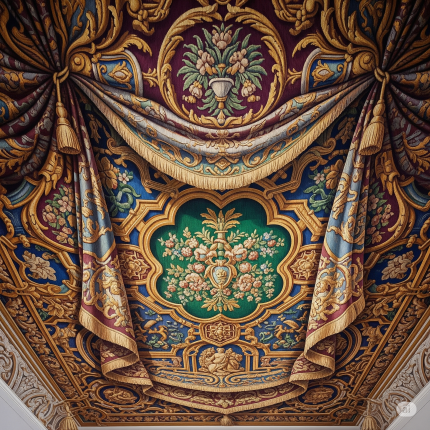
Trompe l’oeil wallpaper (pronounced tromp-loy) is French for “deceive the eye.” In the context of wallpaper murals, it refers to designs that use realistic imagery and optical illusions to trick the viewer into perceiving a flat wall as a three-dimensional space or object.
This technique transforms a static, two-dimensional surface into something that appears to have depth, texture, and architectural structure.
When you look at a flat wall, your brain uses specific cues to determine that it is a solid, vertical surface. Trompe l’oeil murals systematically hijack these cues to substitute a new reality.
Here is a breakdown of the mechanics behind the illusion.
1. The Geometry of Depth (Perspective)
The primary tool of deception is Linear Perspective. In the real world, parallel lines appear to converge as they recede into the distance (think of train tracks meeting at the horizon).
Vanishing Points
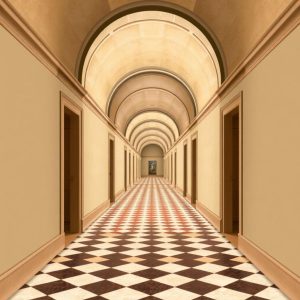
A trompe l’oeil mural establishes a “vanishing point” within the artwork. By angling the lines of architectural elements—like floorboards, ceiling beams, or a corridor—toward this single point, the mural forces the eye to perceive depth where there is only a flat wall.
Foreshortening
Objects in the mural are scaled down as they get “further away” in the image. A chair in the foreground of the mural will be life-sized, while a chair in the background will be much smaller. This scaling tells your brain, “That object is far away,” effectively punching a hole in the wall to create virtual space.
Atmospheric Perspective
To enhance the effect of vast distance (e.g., a mountain range or cityscape), designers use atmospheric perspective. This involves making distant objects lighter, bluer, and less detailed than foreground objects, mimicking how the atmosphere scatters light over long distances.
2. The Logic of Light (Shading & Chiaroscuro)
While perspective handles geometry, shading handles volume. Without accurate shading, objects look like flat stickers; with it, they acquire mass.
Simulated Light Source
The most convincing murals mimic a specific light source. If the mural depicts a faux stone ledge, the artist adds a highlight on the top edge and a shadow underneath. This contrast (often called chiaroscuro) signals to the brain that the ledge protrudes from the wall.
Cast Shadows
Crucially, objects in the mural “cast” shadows onto other surfaces within the image. A faux vine painting on a faux brick wall must cast a shadow onto the brick. If the shadow is missing, the vine looks like a flat drawing. If the shadow is present, the vine appears to float slightly off the surface, creating 3D tactile realism.
3. The Panoramic Trompe l’oeil Wallpaper Mural Format
Standard wallpaper relies on a “repeat”—a pattern that loops every 12 to 24 inches. This repetition instantly signals “surface decoration” to the brain because nature and architecture rarely repeat perfectly.
The “One-Image” Approach
Trompe l’oeil murals are printed as panoramics. This means the image is a singular, continuous scene that spans the entire wall without repeating.
Unique Imperfections
Because it doesn’t repeat, the design can include unique, random details that heighten realism—a single cracked brick in a wall, a specific glint of light on a window pane, or a distinct knot in a wood panel. These irregularities prevent the eye from recognizing a pattern, further reinforcing the illusion that you are looking at a real scene.
4. The “Sweet Spot” & Viewing Distance
The illusion of trompe l’oeil is often mathematically calculated for a specific viewing experience.
The Sweet Spot
The perspective illusion is usually mathematically perfect from one specific point in the room (often the center or the entryway). This is where the vanishing lines align perfectly with the viewer’s eye level. As you move away from this spot, the perspective may skew slightly, though high-quality murals are designed to be “forgiving” so the effect holds up from multiple angles.
Resolution and Distance
These murals are designed to be viewed from a few feet away. Up close (inches away), the illusion breaks down as you see the print pixels or brushstrokes. This is intentional; the technique relies on the viewer standing back enough for the brain to merge the colors and shadows into a cohesive 3D image.
Popular Trompe l’oeil Wallpaper Mural Styles
Modern digital printing has expanded the range of trompe l’oeil murals significantly. Common themes include:
Architectural Illusions
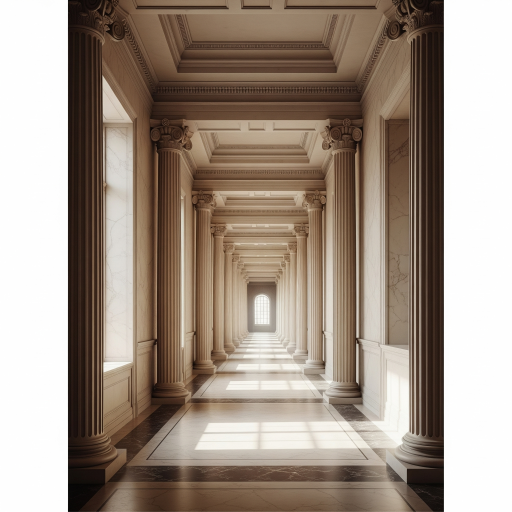
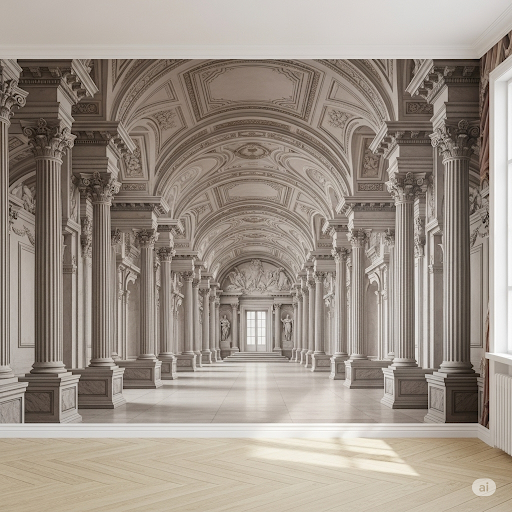
These murals are masterclasses in spatial manipulation, designed to correct the limitations of plain, box-like architecture. By utilizing precise linear perspective and shadowing, they trick the eye into perceiving depth and structural complexity where there is only flat drywall. A boring, square room can be instantly transformed into a neoclassical hall with the addition of faux fluted columns, coffered ceilings, or sweeping staircases that appear to lead to a second floor. This style is particularly effective in hallways or foyers, where the illusion of an extended corridor or a grand archway can visually double the perceived length of the space, adding a sense of historic grandeur and permanence without the need for expensive renovation or carpentry.
Faux Materials (Textures) Trompe l’oeil wallpaper mural
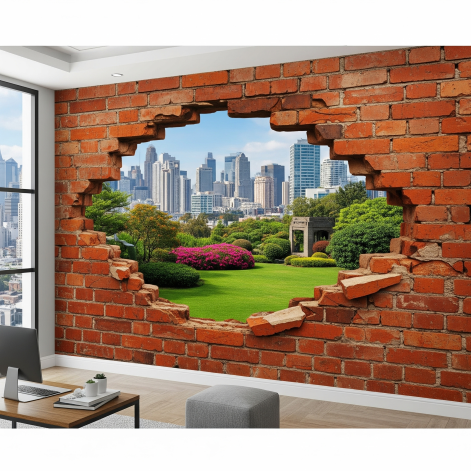
This style focuses on “tactile deception,” creating walls that beg to be touched. High-resolution digital printing captures the intricate details of raw materials—the crumbling mortar of exposed brick, the porous surface of industrial concrete, or the veining in Carrera marble. It allows designers to inject industrial chic or rustic warmth into spaces where installing the real material would be structurally impossible or prohibitively expensive. For instance, a renter can achieve the look of a heavy, reclaimed timber wall without damaging the underlying structure. Beyond wood and stone, soft textures like tufted leather or padded velvet add a layer of virtual soundproofing and coziness, making a room feel immediately warmer and more intimate purely through visual suggestion.
Windows and Vista Trompe l’oeil wallpaper Mural
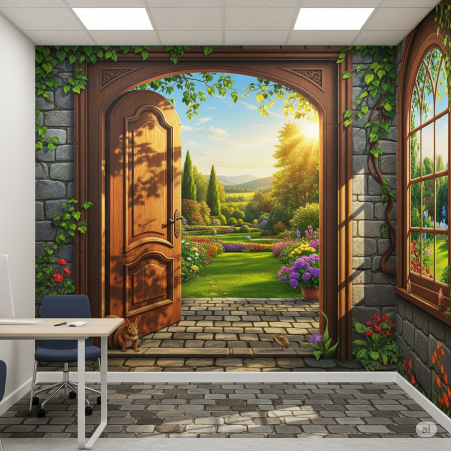
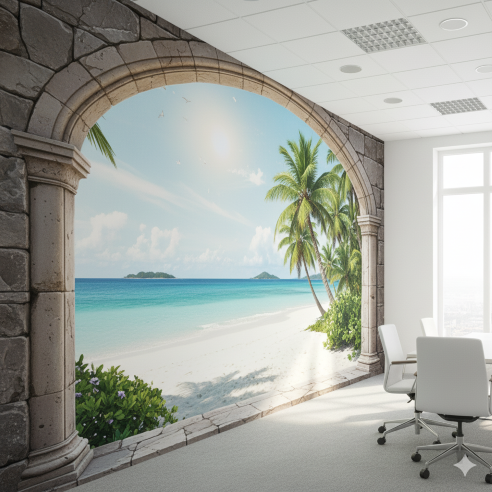
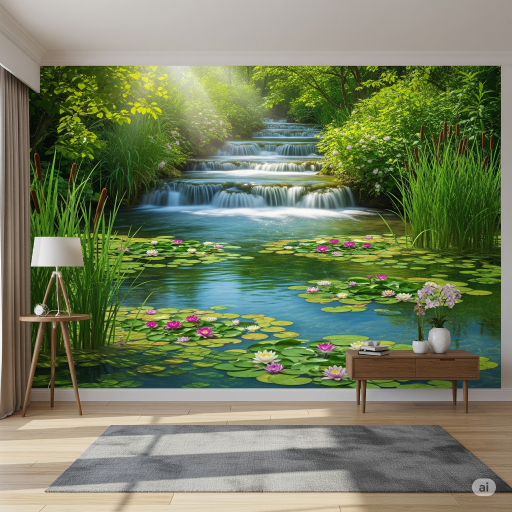
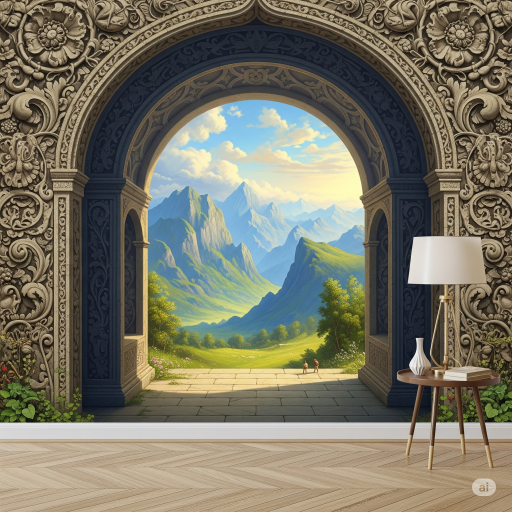
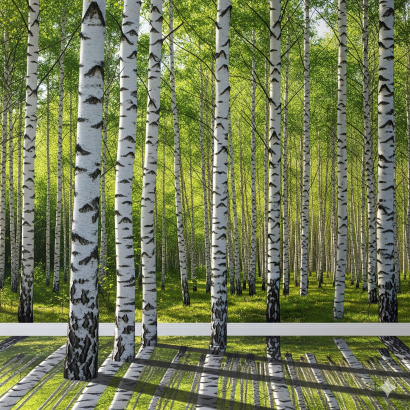
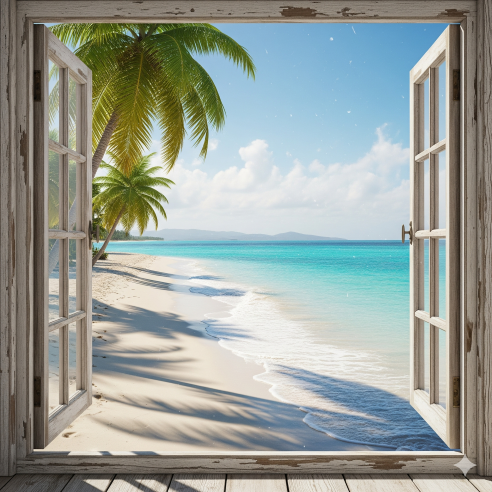
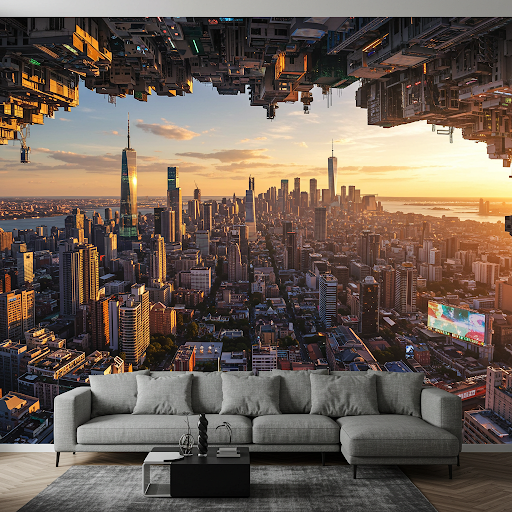
The “Window View” mural is the ultimate tool for escapism and claustrophobia relief. These designs function by punching a visual hole in a solid wall, offering a portal to a different world. Whether it is a sun-drenched terrace overlooking the Amalfi Coast, a misty forest visible through a Gothic window frame, or a high-rise view of a cyberpunk city, these murals dictate the room’s atmosphere. They are exceptionally useful in windowless rooms, basements, or bathrooms, providing a psychological connection to the outdoors. The key to their success lies in the frame; the inclusion of realistic shutters, window sills, or balcony railings anchors the view, giving the brain a reference point that makes the distant landscape feel authentically far away.
Shelving and Curiosities Trompe l’oeil wallpaper Mural
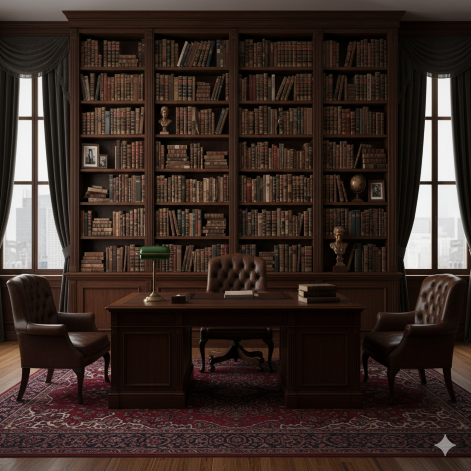
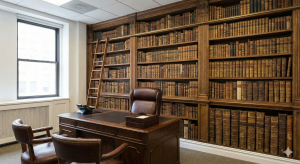
This style appeals to the desire for a sophisticated, “collected” aesthetic without the accompanying dust and clutter. It often features floor-to-ceiling libraries packed with leather-bound books, creating an instant “Dark Academia” or study vibe. However, modern variations also include cabinets of curiosities filled with antique globes, porcelain, or botanical specimens. The brilliance of this style is its ability to add immense visual interest and color to a room while keeping the floor space entirely open. It creates the illusion of a well-traveled, intellectual inhabitant. Because the “objects” are flat, you can place real furniture—like a velvet armchair or a desk—right up against the wall, blending the 2D collection with 3D reality for a seamless, cozy reading nook.
Benefits of Trompe l’oeil Wallpaper Mural
Architectural Interest
Many modern buildings suffer from “box syndrome”—perfectly square rooms with flat drywall and zero structural character. Trompe l’oeil murals offer an instant remedy by injecting architectural soul into these sterile spaces. Without hiring a contractor or creating dust, you can “install” intricate crown molding, weathered exposed brick, fluted Greco-Roman columns, or Haussmann-style paneling. It provides a focal point that anchors the room, giving the eye something complex to rest on. This allows tenants or homeowners to enjoy the grandeur of historic or industrial design styles in new-build properties where such features were never originally constructed, effectively upgrading the perceived “bones” of the house.
Cost-Effectiveness
Achieving the look of authentic materials is often prohibitively expensive and labor-intensive. Installing a real reclaimed brick wall, for instance, requires a mason, heavy materials, and days of messy construction. Similarly, custom wood wainscoting or marble slab cladding costs thousands in materials alone. A Trompe l’oeil mural achieves 90% of this aesthetic impact for roughly 10% of the cost. It eliminates the need for specialized tradespeople, structural reinforcement, or long renovation timelines. Furthermore, if trends change or you move out, a mural is easily removable, whereas a real stone wall is a permanent, heavy commitment that is difficult to alter.
Immersive Atmosphere
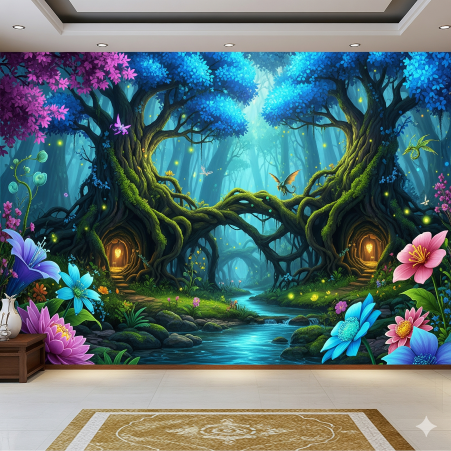
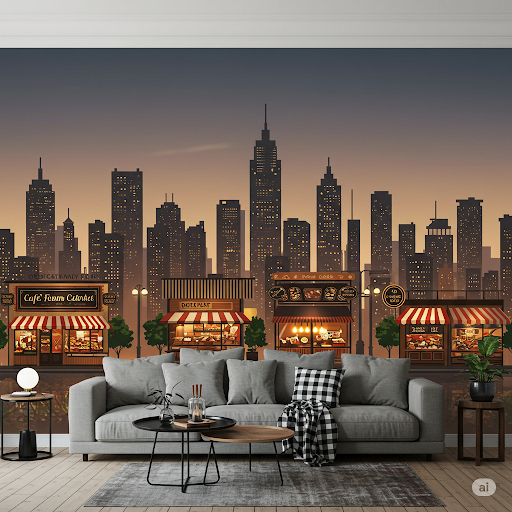
Unlike paint or standard pattern wallpaper, which provide a backdrop, a Trompe l’oeil mural acts as a stage set. It sets a strong, immediate mood that dictates how the room feels. It can transport an occupant from a rainy city apartment to a sun-drenched Tuscan villa, a moody 1920s speakeasy, or a serene Zen garden. This storytelling capability is powerful for hospitality businesses (like cafes or boutique hotels) that want to craft a specific experience, but it is equally valuable in homes. It allows homeowners to curate a specific emotional escape—such as a calming nature scene in a home office—that helps separate distinct zones of life purely through visual cues.
Trompe l’oeil Wallpaper Design Considerations
To ensure the illusion works effectively, consider the following:
Lighting
The shadows in the mural should ideally match the light source in your room. If the mural paints a shadow falling to the right, but your window is on the right, the illusion may feel “off” to the subconscious mind.
Furniture Placement
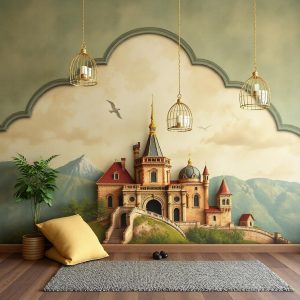
Be careful not to block critical parts of the illusion (like the “pathway” in a garden mural) with a heavy sofa, which creates a visual contradiction.
Wall Condition
Because the goal is realism, the wall surface must be perfectly smooth. Bumps or cracks will ruin the illusion of a “distant view.”
Scale
The objects in the mural must scale correctly to the room. A door in the mural should be roughly the same size as a real door.
Trompe l’oeil wallpaper Mural 2026-2027 Trends
1. Biophilic Integration: The “Living Wall” Illusion
This trend represents the evolution of the popular “bring the outdoors in” philosophy. While standard botanical wallpaper displays a flat pattern of leaves, Biophilic Trompe l’oeil creates the illusion that nature is physically interacting with the architecture of your room.
The Concept
Instead of a passive picture of a forest in the distance, these murals depict vegetation that appears to be growing on, over, or through the walls of the room. It blurs the line between the built environment and the natural world.
Key Visual Elements:
Faux Vertical Gardens
Murals that mimic expensive hydroponic living walls. The shadows and layering of ferns, moss, and broad leaves are rendered to look thick and tactile, as if you could reach out and brush your hand against the foliage.
Overgrown Architecture
Designs featuring “weathered” brick, concrete, or stone walls where realistic ivy, wisteria, or vines appear to be creeping down from the ceiling or sprouting from cracks. This creates a “secret garden” or “modern ruin” aesthetic that is romantic yet structured.
The Greenhouse Effect
Murals designed to look like a glass conservatory structure, where you see “metal” framing in the foreground and lush tropical plants pressing against the “glass” from the outside.
Why It Works
It triggers a calming psychological response (biophilia) without the high maintenance and irrigation systems required for real living walls. It adds texture and life to sterile office spaces or urban apartments.
2. Soft Minimalism & Grisaille Trompe l’oeil wallpaper Mural
This trend is a reaction against the high-definition, hyper-colorful photo murals of the past decade. It aligns with the broader interior design shift toward “Quiet Luxury”—styles that are understated, sophisticated, and calming.
The Concept (Grisaille)
Grisaille (from the French gris, meaning grey) is a painting technique that uses shades of a single color (usually grey or neutral tones) to simulate the look of sculpture or architectural relief. In wallpaper, this translates to murals that look like 3D sketches, engravings, or plasterwork rather than photographs.
Key Visual Elements
Faux Paneling and Molding
Instead of installing real timber or plaster wainscoting, these murals use subtle shadowing to create the illusion of raised panels, intricate crown molding, or fluted columns. Because they are monochromatic, they add grandeur without visual clutter.
Etching Style
Scenes (like landscapes or cityscapes) that look like oversized, hand-drawn charcoal sketches or copperplate engravings. The lack of harsh colors makes the 3D depth feel dreamy and atmospheric rather than aggressive.
Textural Illusion
Designs that mimic “soft” hard materials, such as suede walls, lime wash plaster, or raw travertine stone. The goal is to make the wall look like a high-end material, not a picture of a place.
Why It Works
It is far more versatile than photo-realistic murals. A black-and-white or sepia architectural mural acts as a neutral backdrop, allowing you to change your furniture and accent colors easily. It provides depth and elegance without dominating the room’s color palette.