



Description
1. Disney Lion King Wallpaper Mural Character Integrity
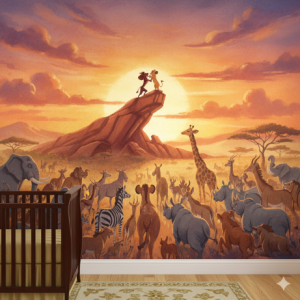
A Walt Disney Lion King Wallpaper Mural is a large-scale, cinematic wall covering designed to transform an entire room into the world of the Pride Lands. Unlike standard wallpaper, which uses small, repeating patterns, a mural is a singular, expansive image. Such as the iconic presentation at Pride Rock or the lush Hakuna Matata jungle.
These murals are typically digitally printed on high-quality non-woven fabric or silk vinyl and are sold in numbered vertical panels (drops) that align to create one seamless scene. Officially licensed versions ensure flawless character accuracy and use the film’s authentic, sun-drenched color palette.
Walt Disney Lion King Wallpaper “Officially Licensed Art” is more than just a legal stamp. It is a guarantee of creative fidelity. When you purchase a licensed Lion King mural, you are getting artwork that has passed through Disney’s rigorous brand-integrity filters.
In the world of animation, “character integrity” means the character looks exactly as the original animators intended.
Proportions: The Geometry of a King
Disney characters are not merely drawings. They are precise architectural constructions built on specific geometric ratios. For instance, the distance between Simba’s eyes, the curvature of his muzzle, and the “three-head-height” rule for cubs are strictly maintained. Licensed murals undergo a “brand-integrity filter” where Disney’s lead artists verify that the artwork is “on-model.”
In contrast, unlicensed or “off-model” art often suffers from subtle distortions. Simba’s eyes might be placed too high, or Mufasa’s mane might lack the specific volume and fluid flow defined by the original animators. These small mathematical errors create a “visual dissonance” that makes the characters look like strangers rather than the icons children love.
2. Expressiveness: Preserving the “Soul.”
Beyond physical measurements, character integrity ensures emotional consistency. Licensed art is created using the original “model sheets”—the technical blueprints used during the 1994 production. These sheets dictate how a character’s personality is physically expressed. The specific “V” shape of Scar’s villainous brow, the carefree tilt of Timon’s head, or the gentle, heavy-lidded wisdom in Sarabi’s eyes.
Without these guidelines, unlicensed murals often feel “stiff” or “vacant.” A generic artist might capture the color of Pumbaa but fail to replicate the specific “squash and stretch” of his posture that conveys his jovial nature. Authentic murals ensure that every smirk and glance carries the same cinematic soul and personality seen on screen, transforming a wall into a living scene.
2. The Iconic Disney Lion King Wallpaper Color Palette
The Lion King wallpaper mural is famous for its specific use of color to evoke the African savanna. Licensed murals use the film’s original digital style guides to replicate:
The aesthetic value of an “Officially Licensed” Walt Disney Lion King Wallpaper Mural ensures that the room feels like a window into the movie, rather than just a decorated space.
Here are the three critical visual elements that define this authenticity:
Sun-Drenched Golds
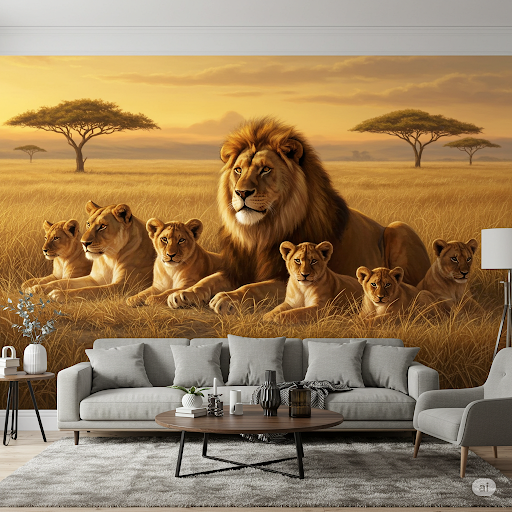
The warmth of the Pride Lands is defined by a specific lighting philosophy. Licensed murals do not simply use “yellow” ink. They utilize a sophisticated blend of ochre, amber, and molten gold. These tones are digitally sampled from the original “Circle of Life” and “I Just Can’t Wait to Be King” sequences to replicate the harsh, majestic beauty of the African sun. By using these precise pigments, the mural interacts with the ambient light in your room. And create a glowing warmth that mimics the film’s morning light. This ensures the savanna feels vast and scorched, yet inviting, providing an authentic sense of place.
Lush Jungle Greens
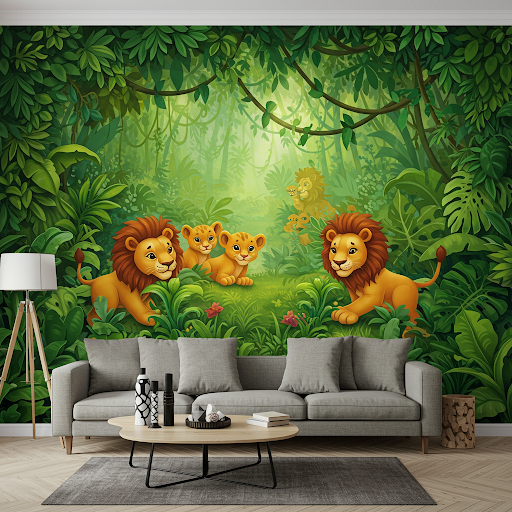
When the story shifts to the “Hakuna Matata” sequence, the color palette undergoes a dramatic transformation. Authentic murals preserve this “color scripting” by transitioning from savanna ambers to deep emeralds, teals, and neon-bright mossy greens. This isn’t just a change in hue; it’s a shift in “mood.” These vibrant greens represent life and renewal, creating a cool, rejuvenating atmosphere in a bedroom or playroom. Because licensed files maintain high color saturation, these jungle scenes feel three-dimensional and lush, avoiding the “flat” or washed-out appearance common in generic, low-resolution replicas.
3. Atmospheric Depth
One of Disney’s greatest cinematic achievements was the multi-plane look, which created an illusion of vast distance. Officially licensed murals replicate this by maintaining “atmospheric perspective.” In these designs, foreground elements like grass and rocks are rendered with sharp, warm detail, while the distant Pride Rock is bathed in a hazy, blue-tinted mist. This color shift—from warm in the front to cool in the back—tricks the eye into seeing miles of savanna on a flat wall. This technical precision prevents the room from feeling “closed in,” instead giving the child a sense of endless horizon and grand adventure.
3. Technical Superiority of Licensed Files
When selecting a Walt Disney Lion King Wallpaper Mural, the distinction between generic prints and officially licensed products lies in the technical engineering of the image files and the materials used.
Here is an expansion on why the technical superiority of licensed files is critical for a high-quality installation:
Access to Original Master Files
Official Disney partners (such as Komar or RoomMates) possess exclusive legal access to the original digital master files stored in Disney’s animation archives. These are the same high-fidelity assets used for the film’s theatrical production. While local custom printers often rely on “found” images from the internet that have been compressed and stripped of data, licensed manufacturers work with raw, multi-layered files. This ensures that every brushstroke of the Pride Lands and every detail of Mufasa’s mane is preserved exactly as the animators intended, without the “visual noise” found in pirated copies.
No Pixelation: Resolution vs. Scale
A major challenge with large-scale murals is “pixelation”—where an image looks blocky or blurry when enlarged. Most custom prints in Kenya are created by blowing up low-resolution JPEGs, which lack the necessary Pixels Per Inch (PPI) for a 3-meter wall. Officially licensed murals are rendered from vector-based art or ultra-high-resolution files designed specifically for wide-format printing. This means even when you are standing just inches away from the wall, the lines remain crisp and the details sharp, providing a professional “cinematic” finish that a low-res download simply cannot achieve.
Ink Fidelity & UV Resistance
Licensed manufacturers utilize specialized archival and UV-curable inks that are scientifically calibrated to match the Disney color profile. In Kenya’s high-UV environment, standard printer inks can fade within months, causing the vibrant savanna golds to turn a dull, washed-out grey. Authentic murals are tested for lightfastness, ensuring the colors remain vivid for years. Furthermore, these inks are often “GreenGuard Gold” certified, meaning they are non-toxic and odorless—essential for maintaining healthy air quality in a child’s nursery or bedroom.
4. Why Licensed Disney Lion King Wallpaper Matters in Kenya
In the Kenyan interior design market, the choice between “Disney-inspired” replicas and officially licensed Lion King murals often comes down to a trade-off between immediate cost and long-term visual quality. While generic options are widely available in Nairobi, they frequently fall short upon closer inspection.
Here is why choosing licensed art matters specifically in the local context:
The Reality of the Local Market
In many Kenyan décor shops, “Disney-inspired” wallpapers are significantly cheaper because they bypass licensing fees and use standard commercial inks. However, while these may look acceptable from a distance, they often lack the “soul” of the movie. Licensed art is a guarantee that you aren’t just buying a picture of a lion. But a piece of cinematic history that has passed Disney’s rigorous brand-integrity filters. This ensures that the mural acts as a premium focal point in a home. And maintains its value and aesthetic appeal far longer than a generic print.
Avoiding the “Uncanny Valley”
The “Uncanny Valley” refers to that unsettling feeling when an animation looks almost right, but is just “off” enough to be creepy. In cheap, unlicensed prints, this is a common issue. You may see Simba with “dead eyes” that lack the warmth of the character, or weirdly saturated skin tones that make him look unnaturally orange or reddish. Because licensed art uses original “model sheets,” the characters possess the correct facial geometry and expressions. This prevents the characters from looking like “distorted imitations” that can actually be unnerving for children in their own bedrooms.
Batch Consistency and Professional Finish
A major frustration for homeowners in Kenya is “color drift.” If you underestimate your wall size and need an extra roll, unlicensed prints often vary significantly between batches—the “sun-drenched gold” on one side of the wall might not match the other. Officially licensed manufacturers use standardized digital color management and gravure printing to ensure perfect consistency. Whether you buy two rolls today or a replacement panel a month later, the amber and ochre tones will align perfectly, ensuring a seamless, professional finish without the jarring “lines” of mismatched colors.
Characters and scenes in Disney Lion King Wallpaper
When selecting a Walt Disney Lion King Wallpaper Mural, the choice of scene dictates the entire energy of the room. Because these are officially licensed, the murals often recreate specific cinematic beats from the 1994 film or the 2019 reimagining.
Here is an overview of the most popular characters and scenes available in Kenyan:
1. The “Circle of Life” / Pride Rock
The Circle of Life is the most iconic and dramatic scene available in Kenya. It usually serves as a monumental focal point in a nursery or playroom, capturing the moment Simba is introduced to the animal kingdom.
Characters
The mural features the wise mandrill Rafiki holding baby Simba atop the peak of Pride Rock. Standing regally behind them are Mufasa and Sarabi, symbolizing parental protection. Expansive versions often include a panoramic “procession” of the savanna’s inhabitants. Including towering giraffes, elephants, and zebras gathered below in a display of unity.
Visual Impact
The artwork utilizes a high-saturation palette dominated by “Sun-Drenched Golds” and vibrant burnt oranges. This choice of color mimics the dawn of a new era on the savanna. It evokes themes of family, heritage, and the interconnectedness of all living things, making it a profound and inspiring choice for a child’s environment.
2. The “Hakuna Matata” Jungle Stroll
This high-energy mural represents the film’s “no worries” philosophy, shifting the room’s atmosphere from majestic savanna to a vibrant, hidden paradise.
Characters
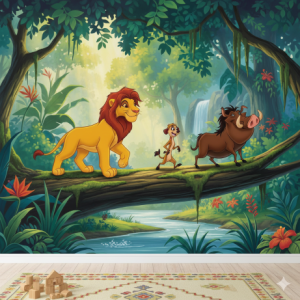
The central focus is the beloved trio—Simba, Timon, and Pumbaa—usually depicted in their famous rhythmic march across a fallen mossy log. Some variations show Simba transitioning from a cub to a young adult as he walks, reflecting his growth and the passage of time in the jungle oasis.
Visual Impact
The palette shifts dramatically to “Lush Jungle Greens,” featuring deep emeralds, teals, and neon-bright exotic flora. These cool tones balance the warmth of the room and create a refreshing, adventurous mood. The inclusion of cascading waterfalls and tropical ferns adds a layer of “Visual Depth” that makes the wall feel like a gateway into a living forest.
3. The “Young Simba and Nala” Playtime
This mural is a softer, more whimsical option often chosen for shared bedrooms or gender-neutral nurseries in Kenya. It focuses on the innocence of childhood before the responsibilities of the “Circle of Life” take hold.
Characters
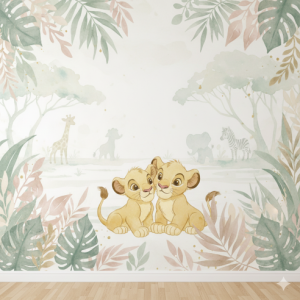
The scene captures young Simba and Nala wrestling playfully in the tall savanna grass. Or pouncing under the shade of a wide acacia tree. The hornbill Zazu is frequently included, either hovering overhead with a worried expression or perched on a nearby branch, acting as the ever-present royal “watchdog.”
Visual Impact
Unlike the high-contrast cinematic scenes, these murals often adopt a “Painterly” or “Watercolor” style. By using a palette of soft pastel yellows, creamy beiges, and sage greens, it creates a calm and gentle environment. This aesthetic is designed to soothe, making it an excellent choice for infants’ rooms where a “high-drama” image might be too overstimulating.
4. Majestic Silhouettes (Sunset Scenes)
A sophisticated take on the film, Silhouette style is increasingly popular in Nairobi for “Boho-chic” or modern minimalist homes. It bridges the gap between a “cartoon” room and a high-end African-themed interior.
Characters
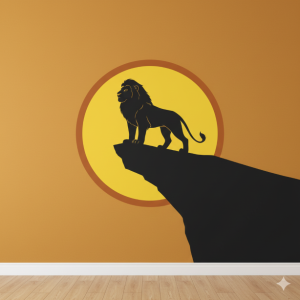
This design is minimalist, usually featuring only the stark black silhouettes of Mufasa and young Simba sitting side-by-side. They are typically positioned on a ridge, looking out over the vast, darkened outlines of the Pride Lands, perfectly capturing the “everything the light touches” moment.
Visual Impact
These murals focus on “Atmospheric Depth,” utilizing a stunning gradient of deep violet, royal purple, and burnt orange. Because there are no detailed facial features to become dated, these murals “age” better as a child grows. To a teenager or adult, the wall feels like a piece of contemporary African savanna art rather than a simple movie poster.
5. The “Return of the King”
This is a high-drama scene depicting the emotional climax of the story. It is a powerful choice for older children’s rooms or dedicated entertainment spaces.
Characters
The mural showcases a fully grown, majestic adult Simba standing at the very tip of Pride Rock. He is often depicted in a powerful stance, mid-roar, as he reclaims his kingdom. The background usually features a dramatic sky—either thick with storm clouds or beginning to clear as the sun breaks through.
Visual Impact
This scene intentionally moves away from the “Sun-Drenched Golds” of Simba’s youth. Instead, it uses “Cooler Tones”. Deep navy blues, slate greys, and charcoal purples. This creates a regal and intense aesthetic that feels more “mature.” The use of shadow and light in this mural provides a sense of power and resilience, serving as a daily reminder of strength and leadership.