


Description
Core Travel Agency Interior Design Zones
Modern Travel Agency Interior Design has evolved from transactional to transformational. In 2026, the focus shifts from cluttered desks and paper brochures to a sophisticated, “immersive gateway” model. By eliminating the barrier of traditional cubicles, the space becomes a curated environment that triggers the senses. The goal is psychological transport. The moment a client enters, they should feel the heavy lift of planning vanish, replaced by the exciting, tangible beginning of their global journey.
The Inspiration Zone
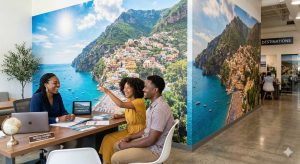
The Inspiration Zone serves as the agency’s visual heartbeat, designed to ignite immediate wanderlust through high-impact storytelling. Dominating this area are floor-to-ceiling digital displays or bespoke, matte-finish map murals that provide a sense of scale and adventure. This isn’t just a lobby; it’s a gallery of possibilities. By utilizing rotating scenic visuals or intricate topographic wall treatments, the space immediately establishes the agency’s expertise and transports the visitor from the street to the world.
The Discovery Lounge
Designed for low-pressure exploration, the Discovery Lounge replaces the waiting room with a tactile, relaxed “living room” feel. Featuring plush armchairs and low-profile coffee tables, this zone encourages clients to linger. High-definition tablets provide access to interactive digital catalogs, while premium physical coffee-table books offer a luxurious, sensory touch. It is a soft-entry point where travelers can browse at their own pace, dreaming up destinations before the formal planning process even begins.
Consultation Hubs
Consultation Hubs move away from confrontational desk setups in favor of collaborative “planning nooks.” These semi-private spaces feature side-by-side seating, allowing agents and clients to view screens together as partners in the journey. This layout fosters transparency and trust, turning a transaction into a shared creative project. To maintain privacy without losing the open feel, designers often use acoustic wall panels or textured non-woven murals that dampen sound while adding a professional, sophisticated aesthetic.
The Virtual Gateway
The Virtual Gateway represents the cutting edge of travel retail, offering a “try-before-you-buy” experience through immersive technology. This dedicated corner is equipped with high-fidelity VR headsets, allowing clients to virtually walk through luxury resorts, explore cruise ship decks, or stand atop mountain peaks. It bridges the gap between imagination and reality. By integrating these digital “portals” into the physical design, the agency provides a compelling, high-tech reason for clients to visit in person.
Travel Agency Aesthetic & Material Palettes
Travel Agency Interior Design in 2026 must master the balance between the thrill of global adventure and the grounded reliability of professional trust. This is achieved through a “Tactile Globalism” approach—layering raw, organic textures that evoke distant lands against clean, modern architectural lines that signal competence. The palette should feel curated rather than cluttered, suggesting a brand that has traveled the world and brought back only the finest inspirations to share with its clientele.
| Element | Recommended Materials & Styles | Psychological Impact |
| Wall Treatments | Matte-finish non-woven murals featuring subtle topographic lines, vintage transit maps, or muted botanical landscapes. | Evokes history and discovery without the distracting glare of glossy finishes. |
| Flooring | Natural textures like sustainable cork, reclaimed wide-plank wood, or matte polished concrete. | Provides a grounded, “earthy” foundation that feels permanent and reliable. |
| Lighting | A curated mix of warm ambient LEDs and statement fixtures like globe pendants or brass linear lights. | Creates a “golden hour” glow that mimics the best part of a travel day. |
| Furniture | “Safari-chic” or Mid-century modern pieces using cognac leather, heavy canvas, and light oak or teak. | Combines the comfort of a luxury lodge with the sleekness of a professional studio. |
Material Synergy
To maintain professional trust, Travel Agency Interior Design materials should be high-quality and durable. For instance, pairing a black matte geometric mural with brushed brass hardware creates a “Global Concierge” aesthetic that feels both adventurous and expensive. Conversely, using light woods and linen textures in the Discovery Lounge suggests an eco-conscious, transparent approach to travel. These material choices act as a silent language, assuring the client that their journey is in the hands of a sophisticated expert.
Travel Agency Interior Design Wallpaper & Visuals
Wall treatments serve as a powerful, cost-effective tool for defining a travel agency’s specific niche. In 2026, the shift toward immersive environments makes high-quality murals essential for storytelling. Beyond mere decoration, these visuals act as silent ambassadors of the brand’s expertise. Whether using matte-finish non-woven materials or textured vinyl, the right wall treatment instantly communicates the agency’s unique travel philosophy.
Educational & Informative
For agencies focusing on eco-tourism, historical expeditions, or educational travel, murals become informative landmarks. Depicting STEM-related global wonders, intricate topographic maps, or botanical illustrations adds an immediate air of authority. These detailed visuals engage the curious traveler, turning a simple wall into a conversation starter. This approach transforms the office into a center of discovery, reinforcing the agent’s role as a knowledgeable guide.
Minimalist Professional
In high-end luxury agencies, the aesthetic leans toward a sophisticated “concierge” environment. Utilizing black or white matte patterns—often accented with subtle geometric gold or metallic foils—creates a premium, understated atmosphere. This minimalist approach avoids visual clutter, allowing the focus to remain on personalized service. The clean lines and high-quality textures suggest exclusivity and meticulous attention to detail, appealing to the discerning, luxury-oriented traveler.
Zonal Branding
Zonal branding uses diverse murals to physically segment an agency without the need for restrictive walls. A lush, vibrant tropical jungle mural can define an “Exotic Escapes” corner, while a crisp, high-contrast snowy mountain range designates the “Adventure and Ski” section. This visual cues allow clients to navigate the space intuitively, feeling the specific “vibe” of their chosen destination before the first itinerary is even drafted.
Functional Considerations
Beyond aesthetics, the practical success of a 2026 travel agency depends on seamless functionality. Design must address the psychological and physical needs of the traveler, ensuring the space is as comfortable as it is inspiring. Integrating technical solutions directly into the design elements—such as walls and ceilings—creates a frictionless environment where the focus remains entirely on the dream of the journey.
Acoustics
Effective acoustic management is vital, as travel planning involves sensitive discussions regarding personal budgets and private details. To ensure confidentiality without building cold, glass walls, designers utilize sound-absorbing acoustic panels or heavy, textured fabric murals. These materials dampen ambient noise between consultation pods, creating “quiet zones.” This acoustic intimacy fosters a secure, professional environment where clients feel comfortable sharing their travel aspirations.
Digital Integration
Modern agencies seamlessly blend the digital and physical worlds through thoughtful integration. Screens should be recessed into walls or elegantly framed to mimic “Virtual Windows,” displaying high-definition, real-time footage of global destinations. This avoids the cluttered look of standard monitors and maintains the agency’s premium atmosphere. By embedding technology directly into the architecture, the digital content feels like a natural extension of the room’s view.
Scent & Sound
To complete the immersive gateway, designers employ subtle sensory triggers like “destination scents” and ambient soundscapes. A faint aroma of sea salt or cedarwood, paired with low-volume sounds of lapping waves or distant forest birds, can subconsciously transport a client. These sensory layers bypass the analytical mind and tap directly into the emotional excitement of travel, making the booking experience truly unforgettable.